







Custom Aluminum Steel Clad Plate
Introduction
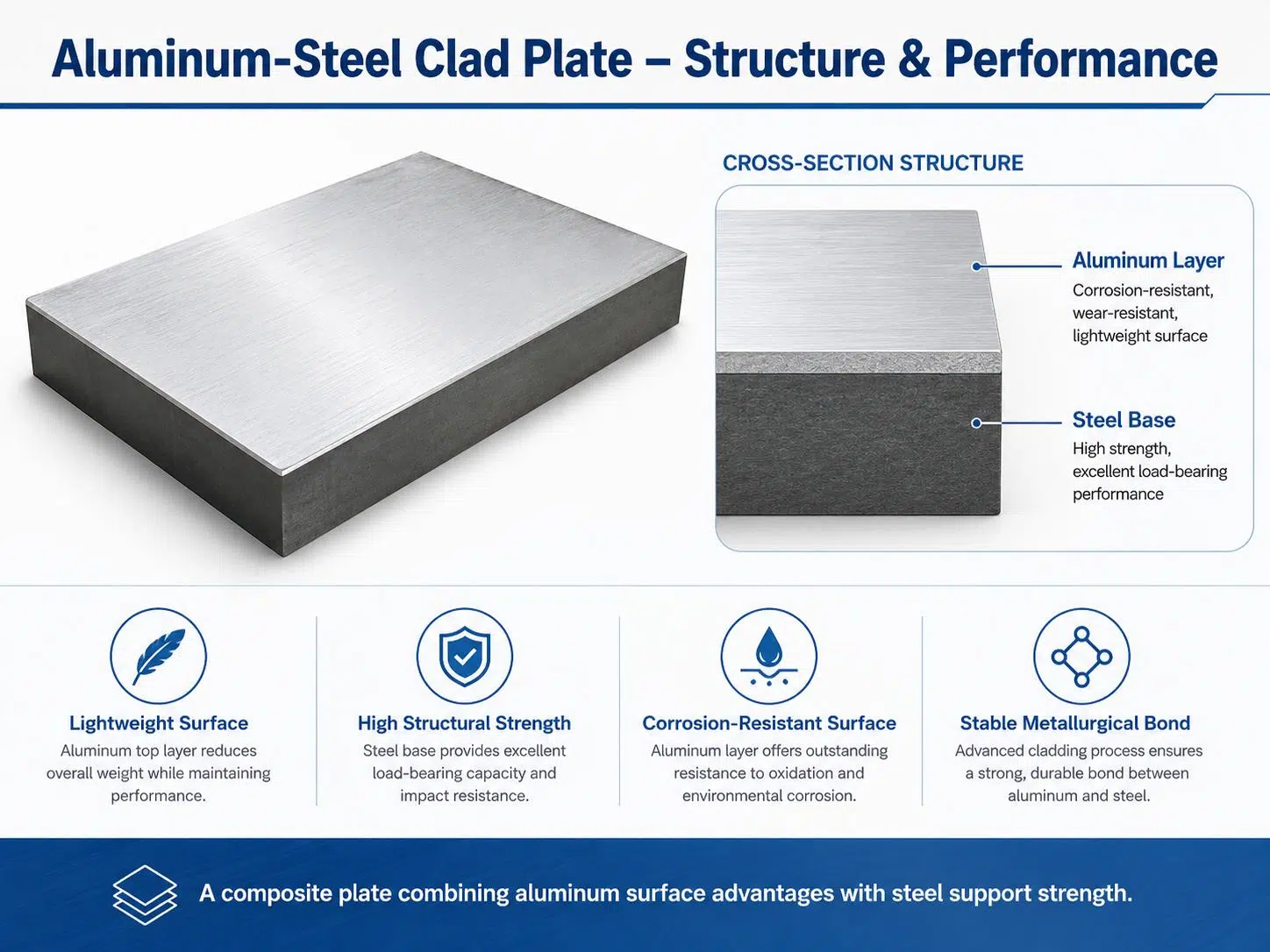
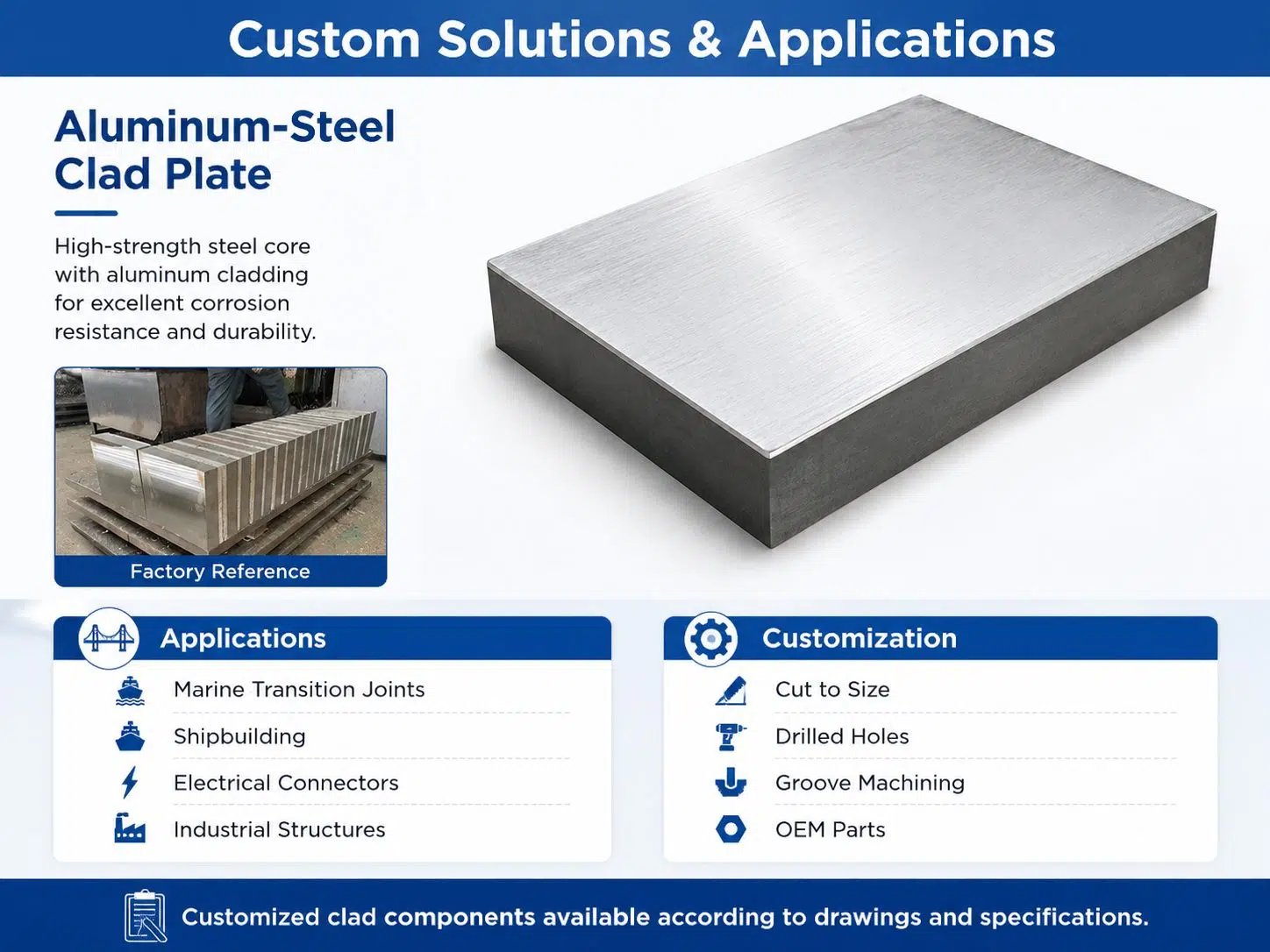
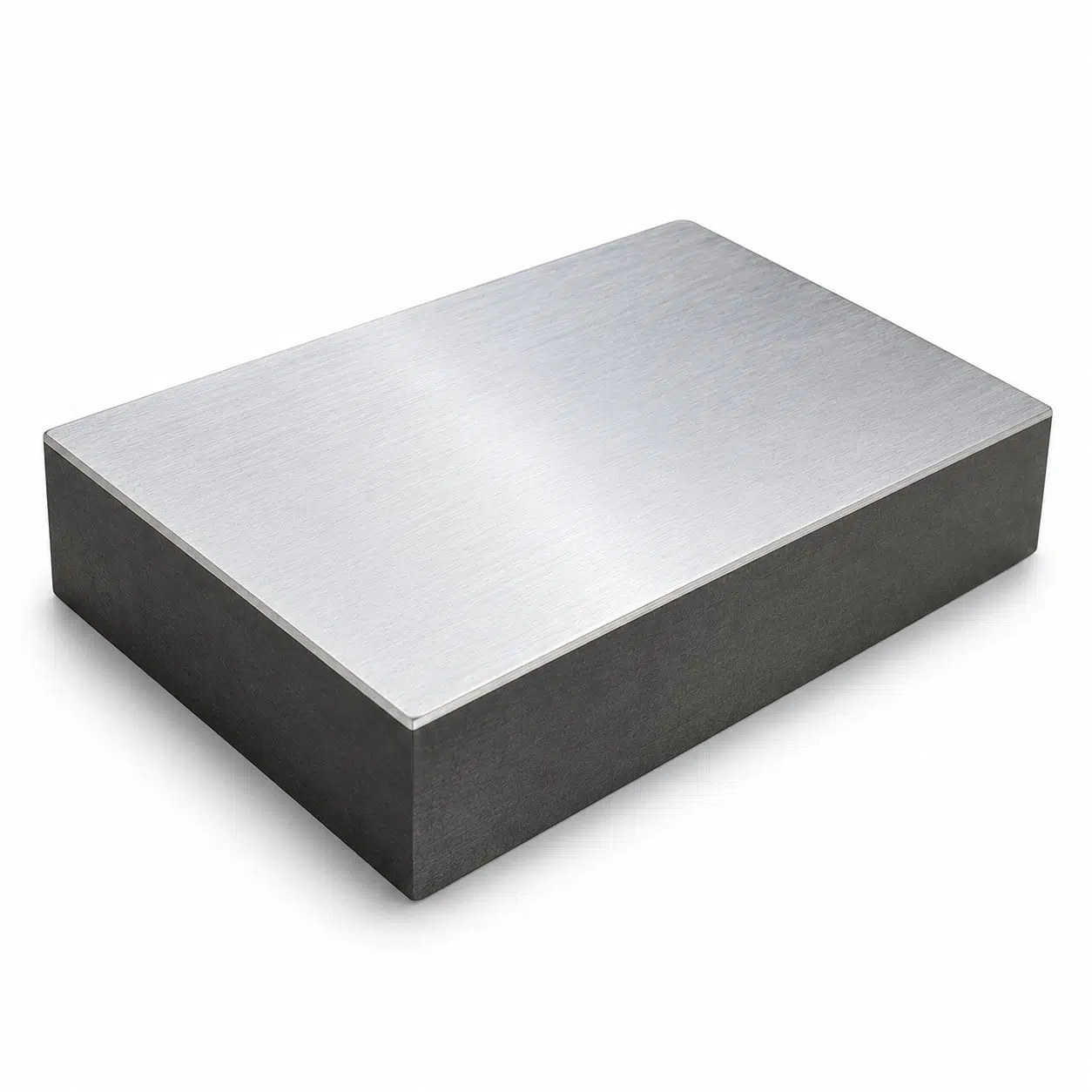
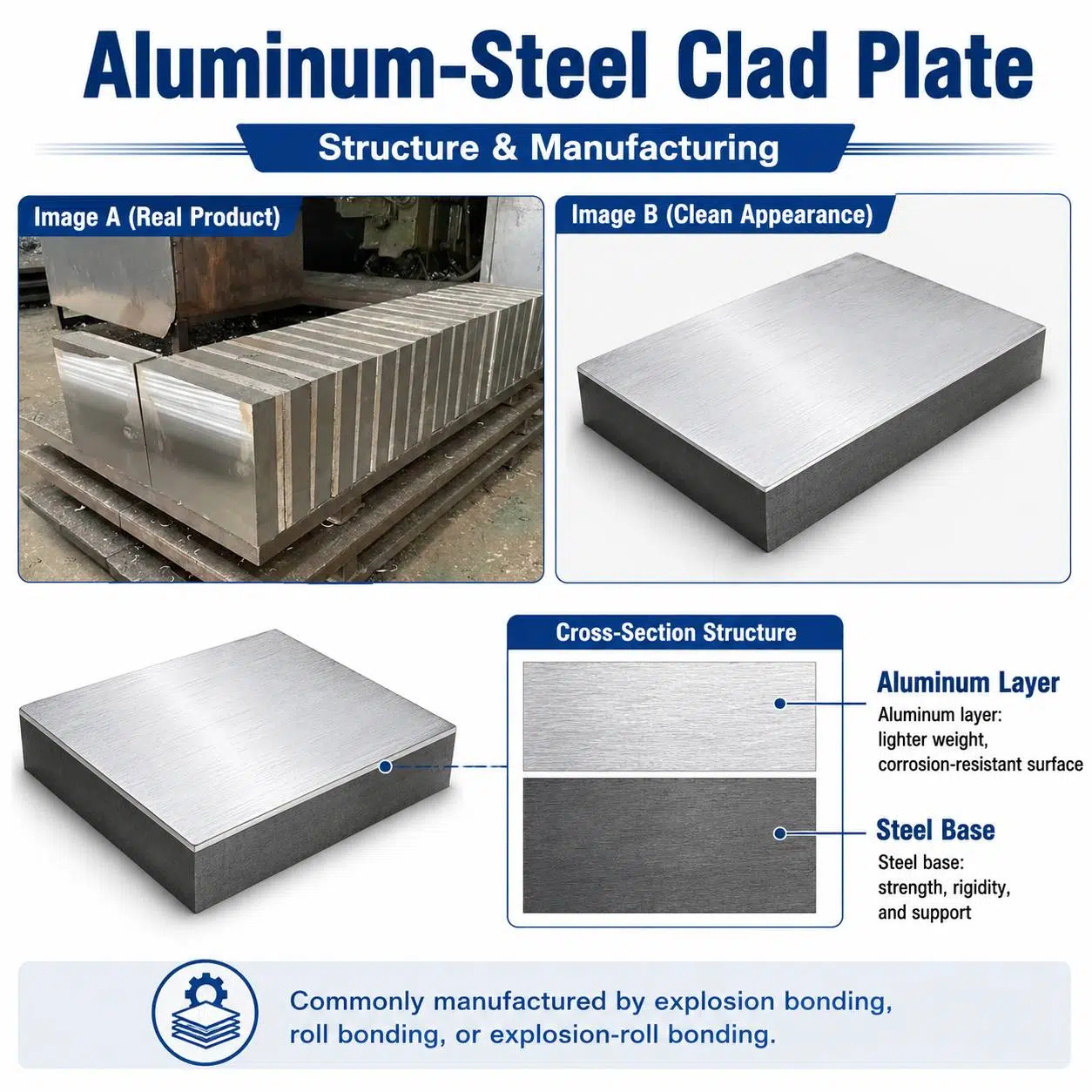
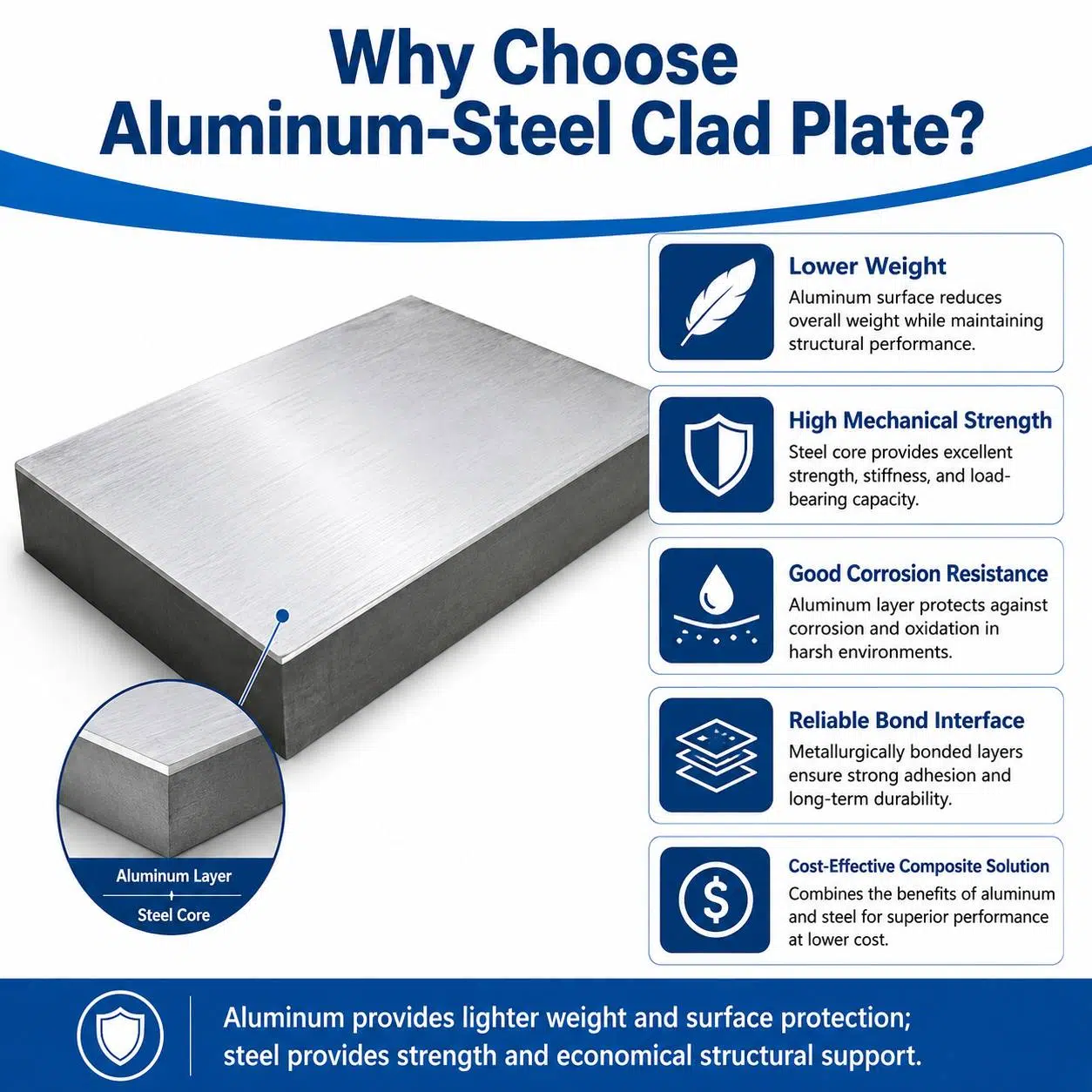
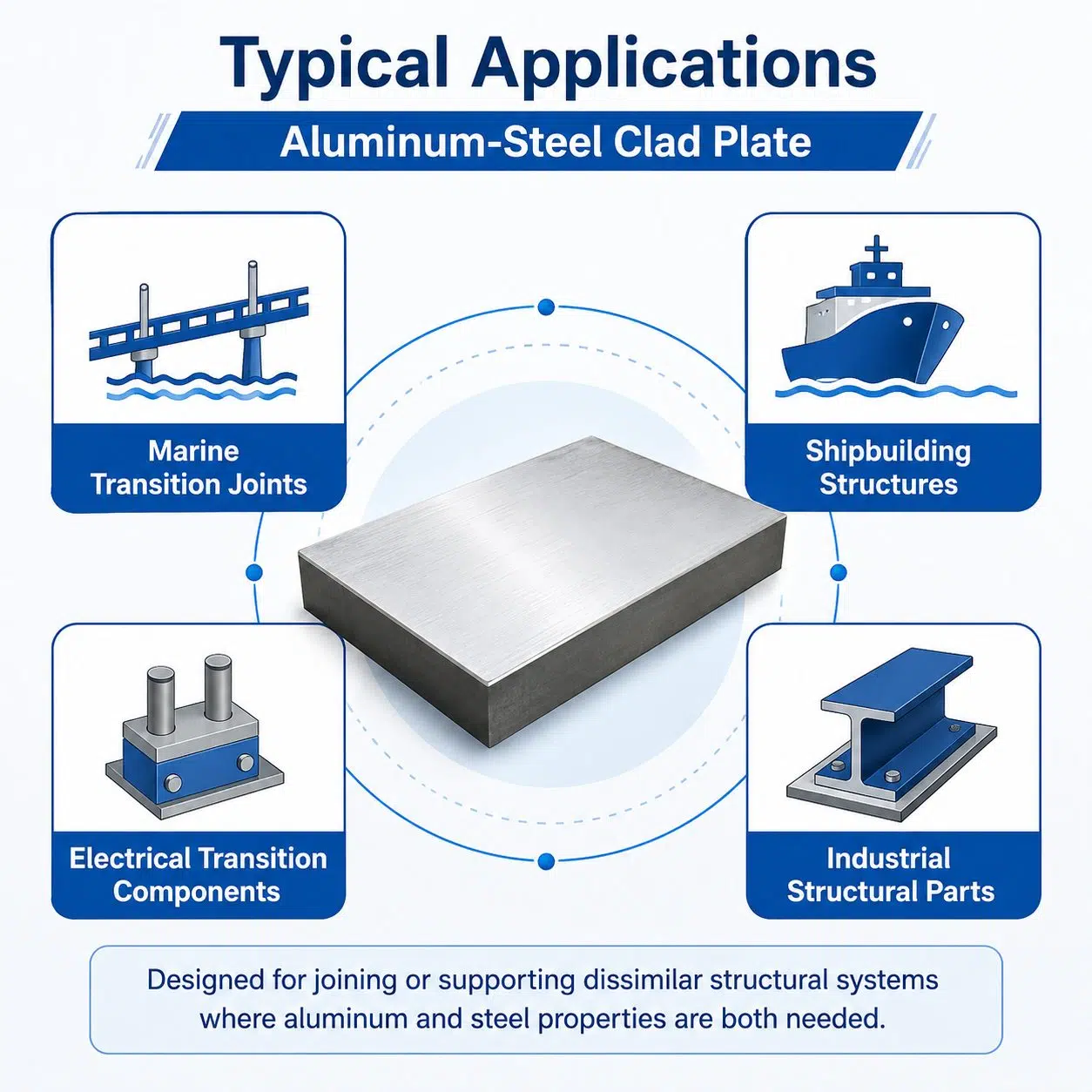
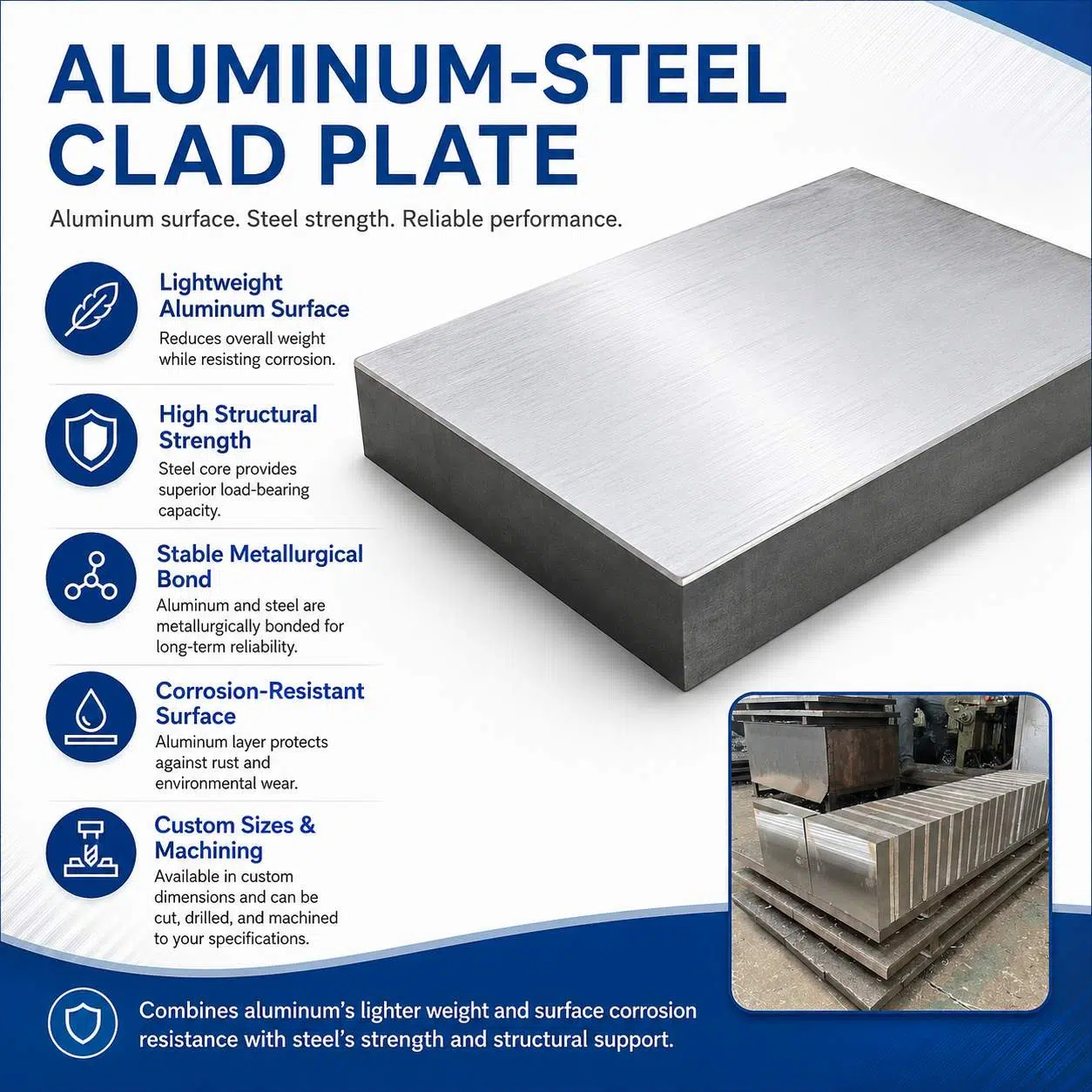
- Aluminum Steel Clad Plate is a bimetal composite that permanently bonds aluminum to carbon steel or stainless steel through explosive bonding or roll‑bonding technology. The steel side provides high strength, stiffness, and good weldability to conventional steel structures, while the aluminum side offers low density, good corrosion resistance, and excellent machinability. This material is widely used as a structural transition joint and lightweight solution in shipbuilding, marine engineering, rail and automotive structures, bridge decks, cryogenic tanks, and other applications where aluminum components must be reliably connected to steel.
-
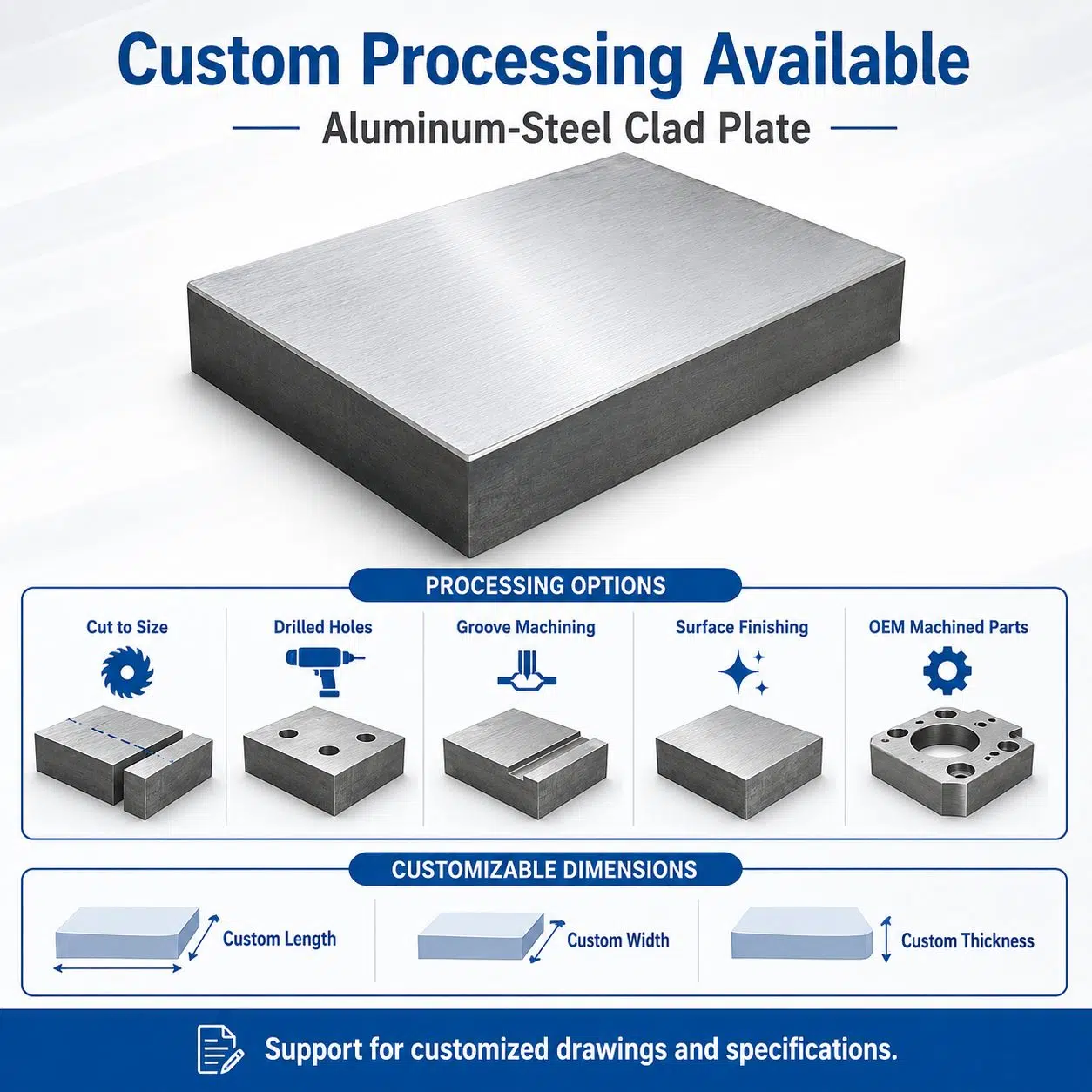
We offer fully customizable Aluminum Steel Clad Plates, including aluminum alloy grade (e.g., 1050, 1060, 3003, 5083) and base steel grade (e.g., Q235/Q345, A36, A516, or stainless steel), as well as total thickness, cladding thickness, plate width/length, and edge machining according to your drawings. The plates feature strong metallurgical bonding, high shear strength, good formability, and compatibility with welding procedures on the steel side and mechanical/bolted or special welding solutions on the aluminum side. They are manufactured with reference to relevant ASTM/EN/GB standards and can be supplied with ultrasonic testing and material certificates for critical projects. OEM/ODM and engineering support are available for shipyards, fabricators, and infrastructure projects.
Specifications
Type Aluminum–Steel Clad Plate / Sheet / Panel / Transition Plate / Bimetal Composite Structure Metallurgically bonded Al–Steel composite: typically Al/Steel or Steel/Al/Steel layered structures produced by explosive bonding, roll‑bonding, or explosion‑roll composite processes Material Grade (Al side) Commercial‑purity and structural aluminum alloys such as 1xxx, 3xxx, 5xxx series (e.g., 1050, 1060, 1100, 3003, 5083, 5754) selected according to strength, corrosion resistance, and weldability requirements Material Grade (Steel side) Carbon and structural steels (e.g., Q235, Q345, A36, S235, S355, shipbuilding steels like A/B/D/E, AH32–AH36) or stainless steels (e.g., 304/304L, 316/316L) depending on application Al/Steel Ratio (Thickness) Customizable aluminum and steel thickness ratio (e.g., 5/95, 10/90, 20/80, 30/70, 50/50 etc.), optimized for weight reduction, strength, stiffness, and cost Mechanical & Physical Props. Combines low density and good corrosion resistance of aluminum with high strength, stiffness, and fatigue resistance of steel; suitable for load‑bearing and lightweight structural applications Form Flat plates and sheets, transition plates, profiles for welding joints; supplied as mill plates, cut‑to‑size panels, or pre‑machined parts Thickness Range Customizable total thickness, typically from about 3–4 mm up to 50–100 mm or more; individual Al and steel layer thicknesses adjustable according to structural and welding design requirements Width & Length Plate width commonly up to 2,000–2,500 mm; length up to 8,000–12,000 mm (depending on grade and bonding process); special sizes on request Bonding Method Explosion bonding, hot roll bonding, or combined explosion‑roll bonding to form a continuous, high‑strength metallurgical interface between aluminum and steel layers Interface Quality High bonding strength, uniform cladding, good shear and peel strength; interface quality verified by ultrasonic testing (UT) and/or shear tests in accordance with relevant standards Mechanical Properties Good formability for bending, rolling, and welding preparation; steel side bears most of the load, aluminum side offers weight savings and corrosion protection in marine and outdoor environments Density & Cost Balance Bimetal design provides significant weight reduction compared with all‑steel structures and reduces the use of more expensive corrosion‑resistant alloys while maintaining required mechanical performance Surface Finish As‑rolled or shot‑blasted steel surface; aluminum side mill finish, brushed or pre‑treated if required; both sides can be supplied with controlled roughness for coating, painting, or welding Surface Treatment Degreasing and cleaning as standard; optional shot blasting, pickling, priming/painting on the steel side, and anti‑corrosion or temporary protective coatings/films on the aluminum side Weldability & Joining Steel side weldable with conventional steel welding procedures (MIG/MAG, SAW, etc.); aluminum side compatible with aluminum welding and mechanical fastening; used as transition joint between aluminum structures and steel hulls Corrosion Performance Aluminum side provides good corrosion resistance in marine and atmospheric environments; appropriate design and coating systems further improve long‑term durability at the steel side and edges Dimensional Tolerances Tight control of thickness, flatness, and dimensions to ensure stable forming, accurate fit‑up in shipbuilding and structural assembly, and consistent welding gap and alignment Standards & Reference Manufactured with reference to relevant standards for aluminum‑steel clad materials and base metals (e.g., ASTM, EN, GB shipbuilding/structural standards; classification society rules such as CCS, DNV, ABS where applicable) Application Range Shipbuilding (aluminum–steel transition joints for decks and superstructures), marine engineering, bridges, rail transit, automotive structures, offshore platforms, cryogenic tanks, pressure vessels, and structural components Processing Capability Supports cutting (shearing, plasma, laser, water‑jet), bending, rolling, drilling, edge machining, and welding preparation; suitable for large‑scale fabrication in shipyards and steel structure workshops Customization Tailored Al/Steel structure, thickness combination, plate width/length, base material grades, edge preparation, and pre‑cut/pre‑formed geometries according to customer drawings or CAD files Packaging Supplied as palletized or crated plates with edge protection; interleaving or protective film on aluminum surface; seaworthy wooden packing available for export and long‑distance transport
Reference dimensions
| 0.1mm*50mm*50mm | 0.2mm*100mm*100mm | 0.1mm*200mm*200mm |
| 0.2mm*300mm*3000mm | 0.3mm*500mm*500mm | 0.1mm*500mm*1000mm |
| 0.2mm*500mm*2000mm | 0.1mm to 50mm*1000mm*1000mm | The size can be customized |