







Custom Aluminum Honeycomb Core and Panels
Introduction
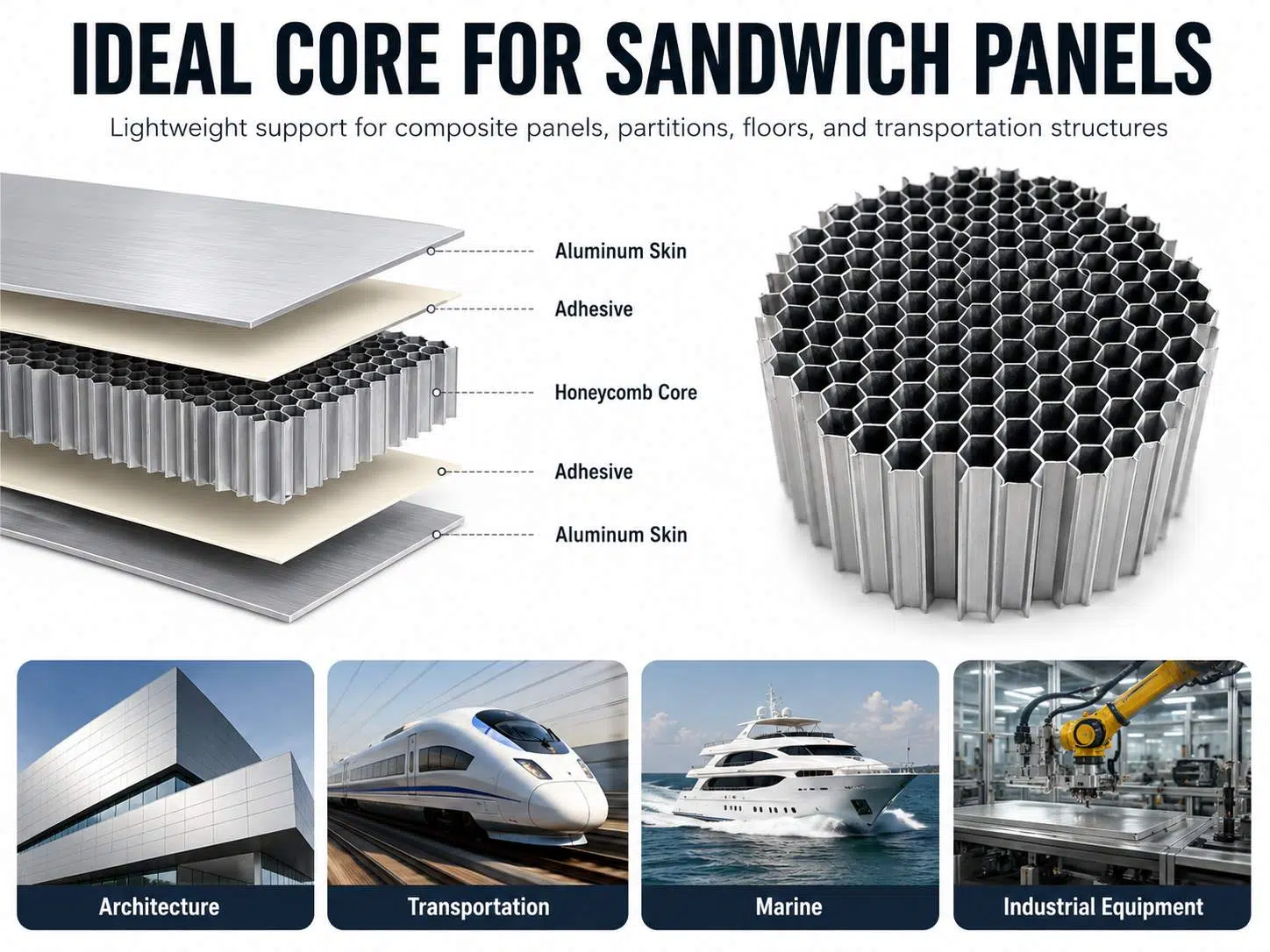
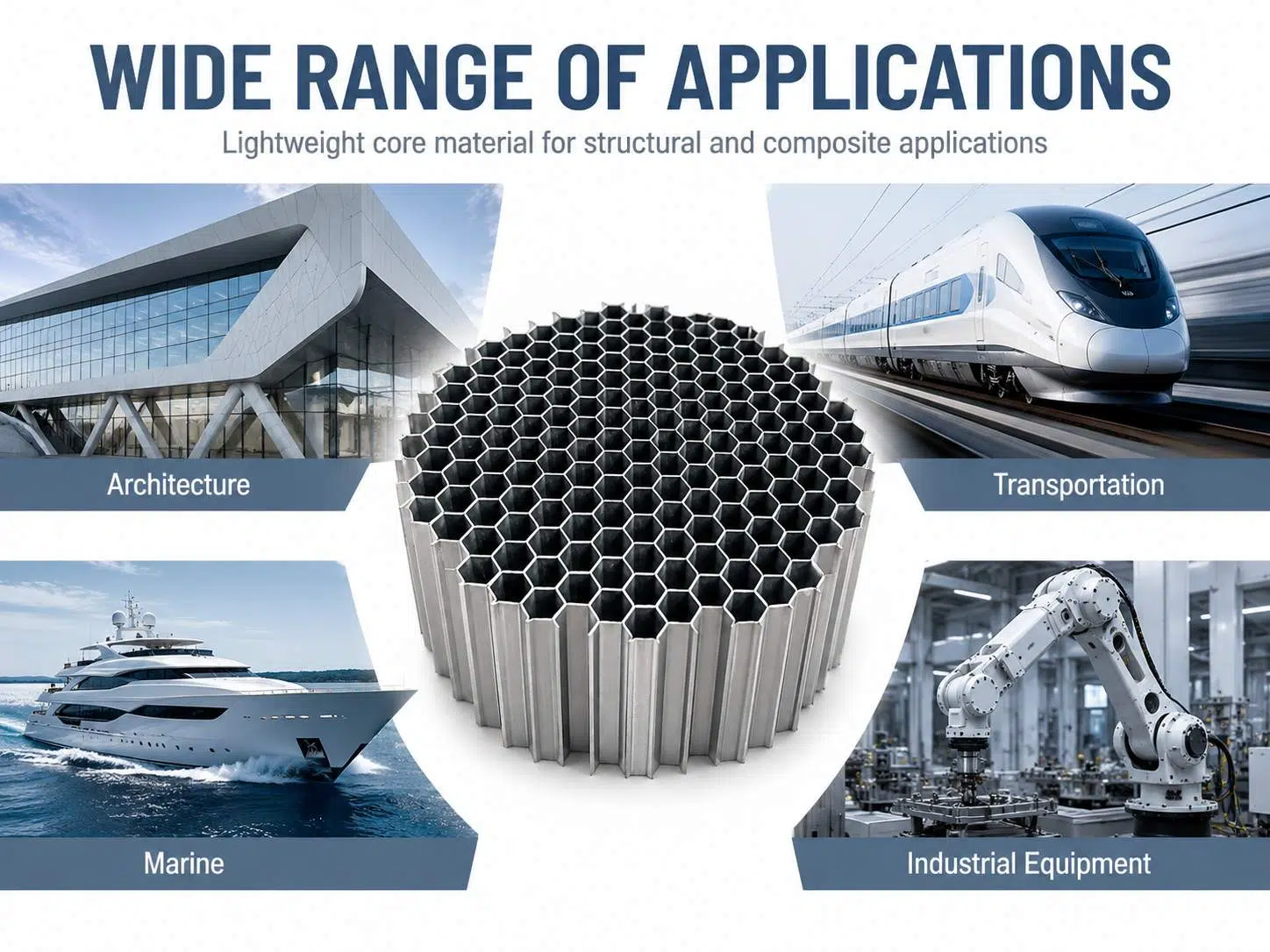
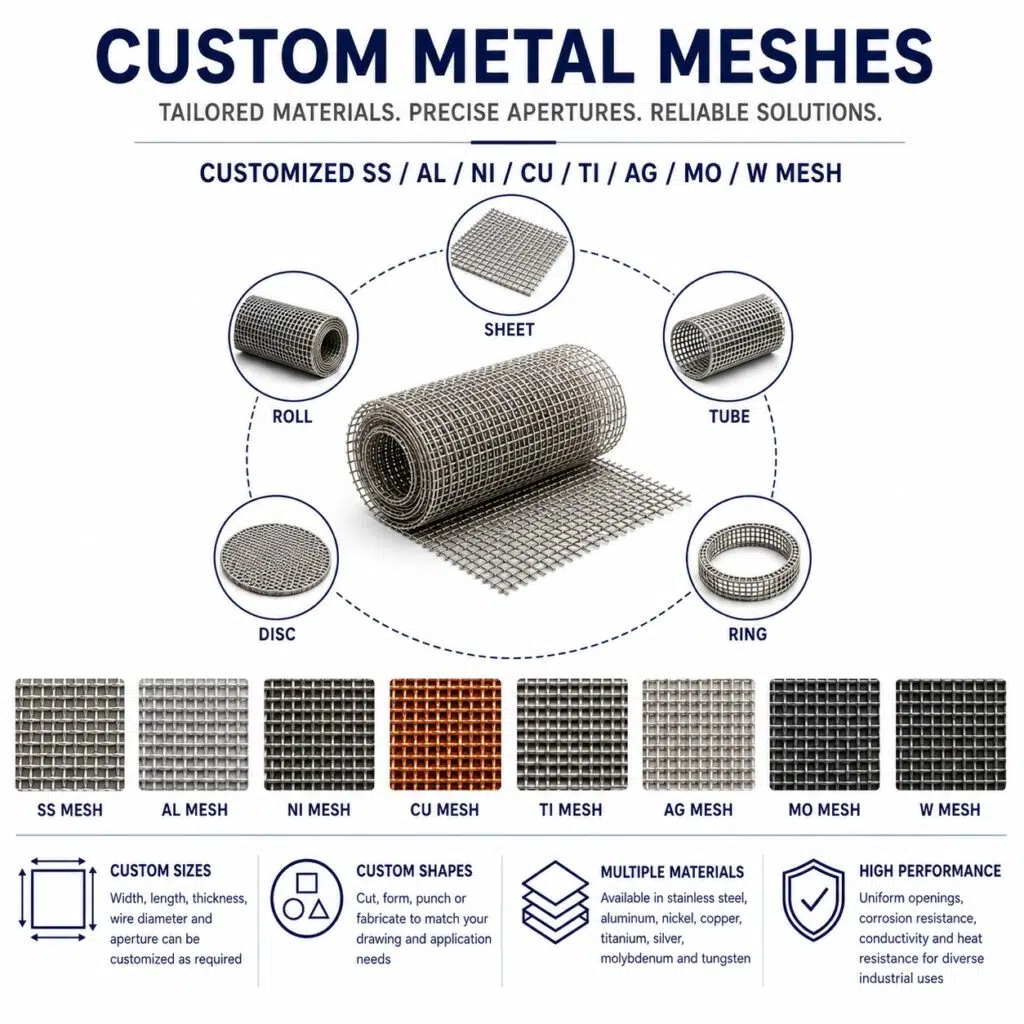
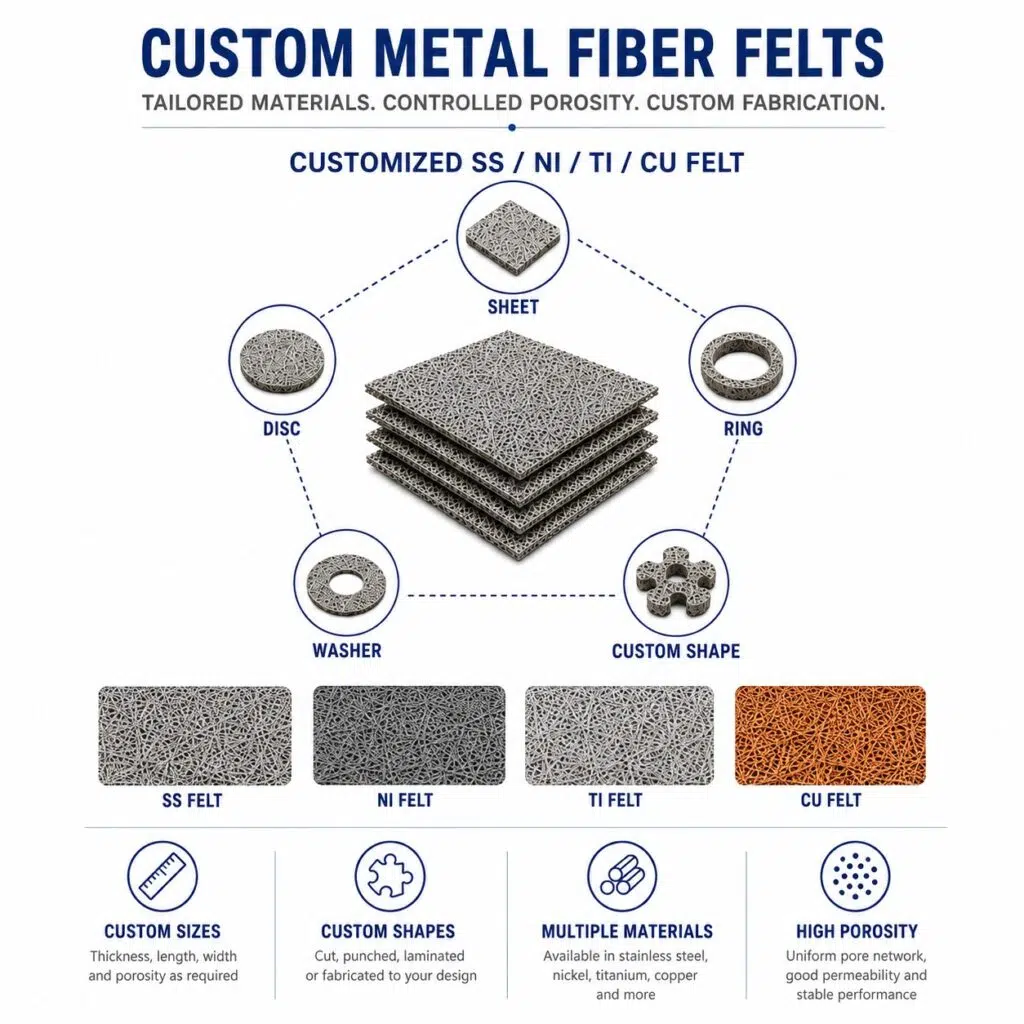
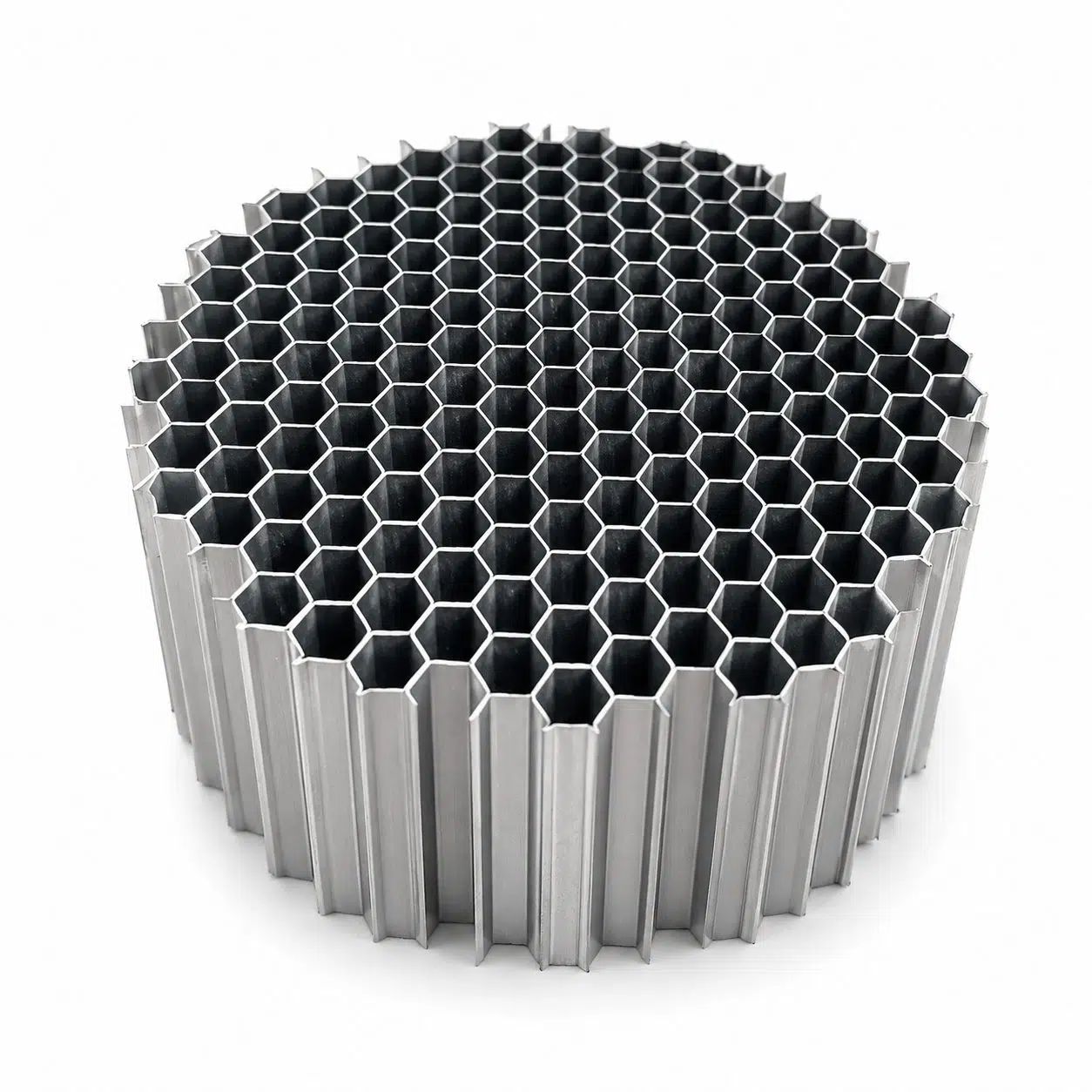
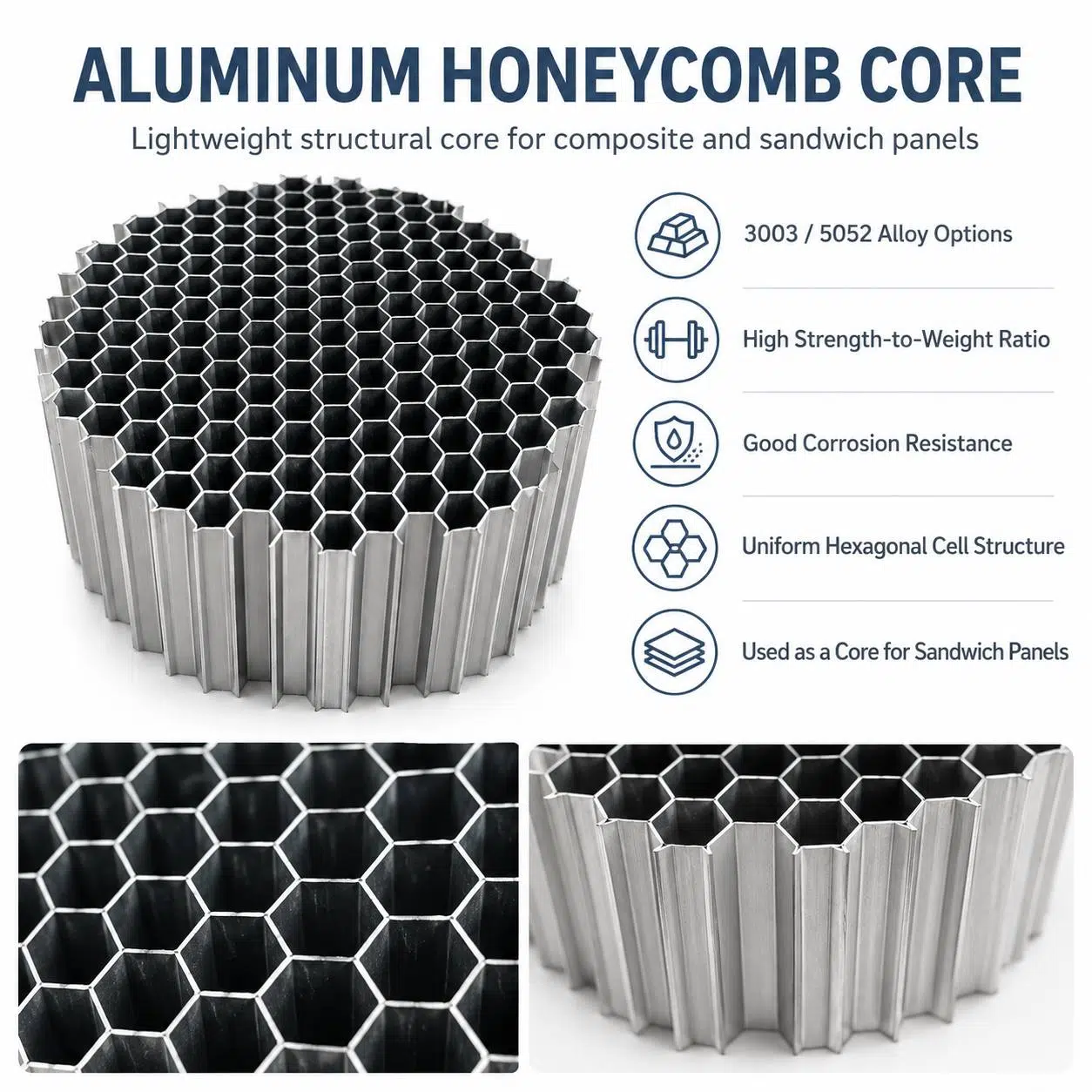
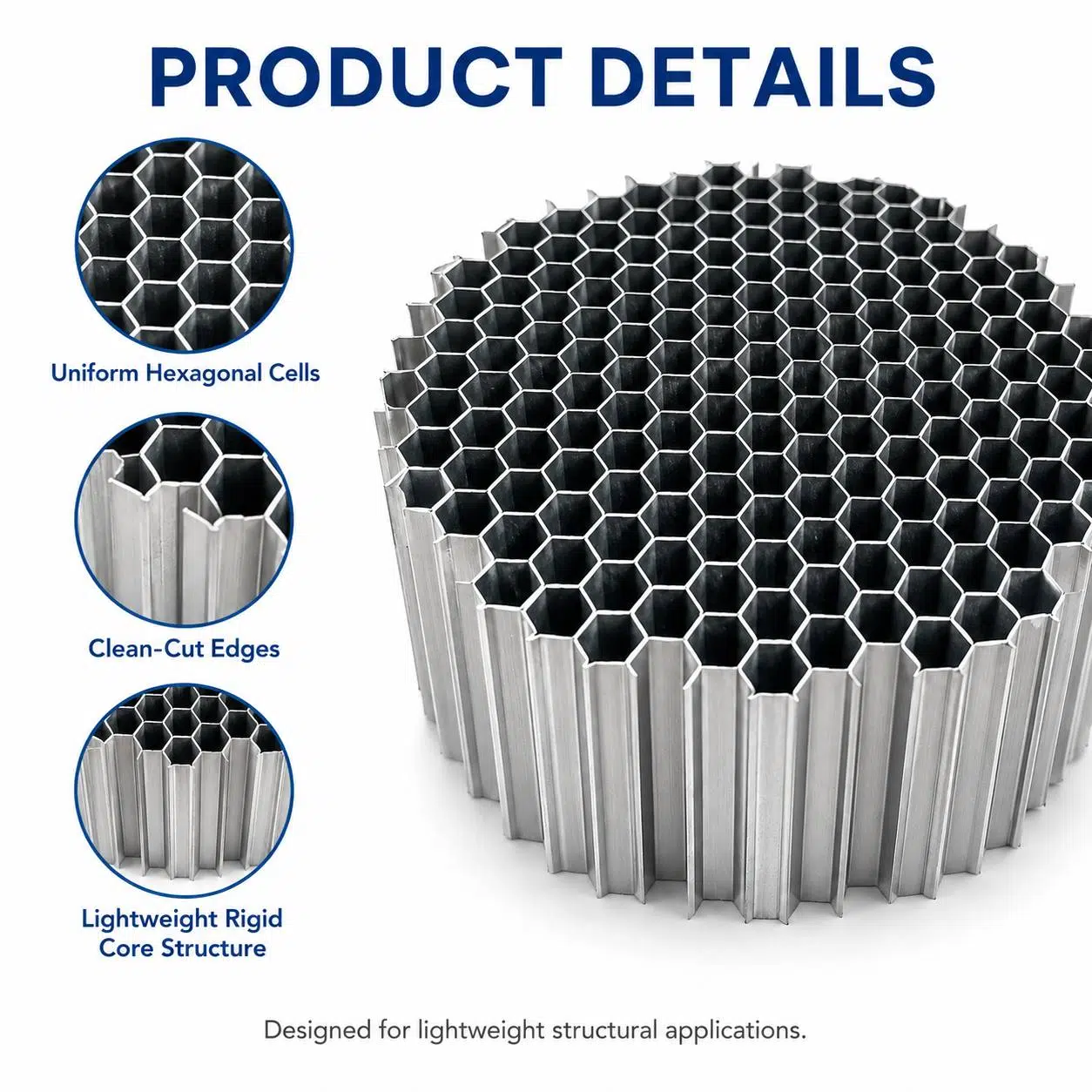
- Our aluminum honeycomb cores and sandwich panels are engineered to deliver exceptional strength‑to‑weight ratio, high stiffness, and excellent flatness for demanding structural and architectural applications. Made from high‑quality aluminum alloys (such as 3003, 5052) formed into regular hexagonal cells, the honeycomb structure provides outstanding compressive and shear strength while remaining ultra‑lightweight. We supply aluminum honeycomb as raw core blocks or as finished sandwich panels bonded with aluminum, composite, stone, or other facing materials, suitable for aerospace interiors, rail and automotive components, building façades, clean rooms, marine structures, and lightweight furniture.
-
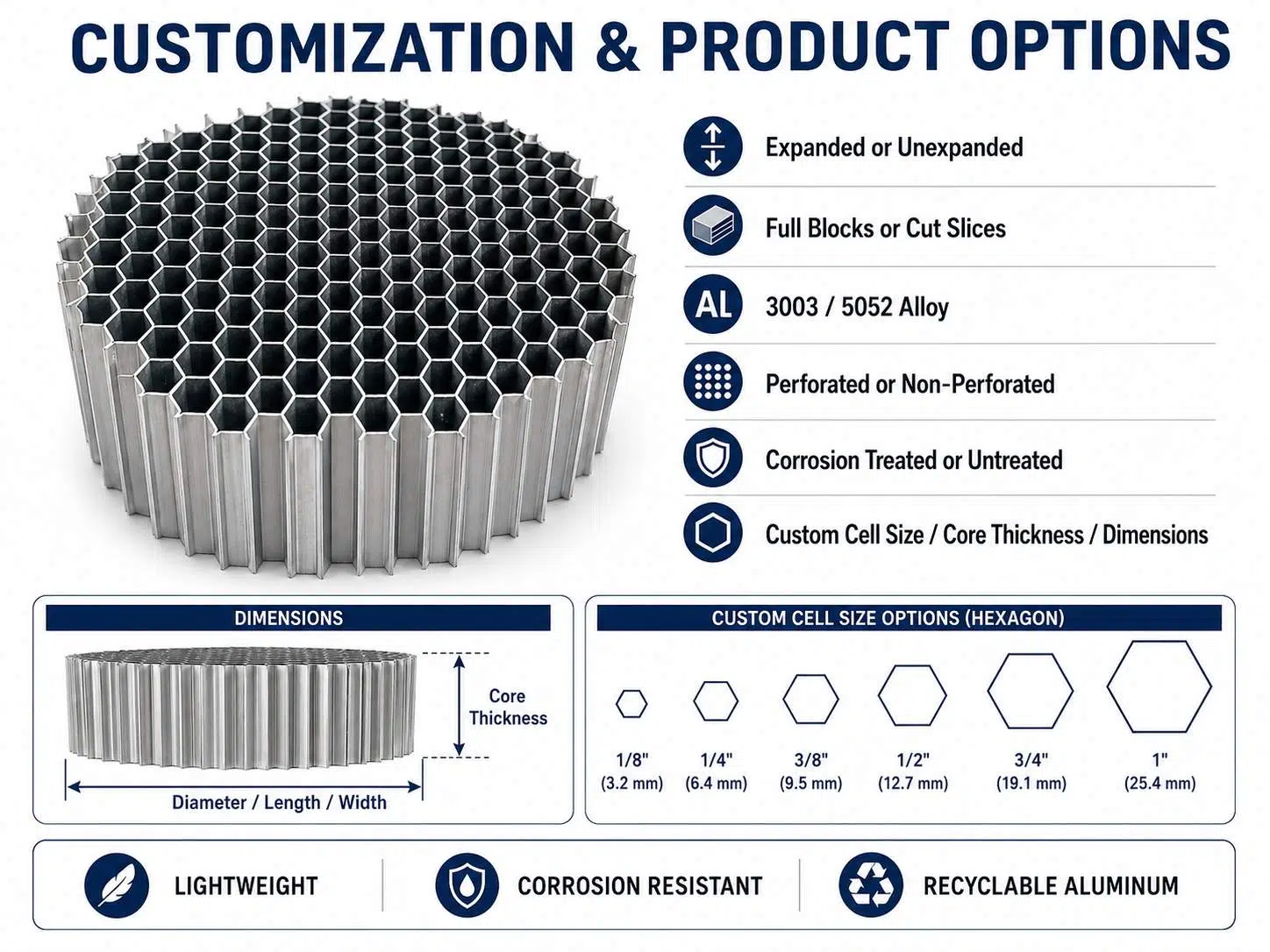
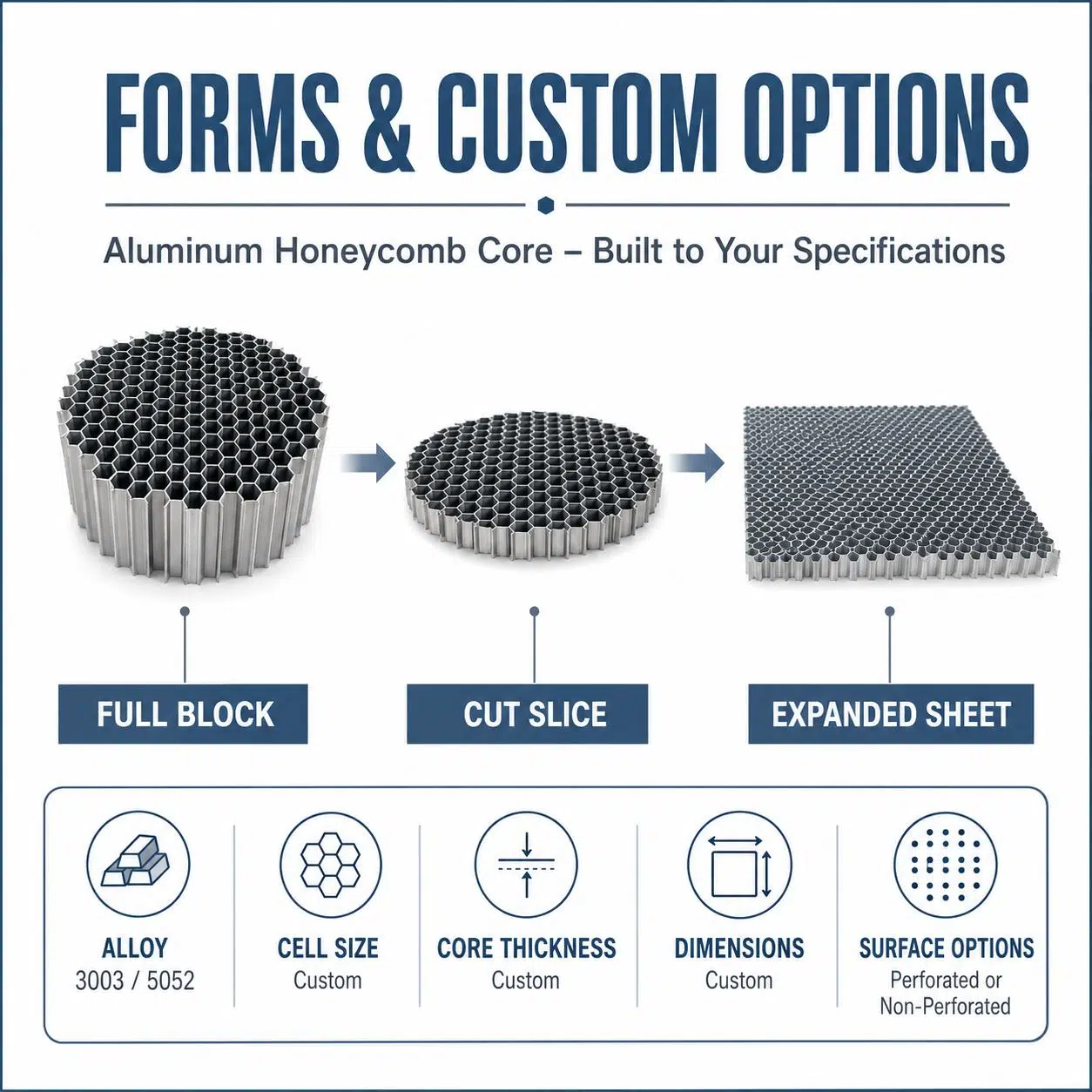
Every aspect of our aluminum honeycomb can be customized to meet your project requirements: cell size (from 3 mm to 19 mm), foil thickness, core height (3–300 mm), panel dimensions, density, and surface finishes (mill finish, anodized, powder‑coated, PVDF, etc.). We offer precision cutting, CNC machining, edge potting, and bonding services to integrate honeycomb cores into your design. Whether you need prototype samples or large‑volume production for construction, transportation, or industrial use, our engineering team will work with you to optimize performance, weight, and cost. Contact us with your drawings or specifications for a detailed quotation and technical support.
Specifications
Type Aluminum honeycomb core / honeycomb sandwich panels / blocks; supplied as core-only or bonded with skins (aluminum, steel, FRP, stone, etc.) Structure Regular hexagonal cells formed from aluminum foil and expanded or corrugated, then bonded to form a lightweight, high‑stiffness honeycomb structure Alloy Grade Commonly 3000 and 5000 series (e.g., 3003, 3004, 5052) for good formability and corrosion resistance; other alloys (e.g., 5056, 6061) available on request Cell Size Typical cell size from about 3 mm to 19 mm (e.g., 1/8″, 3/16″, 1/4″, 3/8″, 1/2″); smaller cells for higher strength and better surface quality, larger cells for lower weight and better airflow Cell Shape Standard hexagonal cells; special shapes or perforated cells available for specific applications (ventilation, acoustic, or bonding requirements) Foil Thickness Aluminum foil thickness typically from about 0.03 mm to 0.2 mm, selected according to required compressive strength, shear strength, and weight Overall Thickness Range Core thickness typically from about 3 mm to 300 mm or more; sandwich panel thickness depending on core height and facing skins (commonly 5–100 mm) Panel Size (L × W) Core blocks and panels available from small cut pieces up to large panels (e.g., 1220 × 2440 mm or larger), depending on production line and transport limits Density Range Customizable density by selecting cell size and foil thickness; typical relative density approx. 3%–10% of solid aluminum, giving very low weight Mechanical Properties High stiffness‑to‑weight and strength‑to‑weight ratio; excellent compressive strength and in‑plane/ out‑of‑plane shear properties for structural use Thermal & Acoustic Good thermal conduction through aluminum; open‑cell structure supports airflow and heat exchange; can be combined with perforated skins for acoustic absorption Surface Finish (Core) As‑expanded or machined core; cell walls in mill‑finish aluminum; edges can be cut, machined, or potted depending on downstream bonding requirements Surface Finish (Panels) With skins: mill finish, anodized, powder‑coated, PVDF‑coated, pre‑painted, brushed, or decorative finishes for architectural and interior applications Bonding & Adhesives Cores typically bonded to skins using structural adhesives (e.g., epoxy, polyurethane, film adhesives) under heat and pressure to form sandwich panels Fire & Temperature Aluminum core is non‑combustible; fire performance dependent on skin material and adhesive; suitable for many building, transportation, and industrial uses within rated temperature limits Corrosion Resistance Good corrosion resistance in standard environments; improved by appropriate alloy choice and surface treatments (e.g., anodizing, conversion coating, painting) Processing & Forming Core can be cut, CNC‑machined, water‑jet cut, shaped, and edge‑potted; panels can be routed, folded, drilled, and fastened according to design Dimensional Tolerances Controlled thickness, flatness, and cell regularity; specific tolerances for core and panels can be supplied according to project or standard requirements Standards & Reference Produced with reference to relevant aluminum and sandwich panel standards (e.g., ASTM, EN, GB for aluminum alloys and honeycomb core/panel properties) Application Range Aerospace interior panels, rail and automotive interiors, building façades and curtain walls, clean rooms, ship and marine structures, doors, partitions, ceilings, furniture, elevators, exhibition stands, and lightweight decorative or structural components Customization Custom cell size, density, alloy, core thickness, panel size, skin material, surface finish, and machining according to drawings, CAD files, or specifications Form of Supply Supplied as raw honeycomb core blocks, cut‑to‑size cores, or finished honeycomb sandwich panels ready for installation or further fabrication Packaging Cores and panels packed with edge protection and moisture‑resistant wrapping; wooden pallets or crates used to ensure flatness and prevent damage during transport and storage
Reference dimensions
| 0.1mm*50mm*50mm | 0.2mm*100mm*100mm | 0.1mm*200mm*200mm |
| 0.2mm*300mm*3000mm | 0.3mm*500mm*500mm | 0.1mm*500mm*1000mm |
| 0.2mm*500mm*2000mm | 0.1mm to 50mm*1000mm*1000mm |
The size can be customized |