







Highly Porous Open Cell Nickel Molybdenum Foam
مقدمة
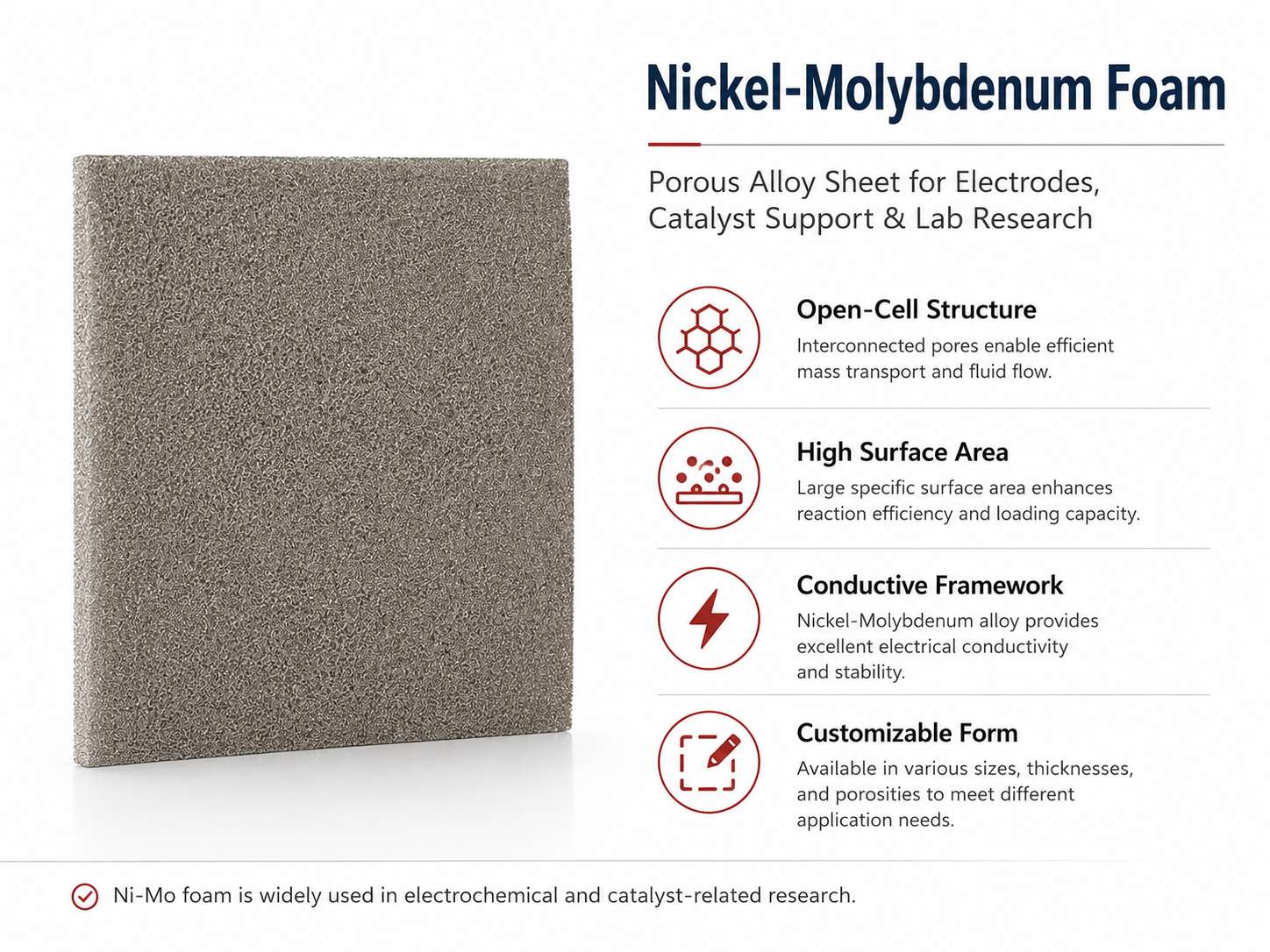
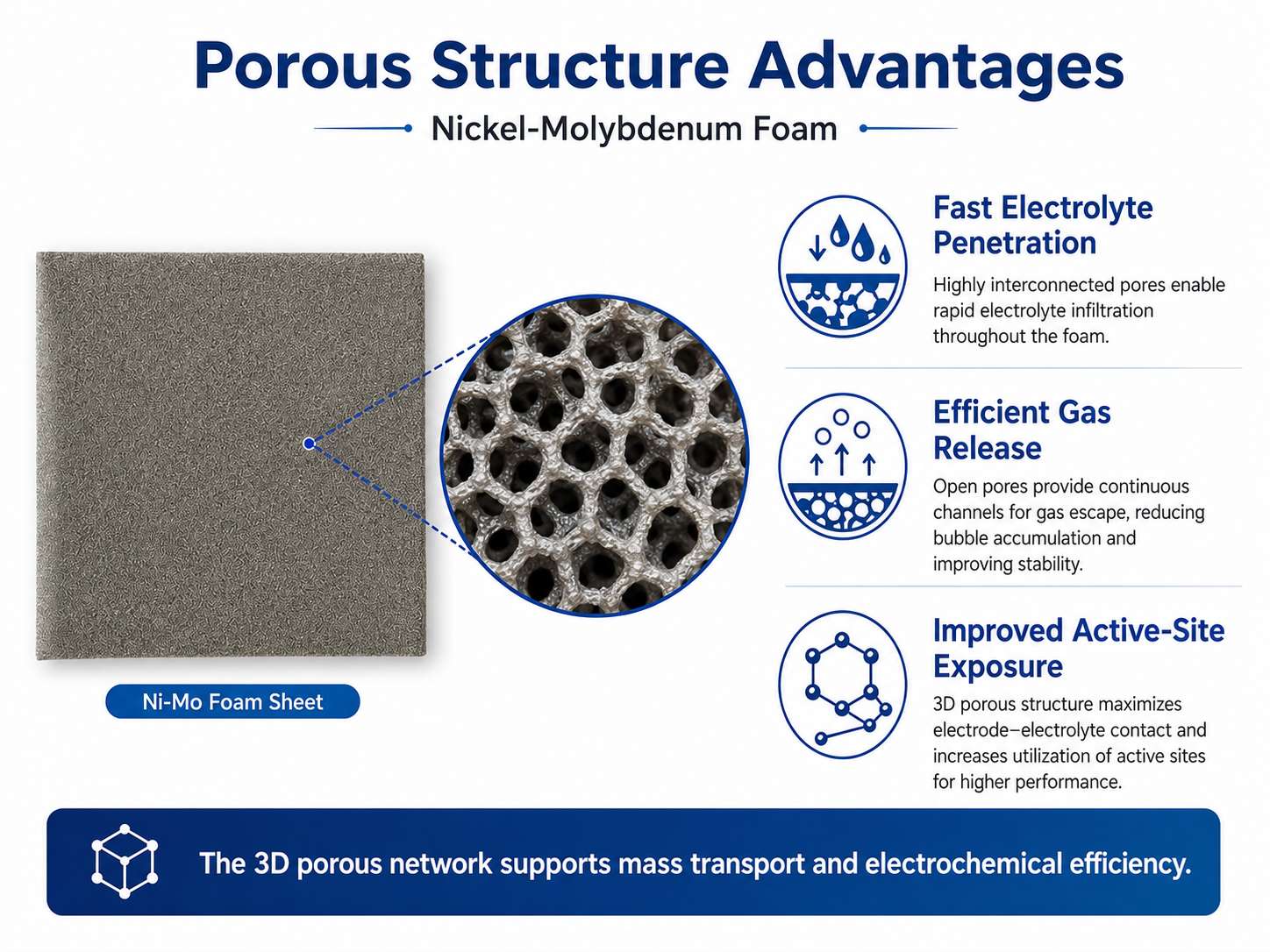
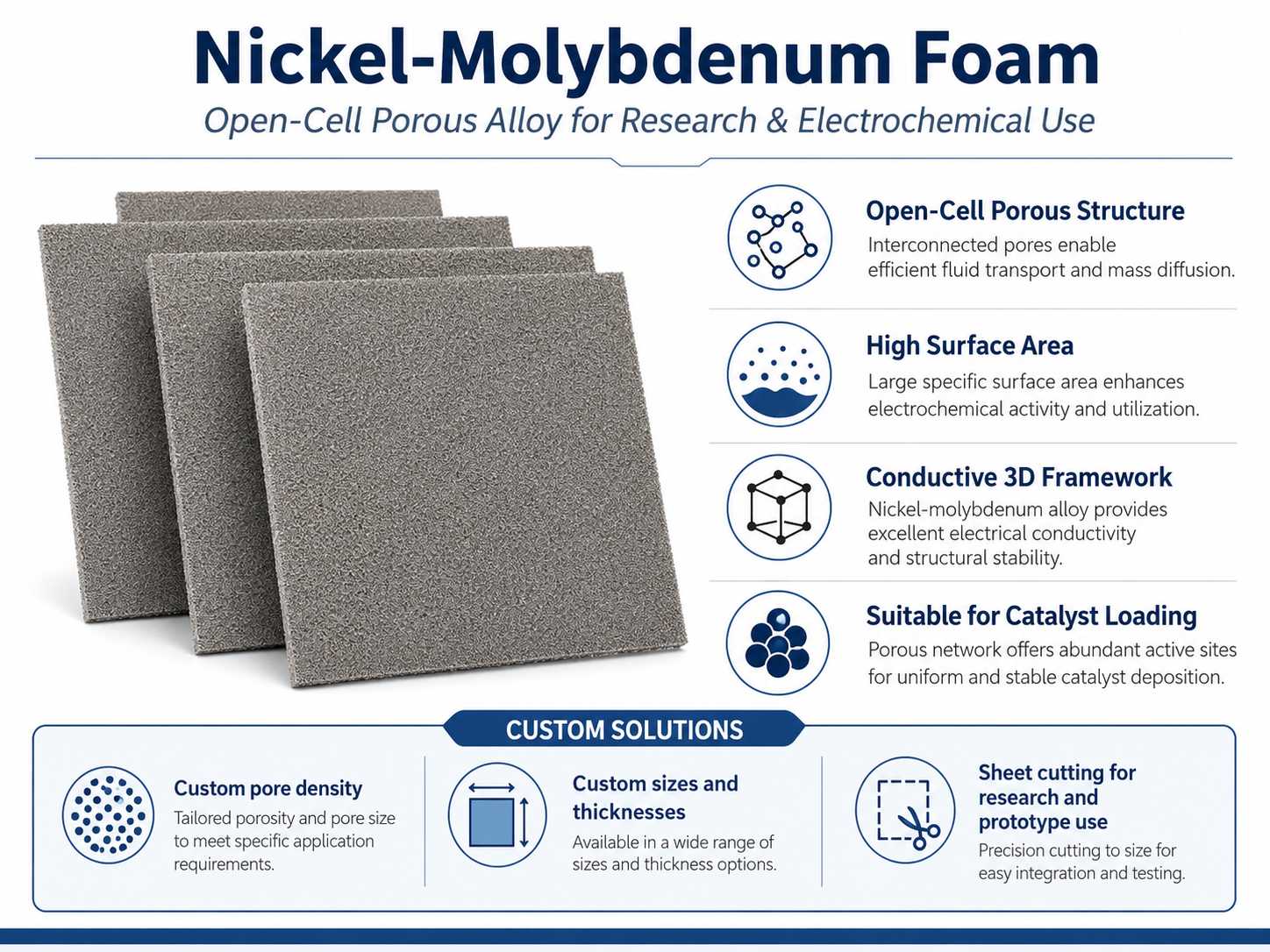
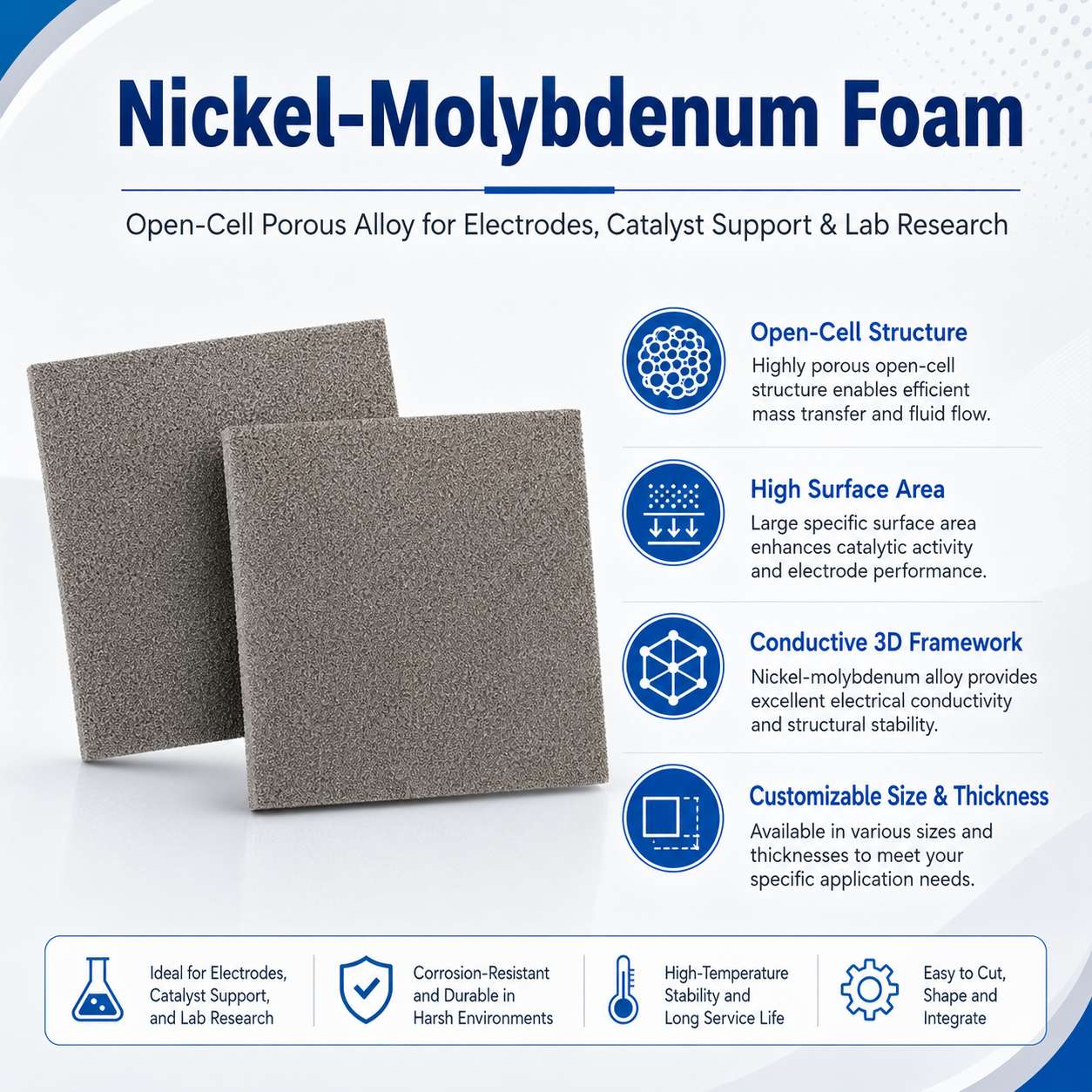
- Nickel molybdenum foam (Ni‑Mo foam) is a 3D open‑cell metal foam with high porosity, large specific surface area and excellent electrical conductivity. The Ni‑Mo alloy skeleton provides abundant active sites and low‑resistance pathways for electron and ion transport, making it an ideal self‑supported electrode for alkaline hydrogen evolution reaction (HER), water electrolysis and various electrochemical tests. The foam can be easily cut, punched and formed into custom sizes for laboratory research, pilot lines and industrial electrolyzers.
- Ni‑Mo foam combines the mechanical strength and corrosion resistance of nickel foam with the enhanced HER activity brought by molybdenum. It is widely used as a binder‑free HER electrode in KOH/NaOH electrolytes, as a substrate for Ni‑Mo and Ni‑Mo‑based catalysts, and as a high‑efficiency current collector in advanced energy‑conversion systems. Using nickel molybdenum foam helps reduce overpotential, lower energy consumption and improve the durability and efficiency of alkaline hydrogen production.
المواصفات
| النوع | Open‑cell Ni‑Mo alloy foam / nickel‑molybdenum porous metal foam (electrocatalytic and conductive alloy) |
| Purity / Alloy Base | Ni‑Mo alloy system (nickel as main component with molybdenum as alloying element; Mo content and possible minor elements are adjusted to optimize hydrogen evolution activity, corrosion resistance and mechanical properties, depending on specific grade) |
| نموذج | Sheet, plate, strip, block, roll or custom‑cut parts; can be supplied as bare Ni‑Mo foam or as Ni foam with Ni‑Mo surface alloy / coating prepared by electroplating or other processes, according to application requirements |
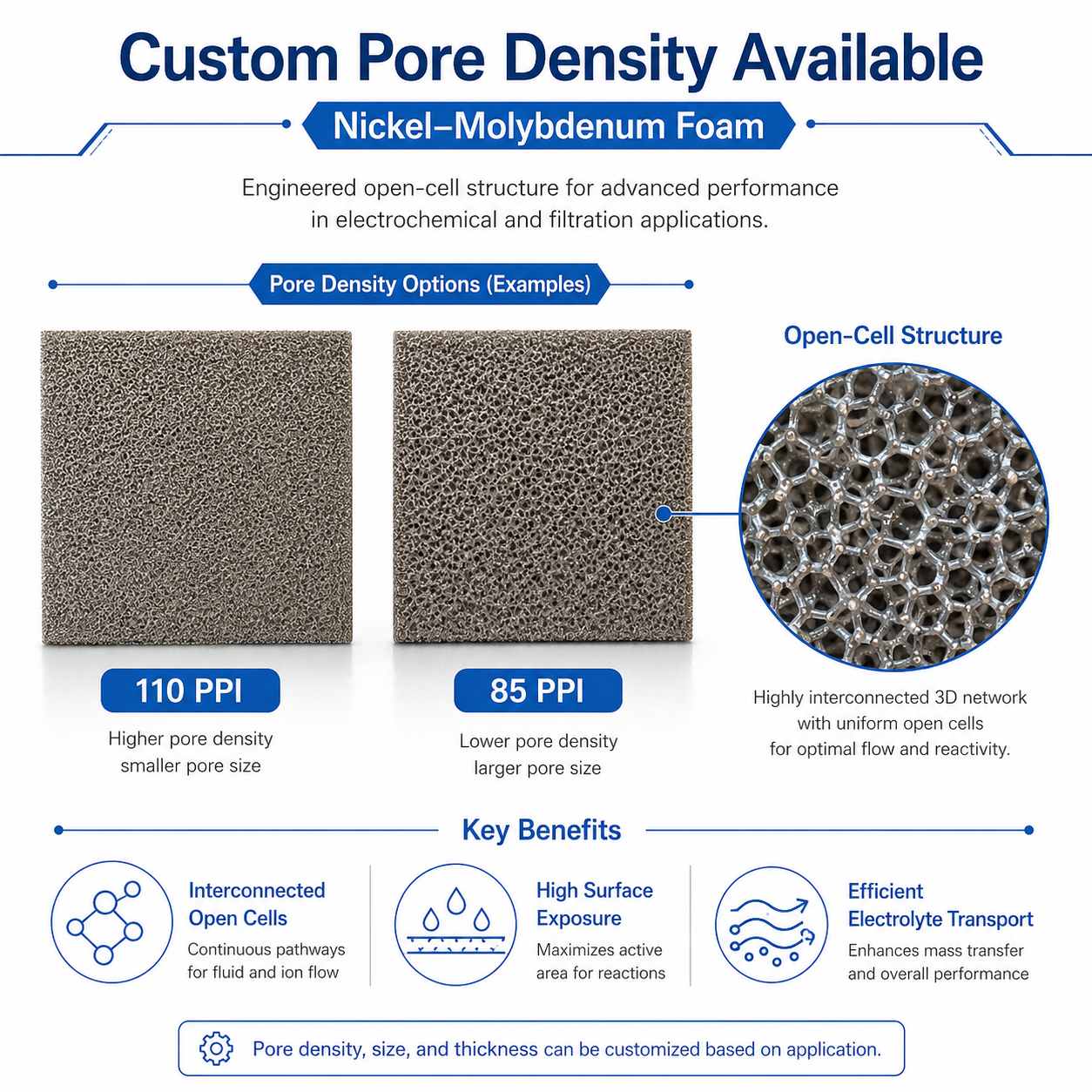
| حجم الخلية (PPI) | Commonly around 10–80 PPI (pores per inch) for electrochemical applications; coarse (10–30 PPI), medium (30–50 PPI) and fine (50–80 PPI) structures are available; other pore sizes and gradients can be customized on request |
| السماكة | Typical foam sheets approx. 0.5–10 mm for electrodes and catalyst supports; thinner foams for low‑resistance electrodes and laboratory tests, thicker sections for structured catalysts and flow‑through reactors; customized thickness available according to design requirements |
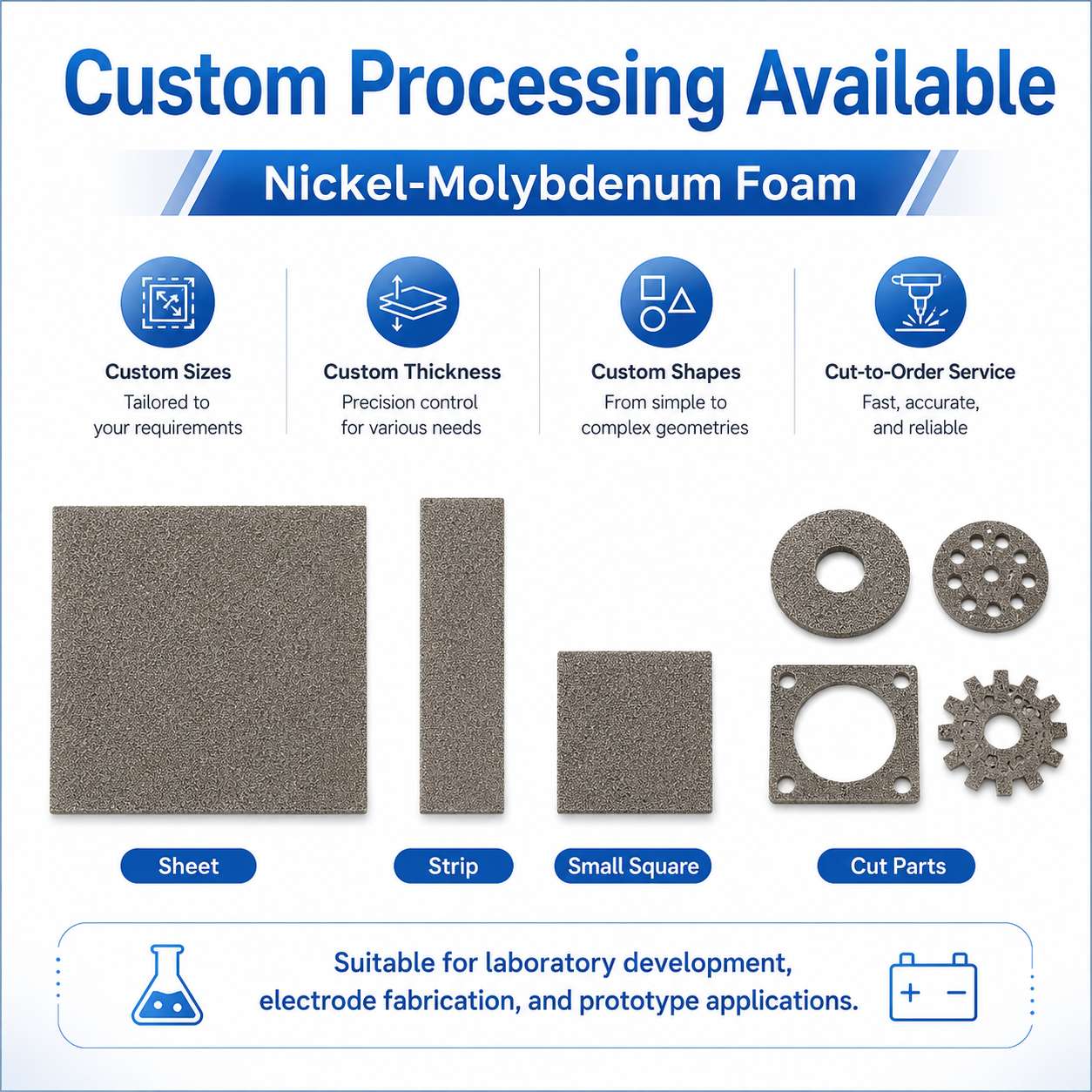
| الحجم والشكل | Standard sheets and blocks (e.g. 50 × 50 mm, 100 × 100 mm, 200 × 300 mm) and strips or discs; can be cut, punched, machined or formed into plates, rings, cylinders and other geometries based on customer drawings or CAD models for electrolyzers and reactors |
| المسامية | Typically about 80% – 98% (adjustable); lower porosity for higher strength and current‑carrying capacity, higher porosity for larger surface area, better mass transport and gas release; porosity tailored to HER electrodes, gas diffusion and catalytic supports |
| معدل الخلايا المفتوحة | Usually ≥ 90% open‑cell interconnected structure, providing continuous channels for electrolyte penetration, gas bubble removal and ion/electron transport; interconnectivity depends on manufacturing process and pore size |
| كثافة الحجم | Approx. 0.15–1.0 g/cm³ (adjustable via porosity and structure), significantly lower than dense Ni‑Mo alloys while maintaining metallic conductivity and mechanical stability for self‑supported electrodes |
| Surface Density | Depending on thickness and porosity, typically about 200–8,000 g/m²; lighter foams for high‑power, low‑mass electrodes, heavier foams for high‑capacity and structural catalyst carriers |
| Specific Surface Area | Large effective surface area due to 3D Ni‑Mo skeleton (commonly several hundred to several thousand m²/m³, depending on pore size and porosity), providing abundant active sites for hydrogen evolution and other electrochemical reactions |
| Thermal Conductivity (Effective) | Effective thermal conductivity lower than dense Ni‑Mo / Ni alloys due to porosity (order of a few to tens of W/m·K, strongly dependent on porosity and orientation), suitable for thermal management in electrolyzers and electrochemical reactors |
| Electrical Conductivity | Good metallic conductivity, reduced compared with dense nickel due to pores but sufficient for use as a self‑supported current collector and HER electrode; low internal resistance supports high current densities in alkaline electrolytes |
| Mechanical Strength (Compressive) | Compressive strength depends on porosity and pore architecture; typically from about 1 MPa up to several MPa for common electrode‑grade foams; higher‑density foams offer higher strength and stiffness, while higher‑porosity foams provide better mass transport |
| Average Tensile Strength (N/20 mm) | Porous Ni‑Mo foam generally shows lower tensile strength than dense alloys; thin strips typically reach tens of N/20 mm depending on porosity and direction. Actual values should be confirmed for each specific product and thickness |
| Temperature Resistance | Suitable for long‑term use in alkaline and neutral electrochemical environments at typical operating temperatures from room temperature up to around 80–90 ℃ in electrolyzers; in inert or mildly oxidizing atmospheres, Ni‑Mo foam can withstand higher temperatures, with limits depending on composition and environment |
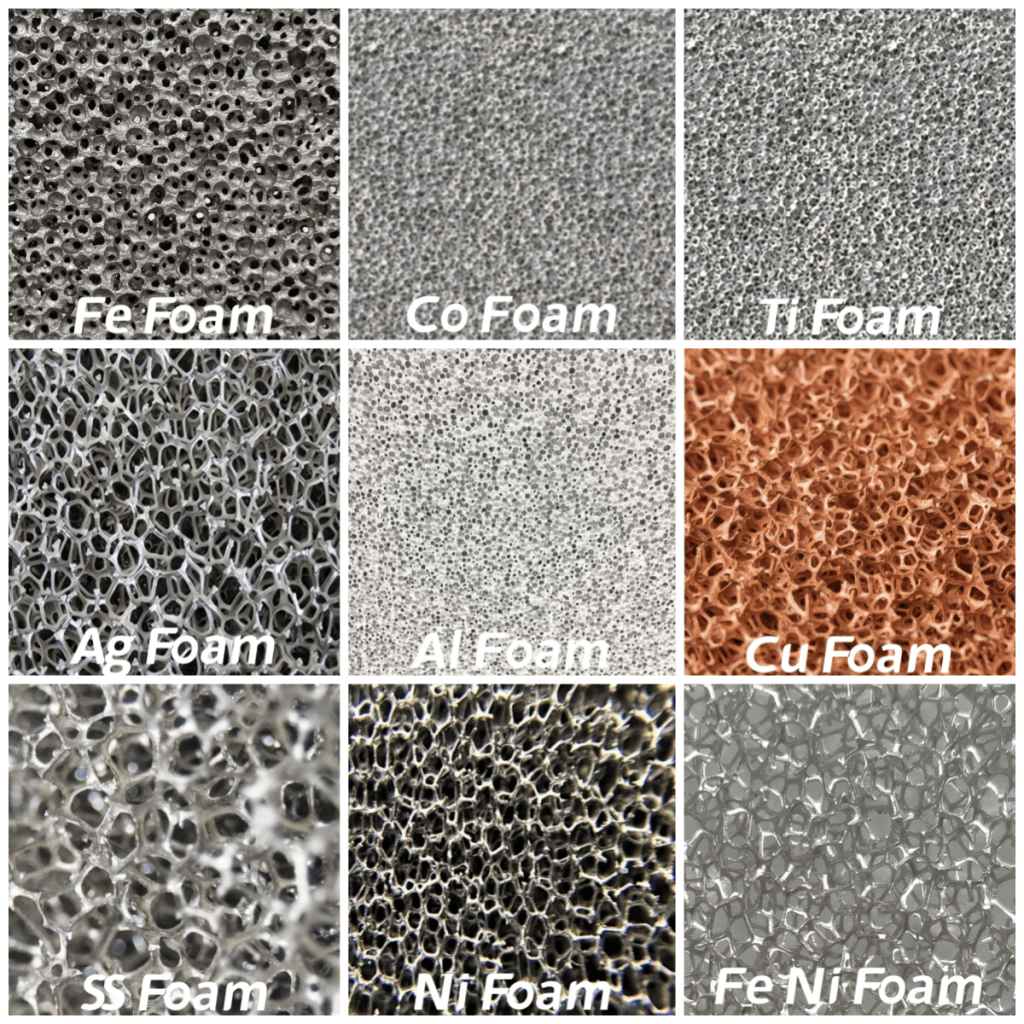
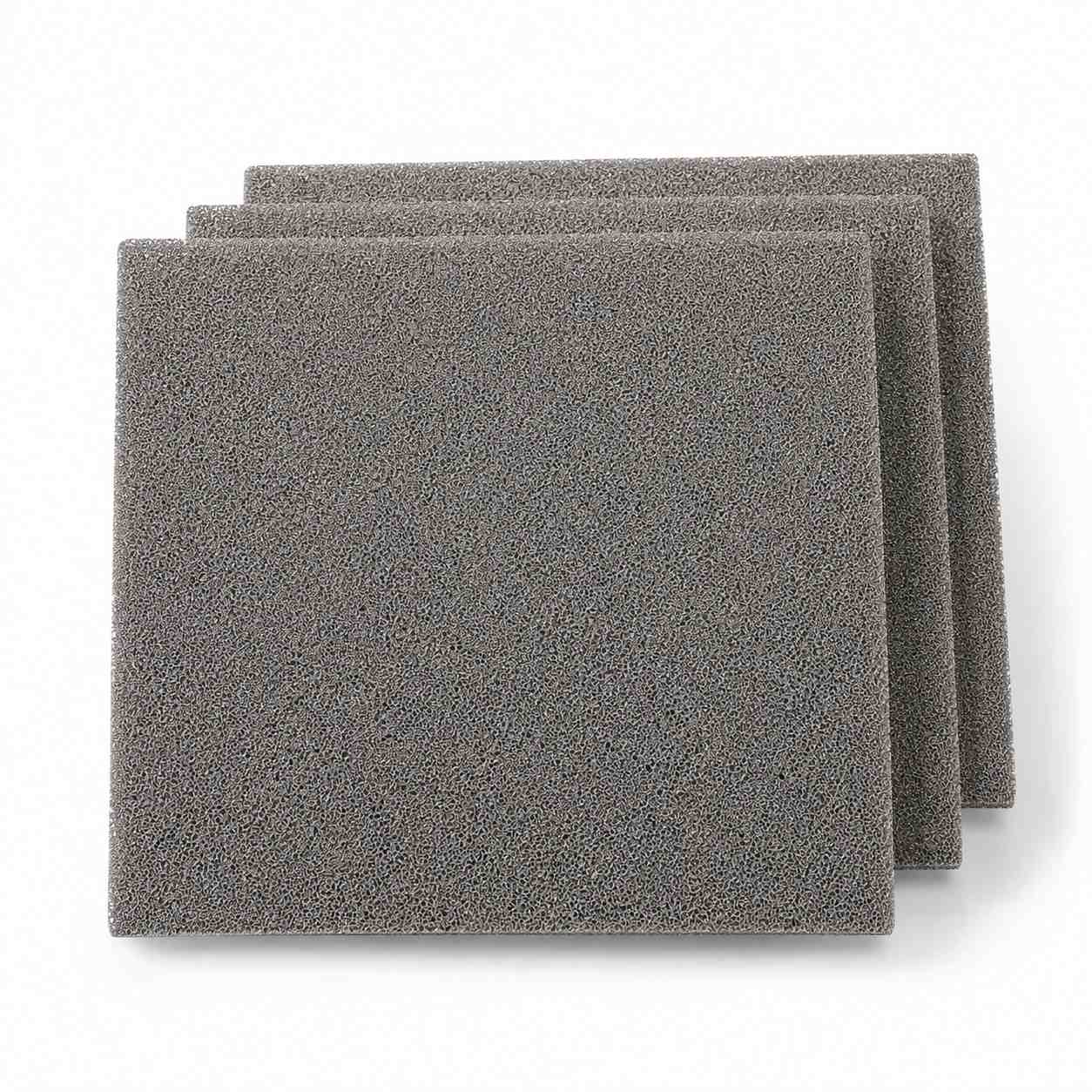
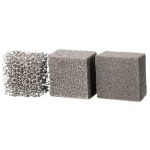
| المظهر | Metallic gray to dark gray Ni‑Mo surface with 3D sponge‑like open‑cell structure; generally uniform pore distribution without obvious defects such as large blind holes, cracks or severe deformation. Surface can be supplied cleaned, activated or pre‑treated for electrochemical use |
| Chemical Composition | Ni‑Mo alloy (nickel‑based with molybdenum) or Ni foam with Ni‑Mo alloy layer, depending on manufacturing route; Ni provides conductivity and mechanical strength, while Mo enhances HER activity and can improve corrosion resistance in alkaline media; exact composition defined by product grade or customer specification |
| Corrosion & Alkali Resistance | Good corrosion resistance in alkaline electrolytes such as KOH and NaOH, suitable for long‑term hydrogen evolution; commonly used in alkaline water electrolysis and electrochemical hydrogen generation. For strong acids, strong oxidizing environments or special media, applicability must be evaluated and additional protection may be necessary |
| المرونة | Thin and medium‑porosity foams can be slightly bent, rolled or compressed; stiffness and brittleness increase with thickness and density. Repeated sharp bending may cause local fracture of the foam skeleton, so handling should follow electrode‑grade guidelines |
| Elongation Rate (%) | Macroscopic elongation is limited compared with dense ductile nickel alloys due to the porous framework, typically a few percent level depending on structure and loading direction; design should rely mainly on compressive and bending performance rather than large tensile strains |
| Processability | Can be cut, punched, laser‑cut, welded or spot‑welded; can be coated or further modified by electrodeposition, chemical deposition, dip‑coating and spraying. Easy to integrate with additional catalytic layers (e.g. Ni‑Mo‑Fe, Ni‑Mo‑Co or precious metals) to enhance activity and durability |
| Surface Treatment / Coating (Optional) | Optional treatments include alkaline cleaning, electrochemical activation, Ni‑Mo alloy plating on Ni foam, additional transition‑metal or precious‑metal coatings, and protective layers to improve catalytic performance, stability and corrosion resistance |
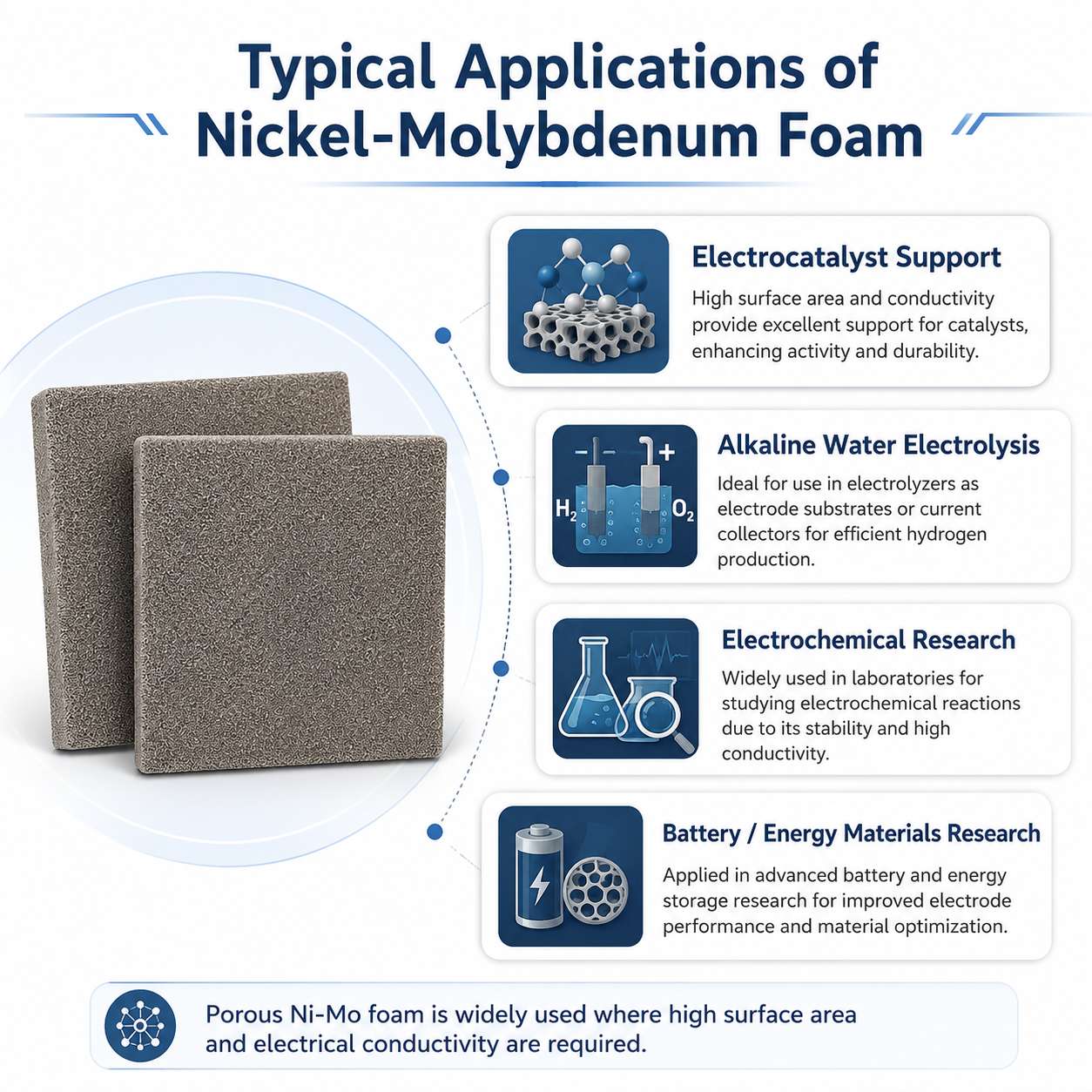
| Typical Electrochemical Applications | Binder‑free hydrogen evolution reaction (HER) electrodes in alkaline water electrolysis; self‑supported Ni‑Mo catalysts and Ni‑Mo‑based catalyst supports; current collectors for alkaline electrolyzers, electrochemical hydrogen generators and flow cells; electrodes for electro‑reduction processes where high surface area and conductivity are required |
| Other Industrial Applications | Porous catalytic supports in gas‑ and liquid‑phase reactors, structured electrodes for fuel cells and redox systems, 3D conductive frameworks for advanced batteries and supercapacitors, gas diffusion and bubble‑release layers in electrochemical and chemical engineering equipment |
| Main Features & Advantages | Combines high porosity and large surface area with good metallic conductivity and Ni‑Mo catalytic activity; 3D interconnected network enables efficient mass transfer and rapid gas release; good stability in alkaline media; suitable as a self‑supported HER electrode and catalyst support, helping to reduce overpotential, improve energy efficiency and extend the service life of hydrogen production and electrochemical systems |
البُعد (السُمك*الطول*العرض)
| 0.08 مم * 300 مم * 200 مم | 0.2 مم * 200 مم * 300 مم | 0.3 مم * 200 مم * 300 مم |
| 0.5 مم * 200 مم * 300 مم | 0.7 مم * 200 مم * 300 مم | 0.9 مم * 200 مم * 300 مم |
| 1.0 مم * 200 مم * 300 مم | 1.3 مم * 200 مم * 300 مم | 1.5 مم * 200 مم * 300 مم |
| 1.7 مم * 200 مم * 300 مم | 2.0 مم * 200 مم * 300 مم | 5 مم * 200 مم * 300 مم |
| 10 مم * 200 مم * 300 مم | 30 مم * 200 مم * 300 مم | يمكن تخصيص الحجم |
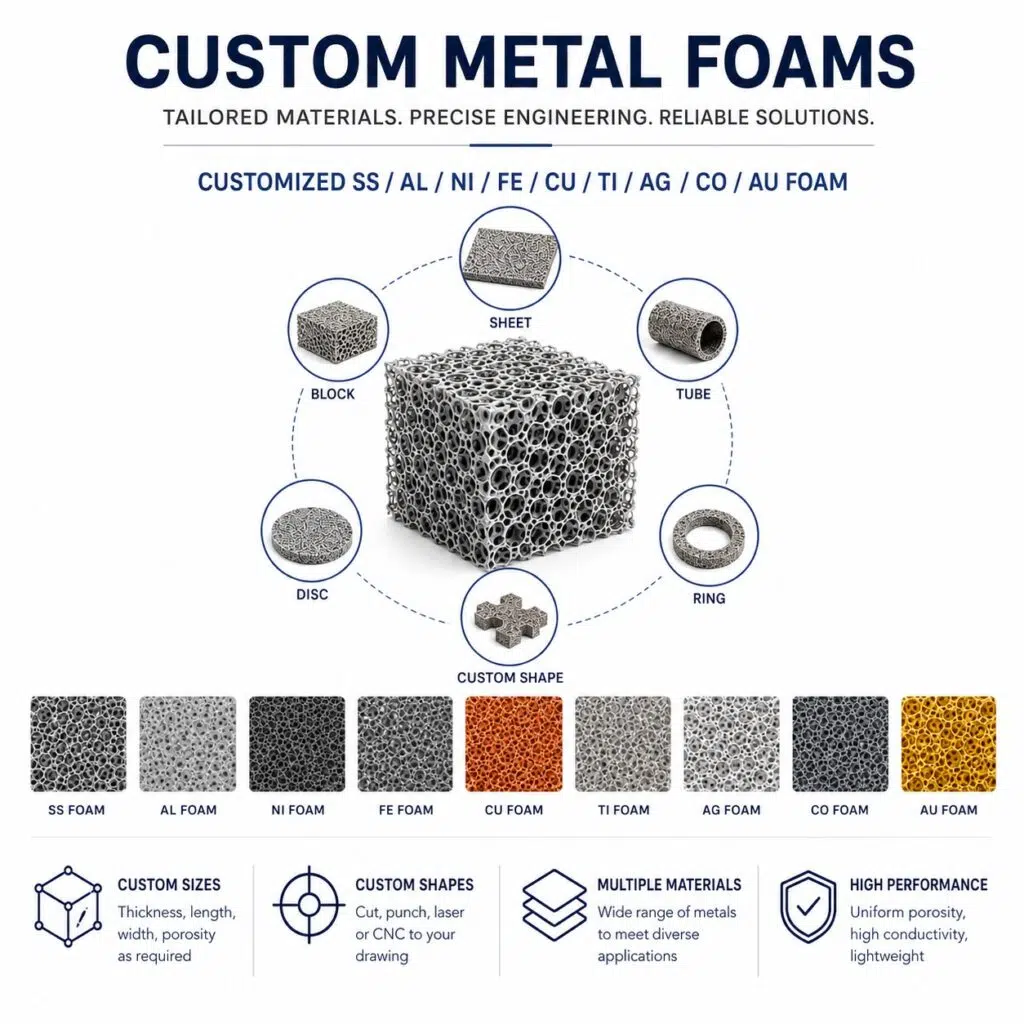
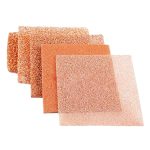
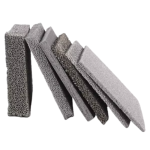
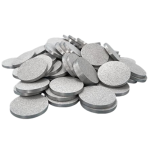
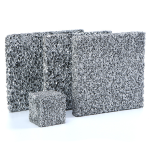
لتخصيص مختلف أنواع الرغاوي المعدنية، يرجى النقر على الصورة أدناه للحصول على التفاصيل:
 |
 |
 |
 |
 |
 |
 |
 |