






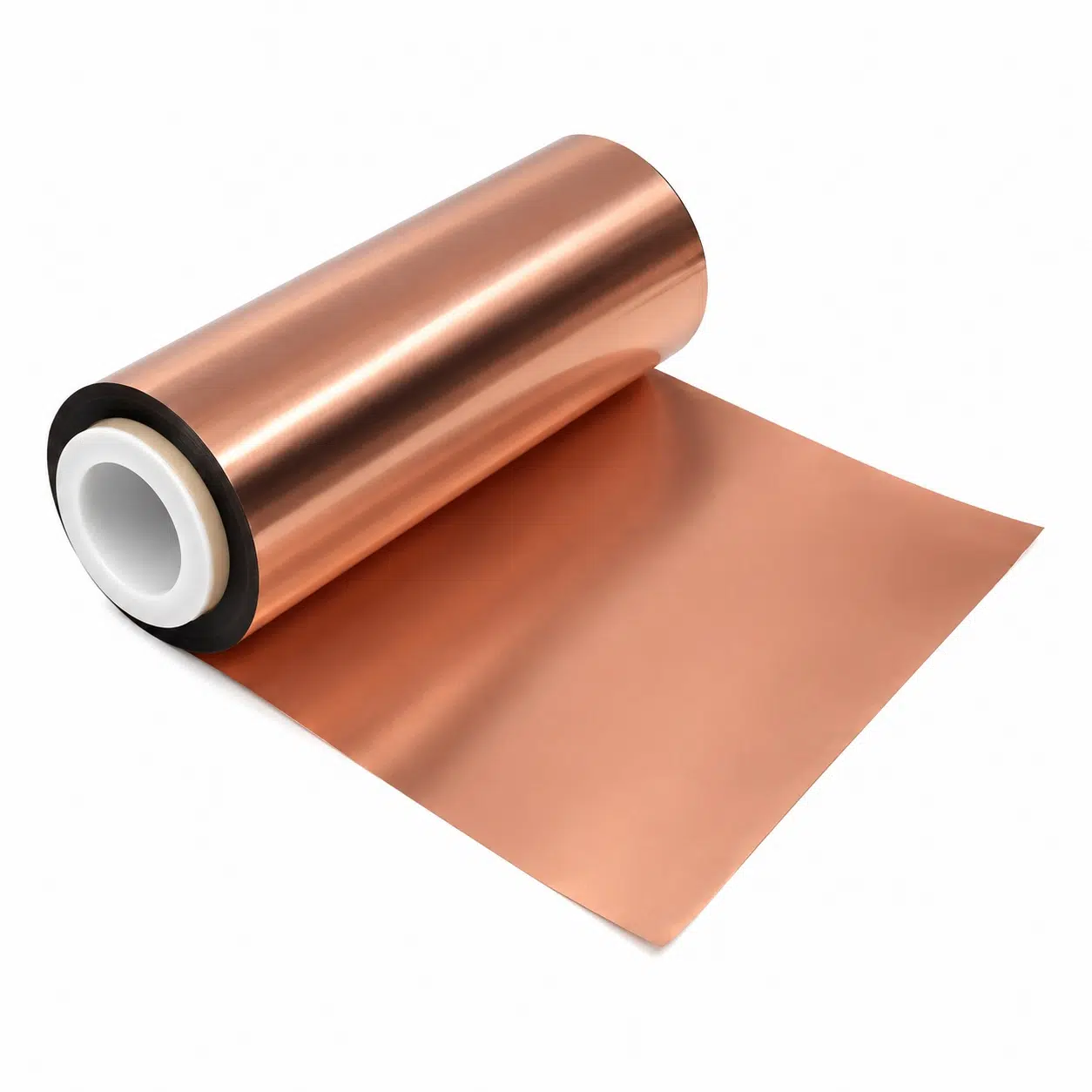
Custom Composite Copper Foil Current Collector
Einführung
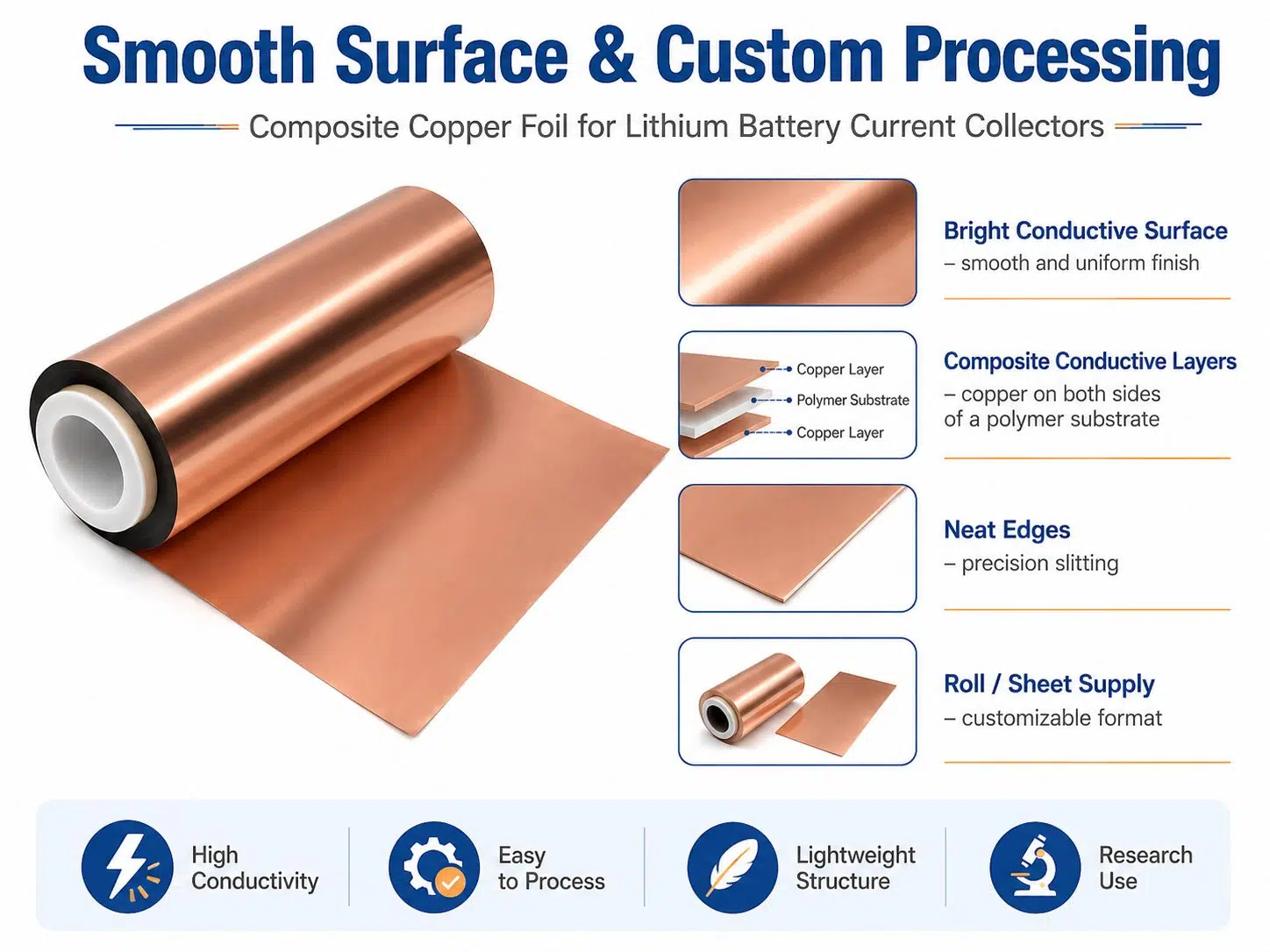
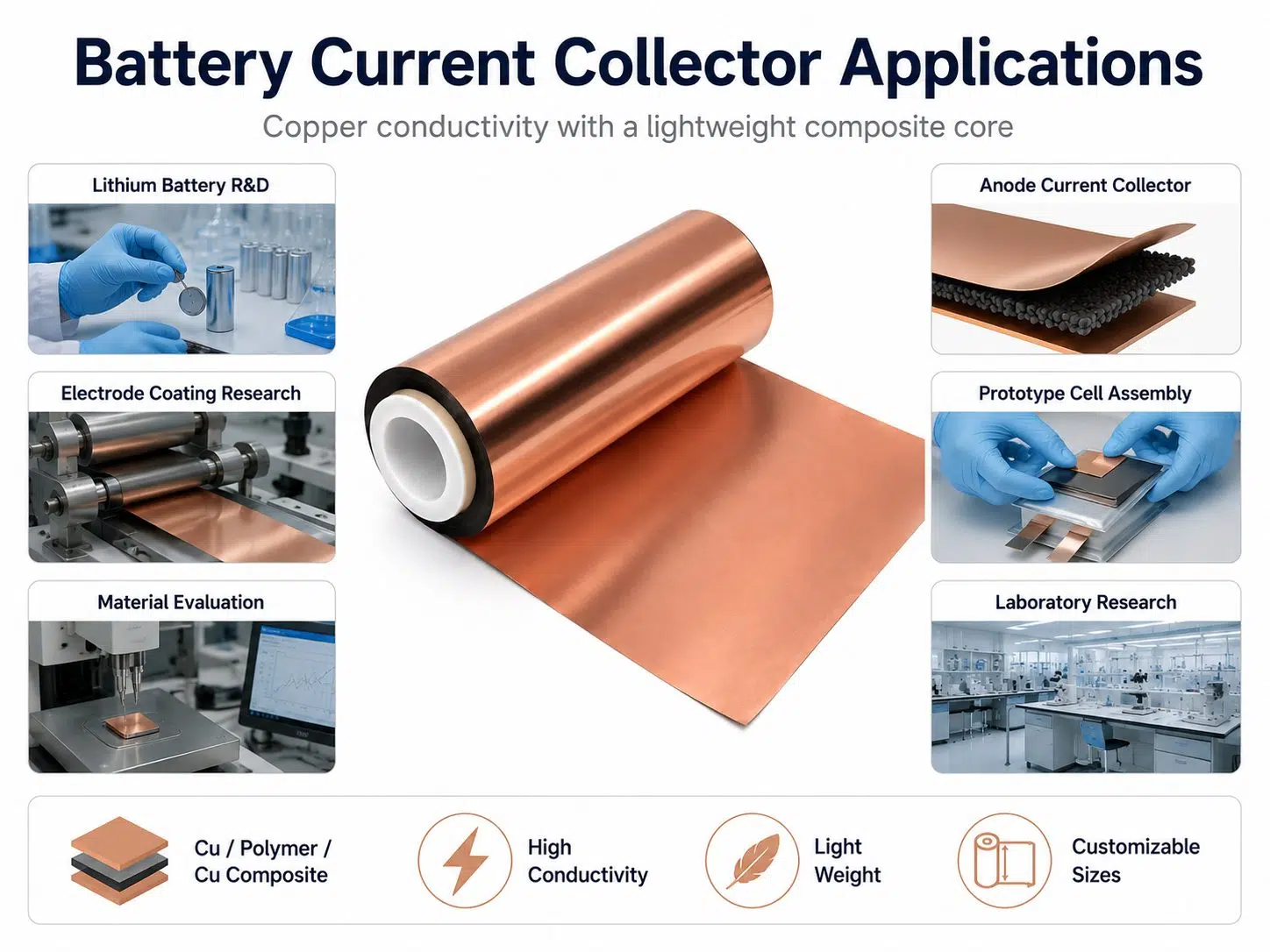
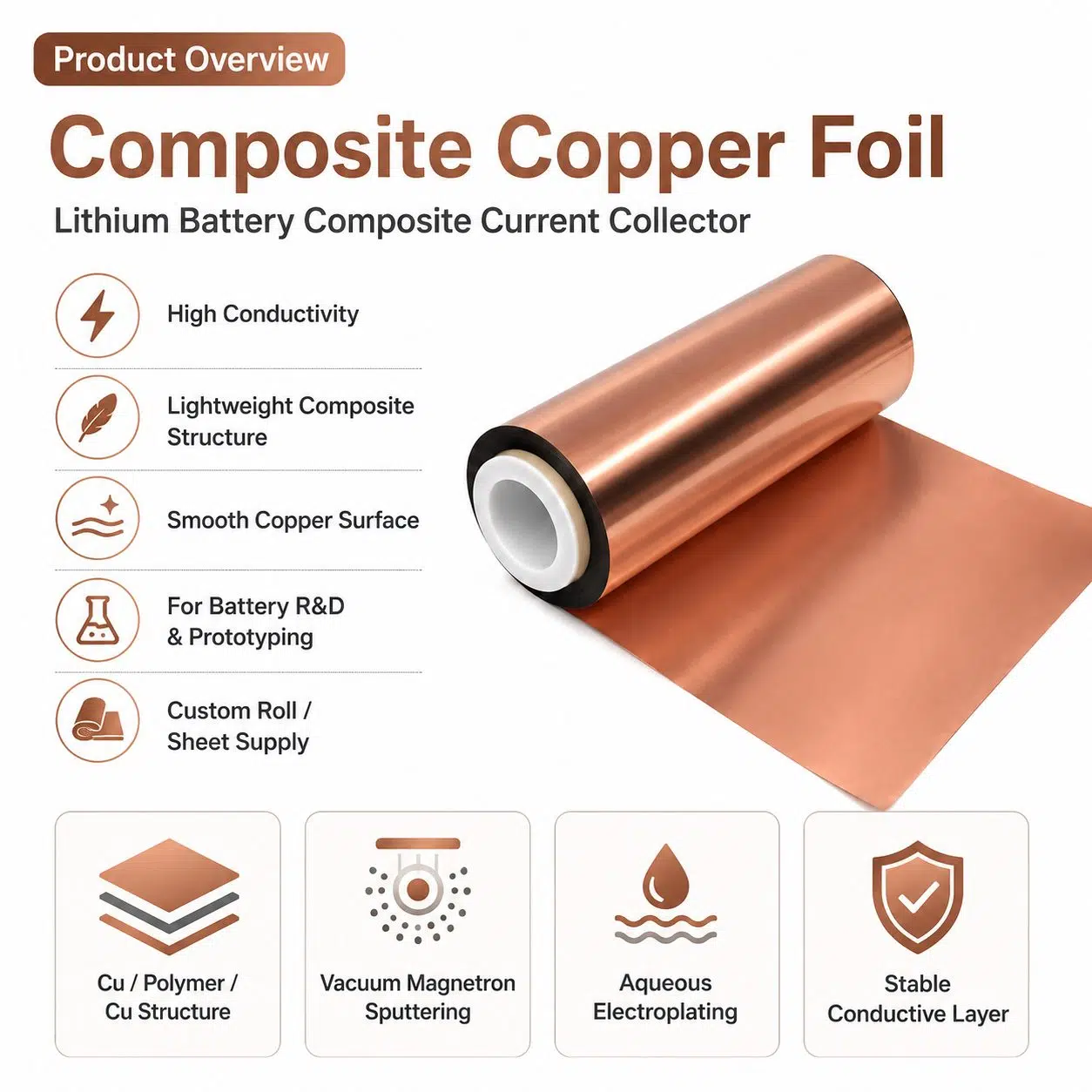
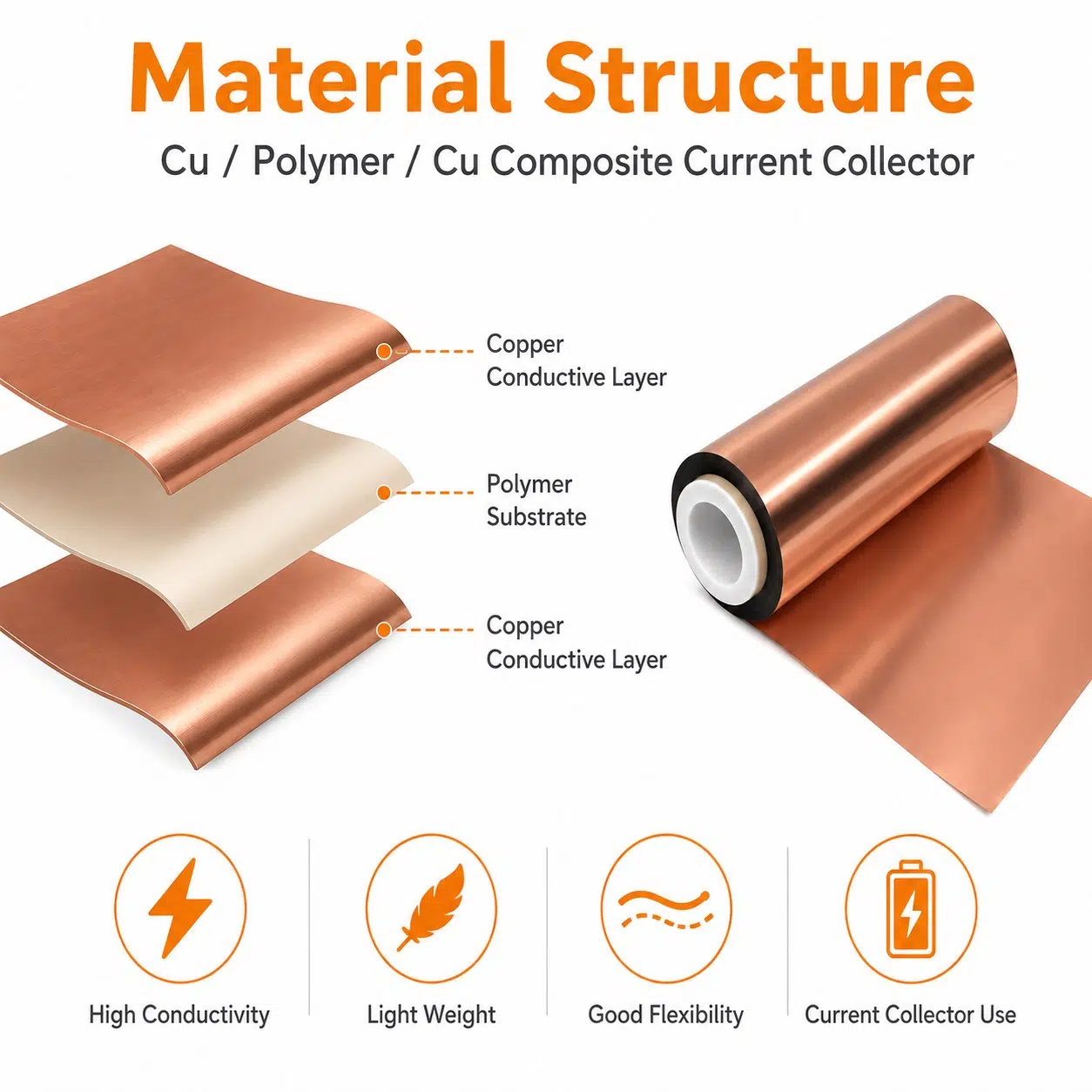
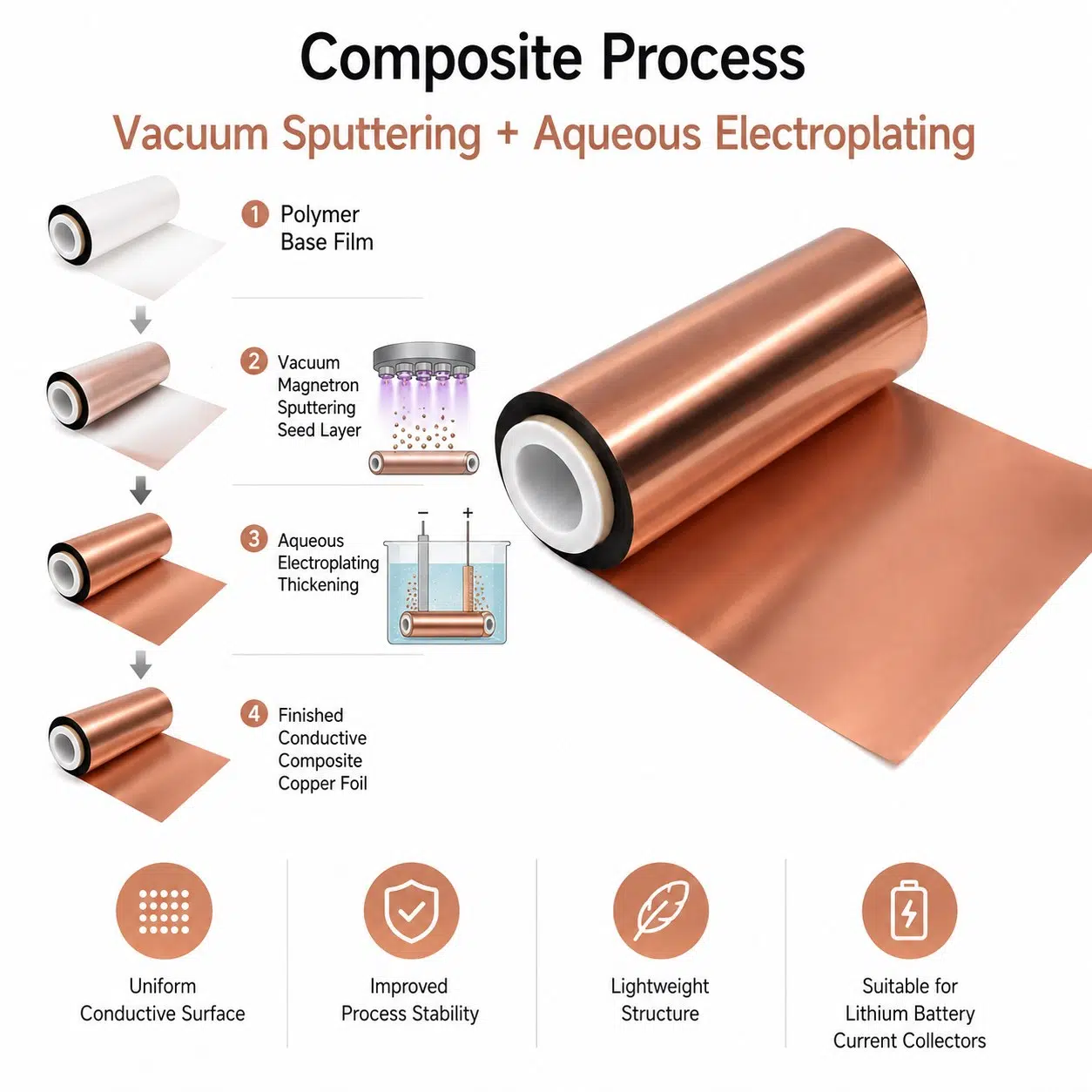
- Our composite copper foil current collector is a functional multilayer foil designed specifically for lithium-ion and next‑generation batteries. Based on high‑purity battery‑grade copper foil, the surface is modified by vacuum magnetron sputtering and/or electroplating to introduce functional layers (such as adhesion‑promoting, corrosion‑resistant, or high‑wettability coatings). These engineered interfaces improve slurry adhesion, suppress side reactions, enhance cycling stability, and can be tailored for anode or cathode use in advanced cell designs.
-
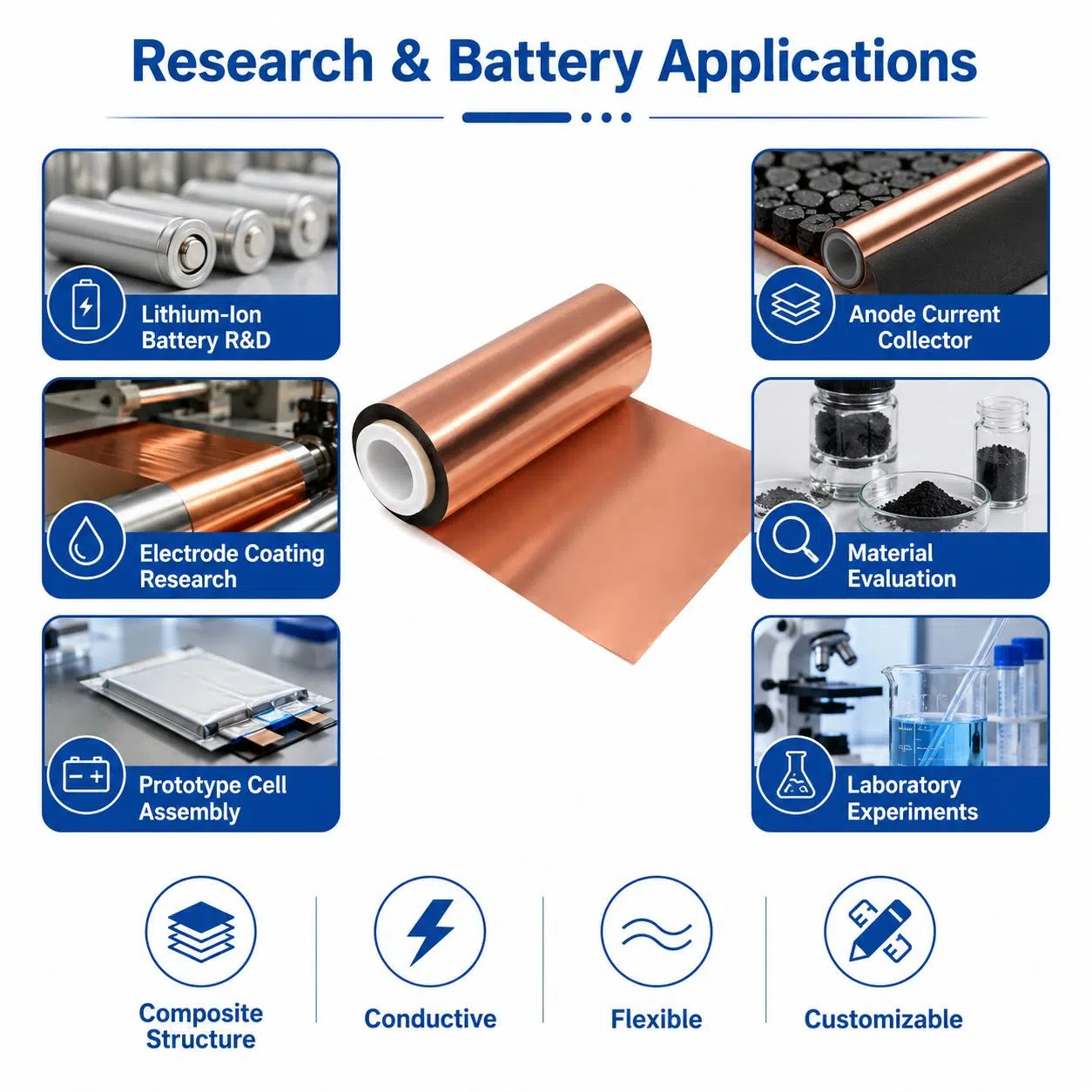
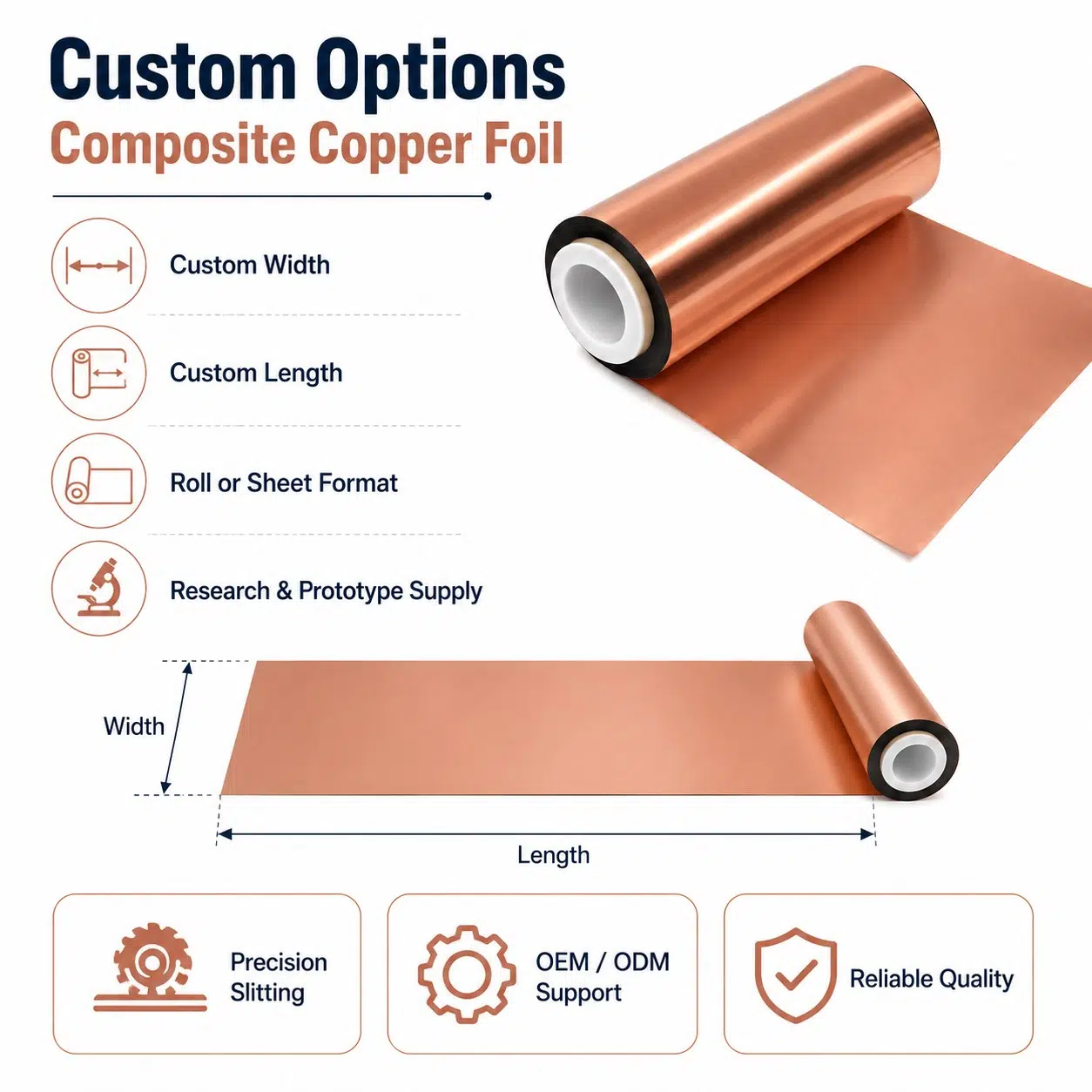
We offer fully customizable composite copper foils, including copper thickness, coating type and thickness (sputtered or electroplated), one‑side or double‑side treatment, surface roughness, and roll width/length. The foils are compatible with conventional electrode coating and calendaring processes and are suitable for laboratory research, pilot lines, and specialty high‑performance cells. Technical data sheets and engineering support are available to help you select or design the right composite current collector for silicon‑carbon anodes, high‑voltage cathodes, solid‑state systems, and other demanding lithium‑battery applications.
Spezifikationen
Typ Composite Copper Foil / Functional Copper Foil / Vacuum‑Sputtered & Electroplated Copper Current Collector for Lithium‑Ion Batteries Structure Multilayer structure based on battery‑grade copper foil with one or more functional coatings applied by vacuum magnetron sputtering and/or electroplating (e.g. adhesion‑promoting, protective, or conductive functional layers) Base Material (Cu Foil) High‑purity lithium‑battery copper foil (typically ≥99.9% Cu), rolled or electrolytic, produced in accordance with common Li‑ion copper foil standards (ASTM/EN/GB equivalents) Copper Thickness Customizable; typical battery foil thickness range approx. 4–12 μm (thinner or thicker foils available on request for special designs) Coating Types Inorganic or metallic functional layers (e.g. adhesion layers, corrosion‑resistant layers, wetting‑improvement layers) deposited by vacuum magnetron sputtering and/or electroplating, tailored to anode or cathode requirements Coating Thickness Customizable nanometer–micrometer range, depending on process and function; sputtered layers generally nm–sub‑μm, electroplated layers typically up to several μm Electrical Properties Copper core provides low resistivity and high in‑plane conductivity; coatings engineered to maintain good current collection while improving interface stability and contact with active material Thermal Properties Good in‑plane thermal conductivity from copper foil, suitable for heat spreading in Li‑ion cells; coatings selected to withstand standard electrode drying/calendaring conditions Surface Characteristics Controlled surface roughness and chemistry on one or both sides to enhance slurry adhesion, reduce interface resistance, suppress gas evolution, and improve cycle stability Formular Supplied mainly in roll (coil) form for coating lines; cut sheets available for laboratory and small‑format cell research Thickness Range (Total) Determined by copper thickness plus coating(s); typical total thickness remains within standard battery foil range to ensure compatibility with existing electrode coating and calendaring equipment Width & Length Roll width typically from 100 mm to 600 mm for lab and pilot use (wider industrial widths on request); roll length according to thickness and order specification Application Range Lithium‑ion and next‑generation cells (pouch, cylindrical, prismatic), especially high‑energy anodes (e.g. Si‑based), high‑voltage cathodes, solid‑state/semisolid concepts, and R&D cells requiring enhanced interface stability Interface Stability Coatings designed to improve adhesion between active layer and current collector, mitigate side reactions at the Cu/electrode interface, and enhance cycling life and rate performance Processing Compatibility Compatible with standard slurry coating (slot‑die, comma bar, doctor blade), drying, calendaring, slitting, stacking, and winding processes used in Li‑ion cell manufacturing and laboratory prototyping Standards & Reference Manufactured with reference to battery copper foil standards and applicable thin‑film / electroplating process controls; specific test data (adhesion, roughness, resistivity, peel strength) available on technical datasheets upon request Quality Control Coating thickness, uniformity, adhesion, and surface properties monitored by inline and offline measurement; samples can be characterized by microscopy, roughness, and electrochemical tests for R&D customers Customization Tailored Cu thickness, coating type and thickness, one‑side or two‑side functionalization, surface roughness, roll width/length, and lab‑sheet formats according to customer drawings, electrode design, and process requirements Packaging Clean‑room‑compatible roll or sheet packaging; moisture‑barrier film and desiccant as required; carton or wooden‑case outer packing for safe storage and international transport
Referenzmaße
| 0.1mm*50mm*5000mm | 0.2mm*100mm*10000mm | 0.1mm*200mm*20000mm |
| 0.2mm*300mm*300000mm | 0.3mm*500mm*50000mm | 0.1mm*500mm*100000mm |
| 0.2mm*500mm*200000mm | 0.1mm to 50mm*100000mm*100000mm | Die Größe kann individuell angepasst werden. |