






Highly Porous Open Cell Copper Tin Foam
Einführung
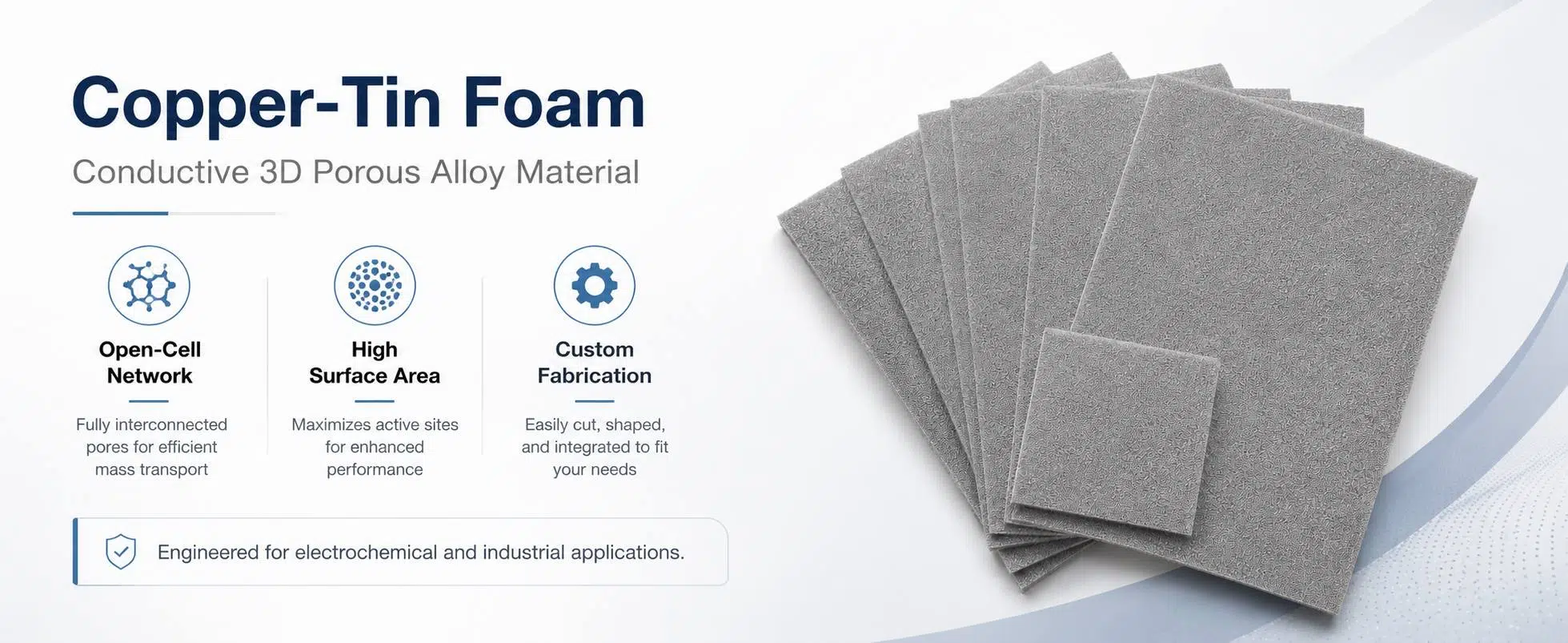
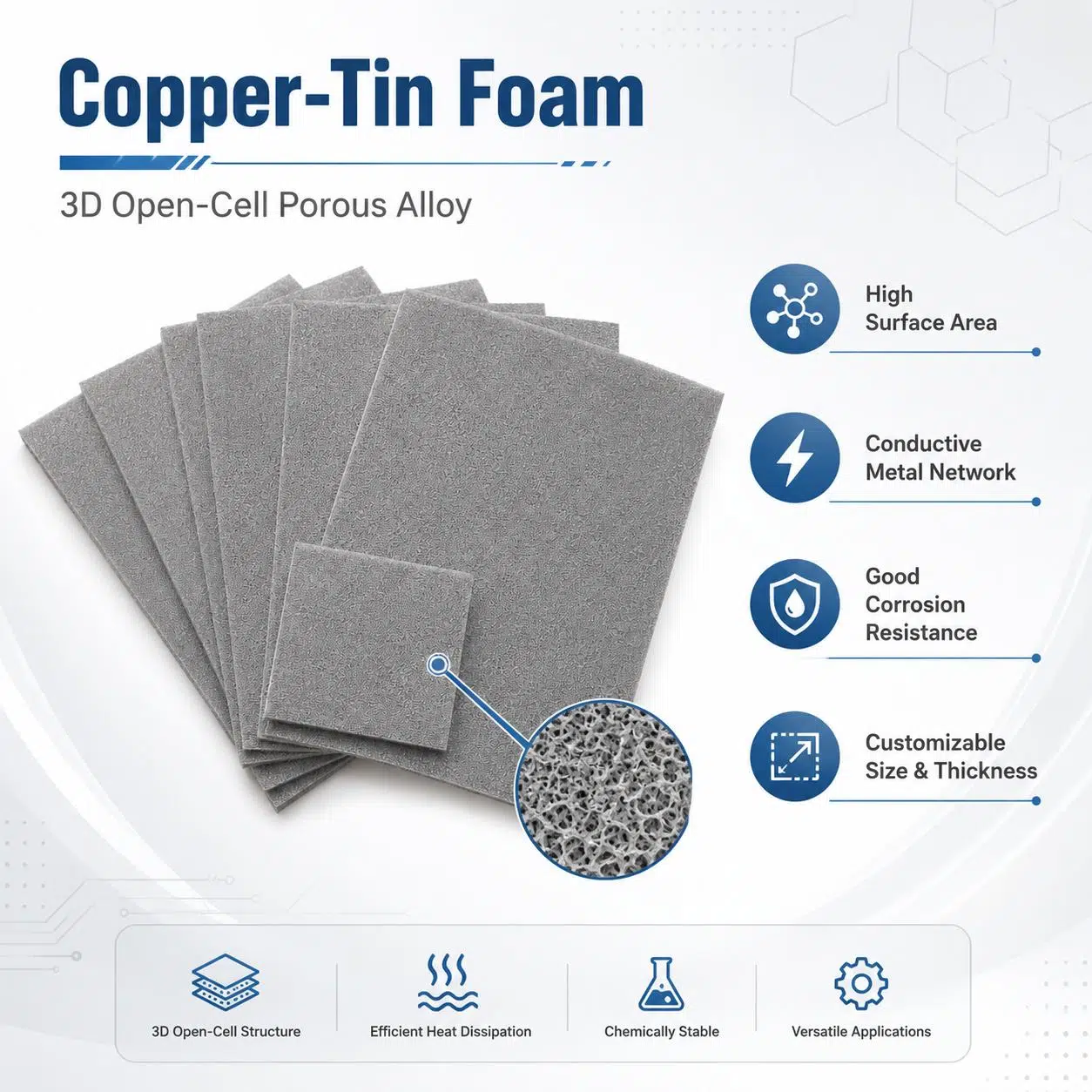
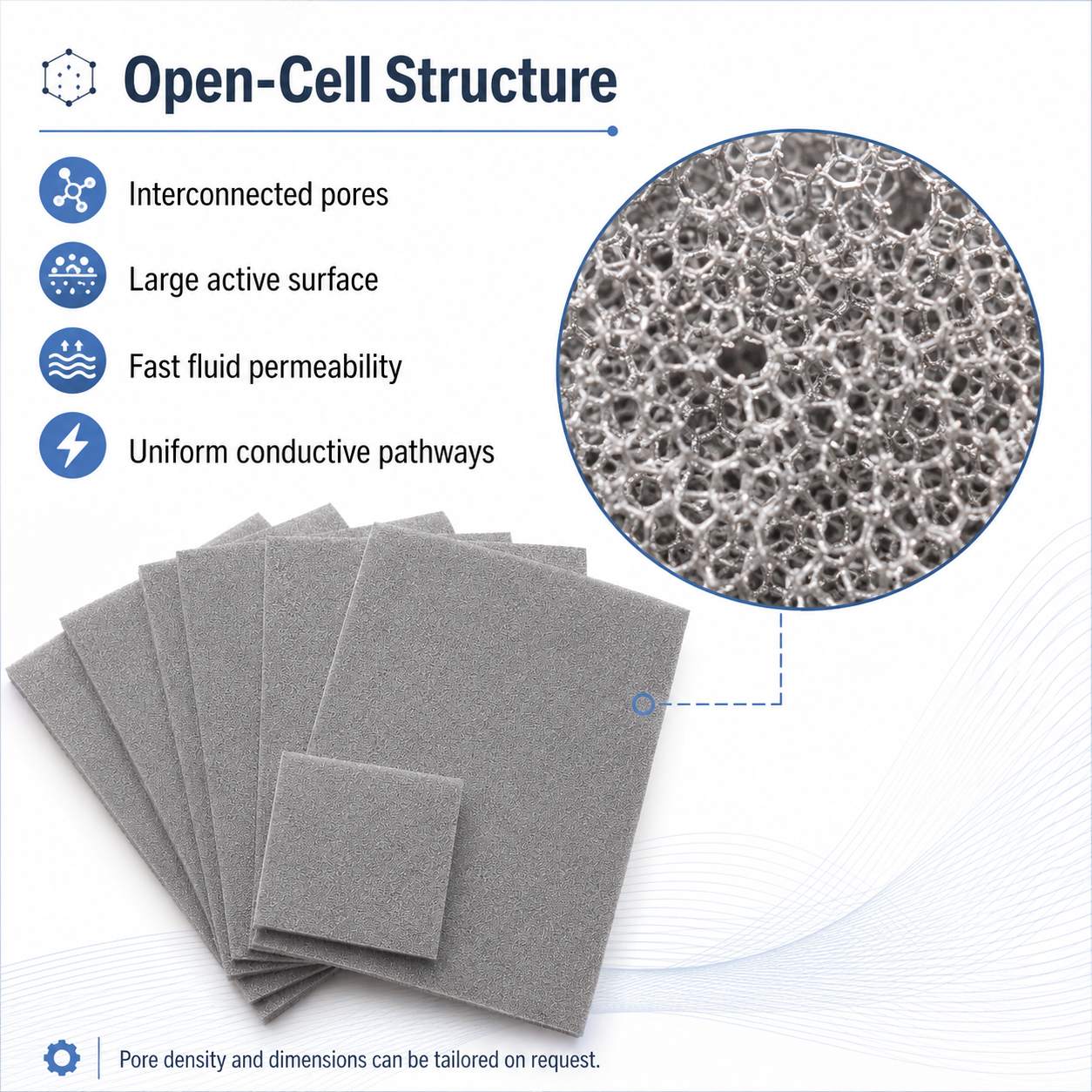
- Copper tin foam (Cu‑Sn foam) is a 3D open‑cell porous metal foam with high surface area, good electrical conductivity and a tunable Cu–Sn alloy composition. Its interconnected sponge‑like structure provides abundant active sites and low‑resistance pathways for electron and ion transport, making it an attractive self‑supported substrate for electrocatalysis, CO₂ reduction, electroplating, and advanced battery and supercapacitor electrodes. The foam can be easily cut, punched and shaped to fit different cell designs in laboratories and pilot lines.
- Cu‑Sn foam combines the conductivity and mechanical strength of copper with the alloying properties of tin, which can improve electrochemical behavior for applications such as Li‑ion/S batteries, Na‑ion batteries, electro‑reduction and catalyst supports. It can be supplied in different thicknesses and pore sizes (PPI), and can be further coated with active materials to increase capacity and catalytic activity. Copper tin foam is suitable for researchers and manufacturers looking for a cost‑effective, high‑surface‑area porous current collector for energy storage and conversion systems.
Spezifikationen
| Typ | Open‑cell Cu‑Sn alloy foam / copper‑tin porous metal foam |
| Purity / Alloy Base | Cu‑Sn alloy system (copper as main component with tin as alloying element; Cu/Sn ratio adjusted to tune mechanical properties, corrosion behavior and electrochemical performance, similar to copper‑tin bronzes) |
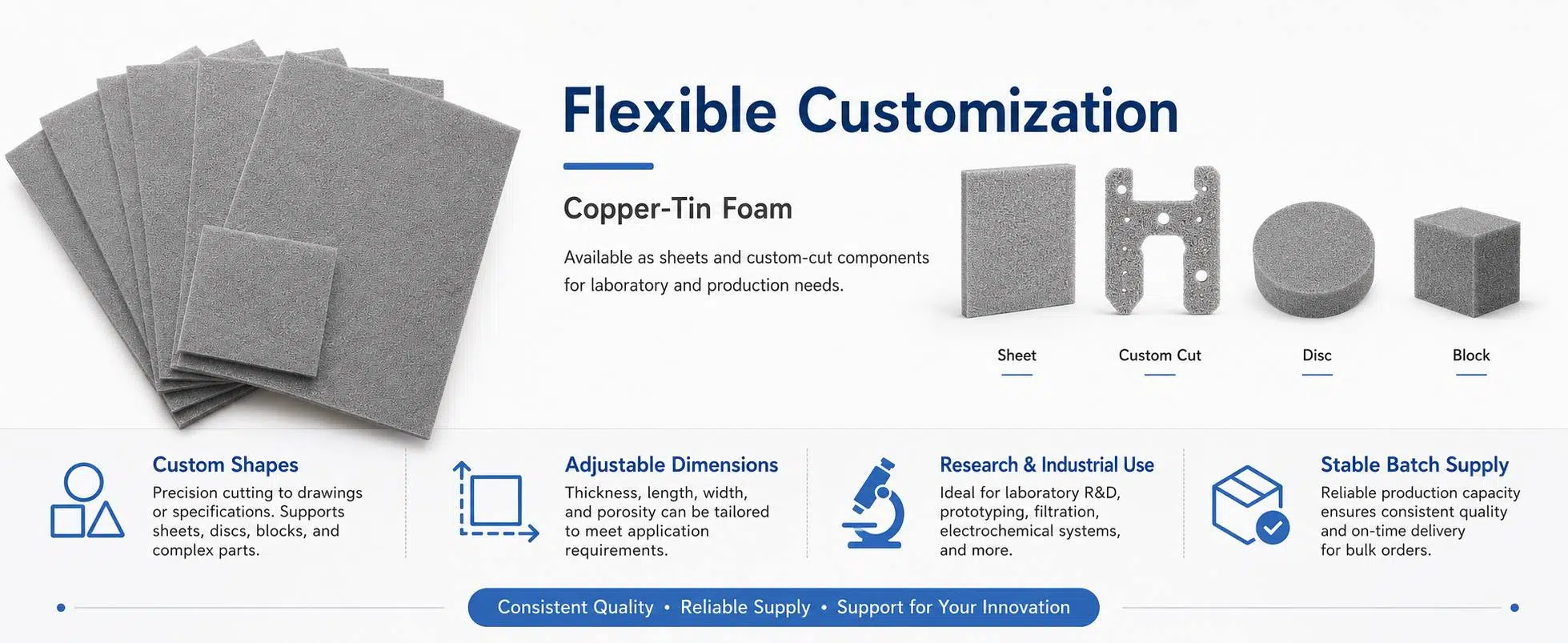
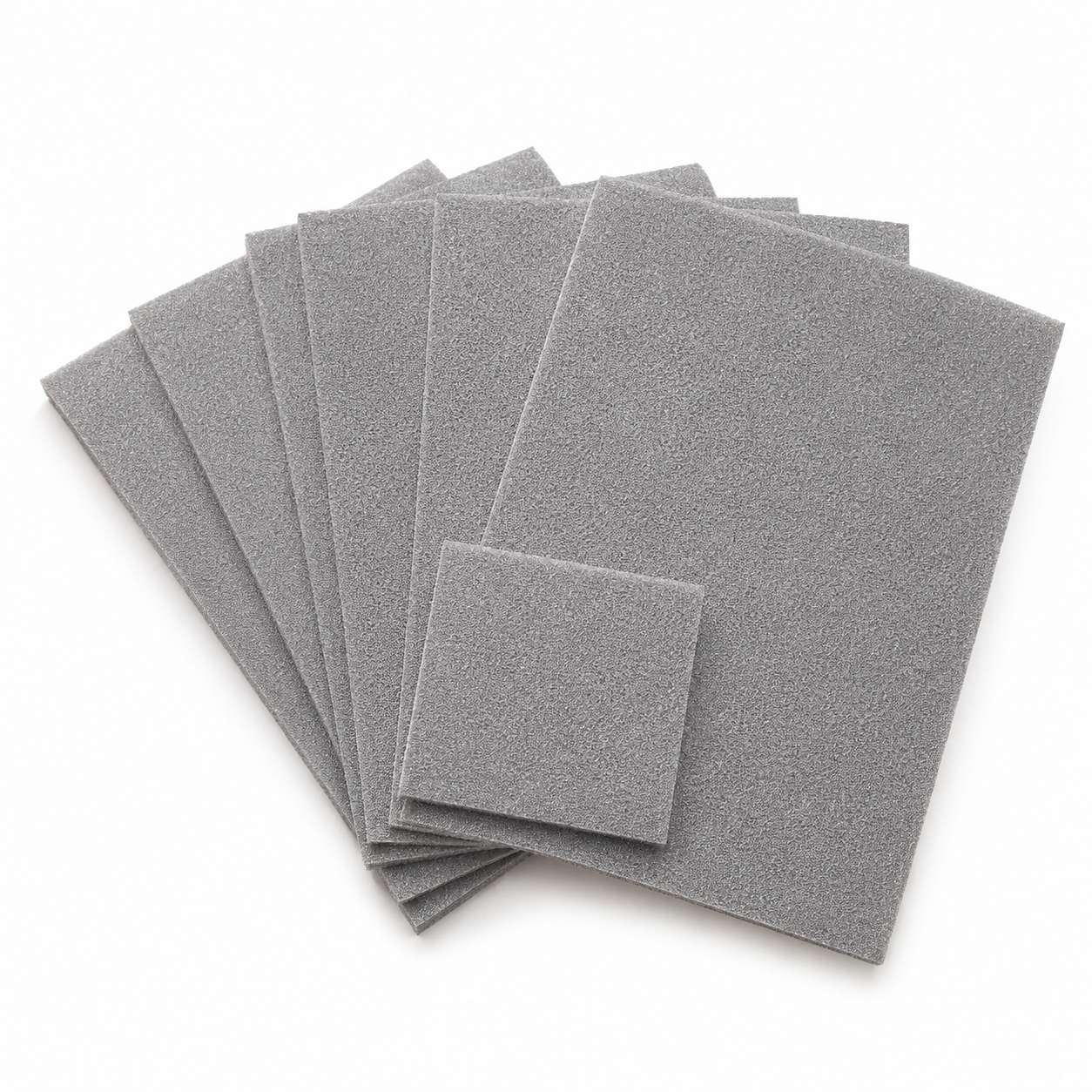
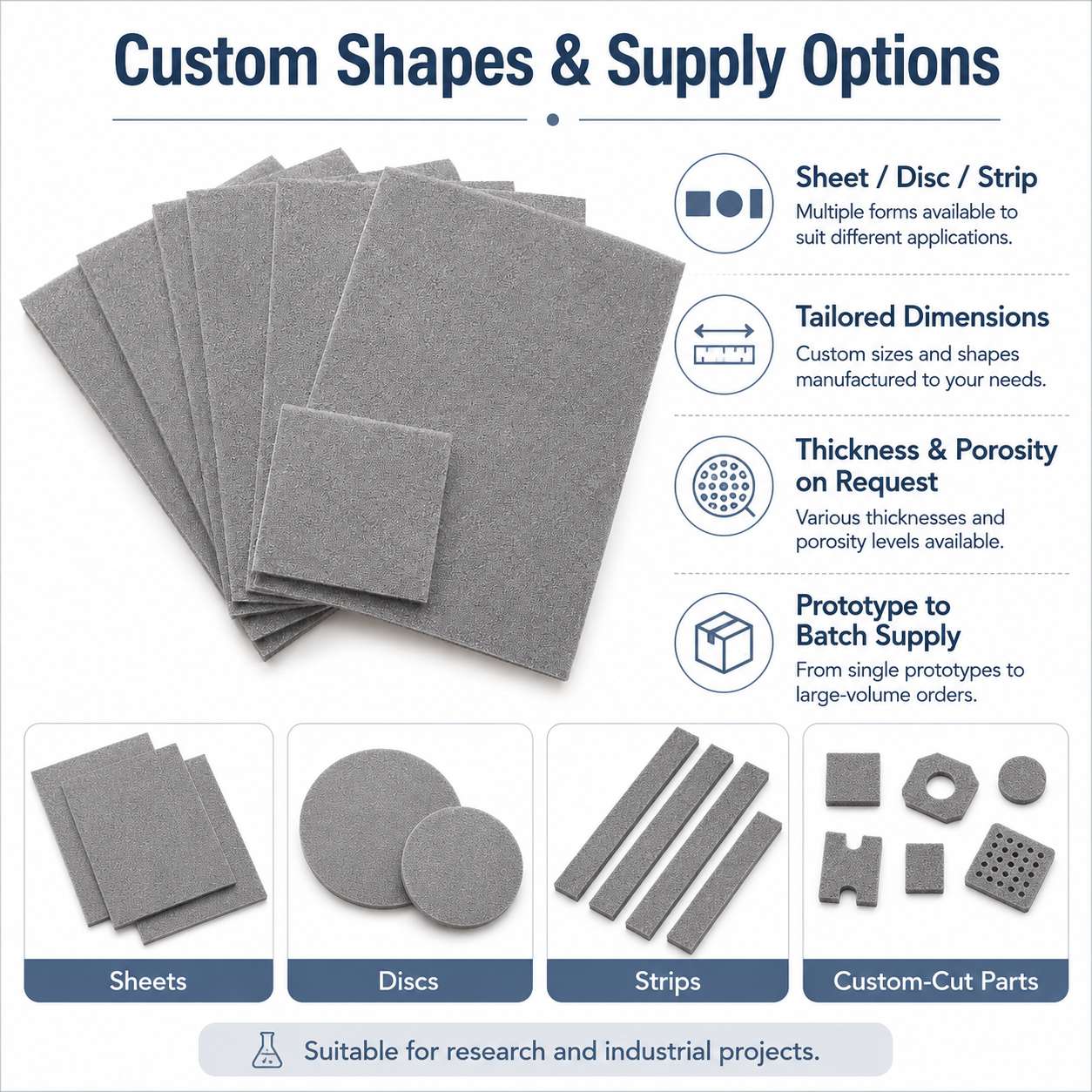
| Formular | Sheet, plate, strip, or custom‑cut blocks/parts depending on size & thickness; can be supplied as bare Cu‑Sn foam or with surface treatments/coatings for specific electrochemical uses |
| Zellengröße (PPI) | Typically around 10–80 PPI; coarse (10–20 PPI), medium (20–40 PPI) and fine (40–80 PPI) structures available; other pore sizes can be customized on request |
| Dicke | Standard approx. 0.5–10 mm; other thicknesses can be customized according to application (e.g. electrodes, catalyst supports, filters) |
| Größe und Form | Common sheets such as 100 × 100 mm / 200 × 300 mm; can be cut, punched or formed into discs, strips, cylinders and other shapes as per request or drawing |
| Porosität | Typically about 70% – 95%, depending on grade, PPI and density; higher porosity gives larger surface area and better mass transport, lower porosity gives higher strength |
| Offenzellrate | Usually ≥ 95% (3D interconnected open‑cell structure), providing continuous channels for liquid/gas flow and ion transport in electrochemical systems |
| Volumendichte | Approx. 0.3–1.5 g/cm³ (adjustable by porosity and structure), significantly lower than dense Cu‑Sn alloys while maintaining metallic connectivity |
| Oberflächendichte | Approx. 300–6000 g/m², depending on thickness and density; lighter foams for low‑mass electrodes, heavier foams for structural catalyst carriers |
| Thermal Conductivity (Effective) | Typically on the order of a few to tens of W/m·K; lower than bulk copper/brass due to porosity but still sufficient for heat‑spreading and thermal‑management roles in electrochemical or catalytic devices |
| Mechanical Strength (Compressive) | Typically about 2–10 MPa (varies with density, pore size and alloy composition); higher density and lower PPI give higher strength |
| Average Tensile Strength (N/20 mm) | For thin, medium‑density foam strips, vertical ≈ 15–30 N/20 mm, horizontal slightly lower; actual values depend on specific product, porosity and processing |
| Temperature Resistance | Suitable for long‑term use at moderate temperatures typical of electrochemical and catalytic environments (generally up to a few hundred °C in non‑aggressive atmospheres); not designed as a high‑temperature structural alloy like Ni‑Cr systems |
| Aussehen | Metallic reddish‑brown Cu‑Sn surface, uniform color, without obvious defects such as heavy oxide scale flaking, blind holes, large through holes, severe deformation or cracks |
| Chemical Composition | Cu‑Sn multi‑component alloy (copper‑based with tin); Cu provides high electrical and thermal conductivity, Sn modifies mechanical and electrochemical properties and can improve certain corrosion behaviors; exact composition per specific grade/standard or customer specification |
| Electrical Conductivity | Good metallic electrical conductivity; effective conductivity decreases with porosity and foam structure but remains suitable for use as current collectors, electrode substrates and catalyst supports |
| Corrosion Resistance | Generally good corrosion resistance in many neutral and some mildly alkaline environments, similar to copper/tin bronzes; not suitable for strong acids or highly oxidizing/halide media beyond alloy design limits without additional protection |
| Flexibilität | Certain flexibility for thin, medium‑porosity sheets; can be slightly bent and compressed, but stiffness and brittleness increase with thickness and higher density |
| Elongation Rate (%) | Typically low compared with fully dense ductile copper alloys; for thin, high‑porosity foam, vertical ≈ 2–4%, horizontal ≈ 3–5% (reference values; actual data depend on grade and structure) |
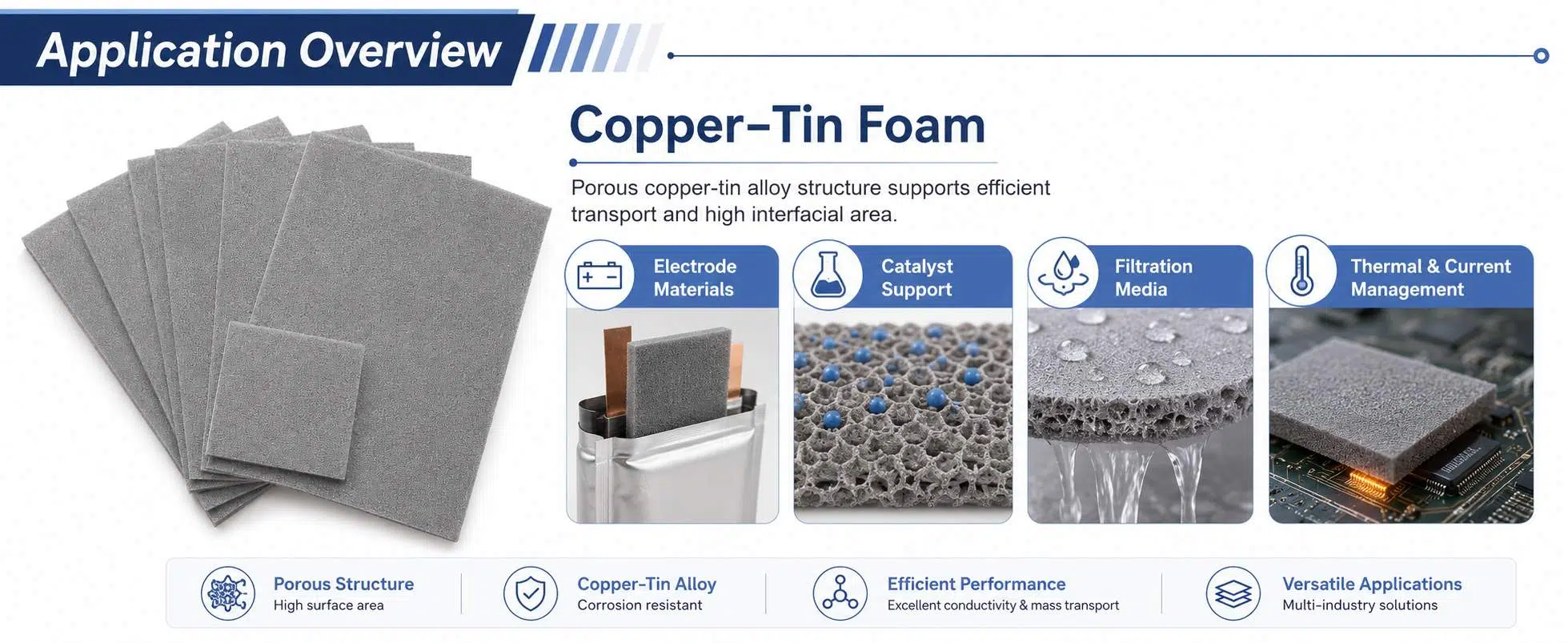
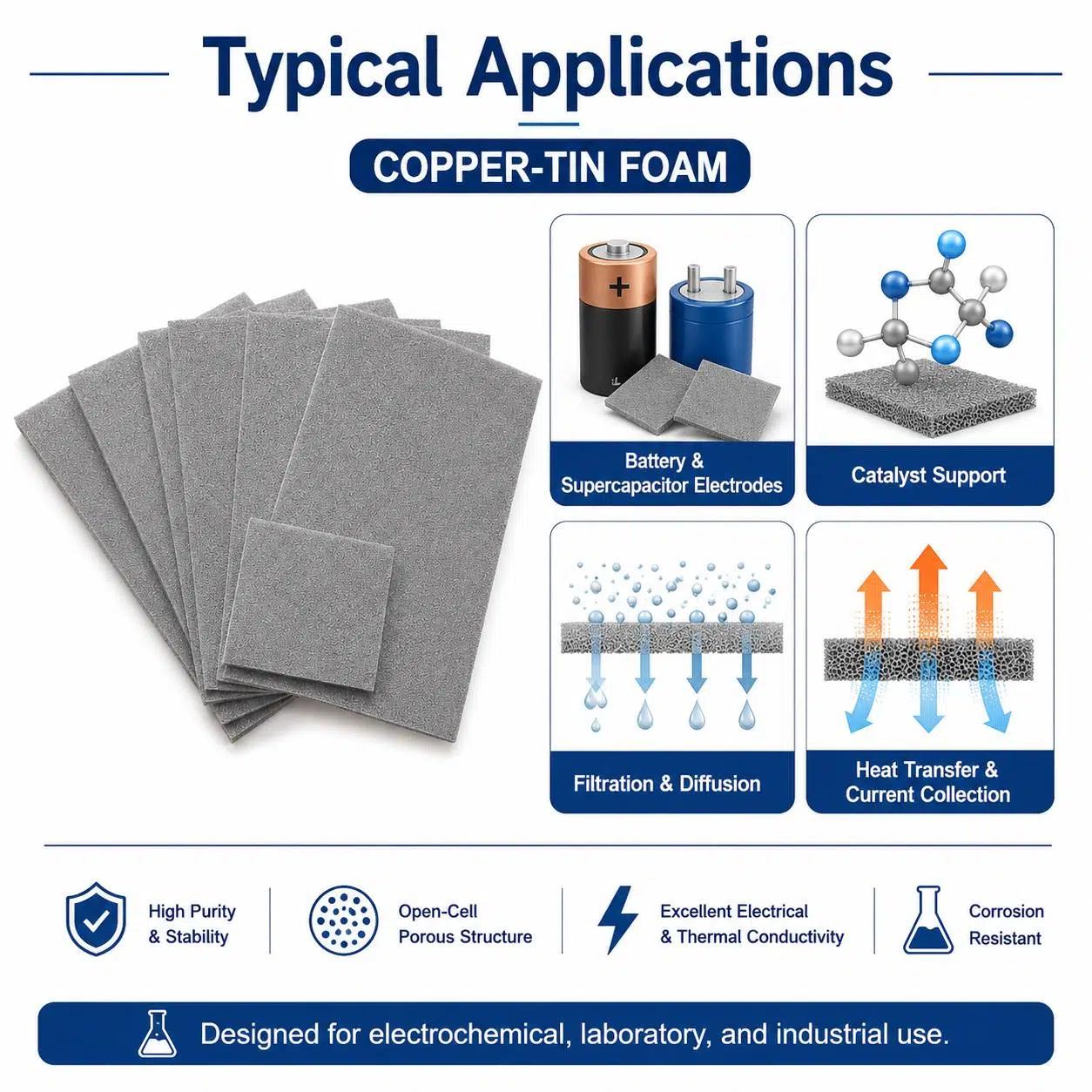
| Applications | Electrochemical electrodes and current collectors (e.g. for Li‑ion/Li‑S/Na‑ion anodes, CO₂ reduction, electroplating substrates), catalyst supports, porous conductors in electrochemical reactors, gas/liquid distribution media and filters in chemical, environmental and energy‑storage fields |
Dimension (Dicke* Länge*Breite)
| 0,08 mm × 300 mm × 200 mm | 0,2 mm × 200 mm × 300 mm | 0,3 mm × 200 mm × 300 mm |
| 0,5 mm × 200 mm × 300 mm | 0,7 mm × 200 mm × 300 mm | 0,9 mm × 200 mm × 300 mm |
| 1,0 mm × 200 mm × 300 mm | 1,3 mm × 200 mm × 300 mm | 1,5 mm × 200 mm × 300 mm |
| 1,7 mm × 200 mm × 300 mm | 2,0 mm × 200 mm × 300 mm | 5 mm × 200 mm × 300 mm |
| 10 mm × 200 mm × 300 mm | 30 mm × 200 mm × 300 mm | Die Größe kann individuell angepasst werden. |
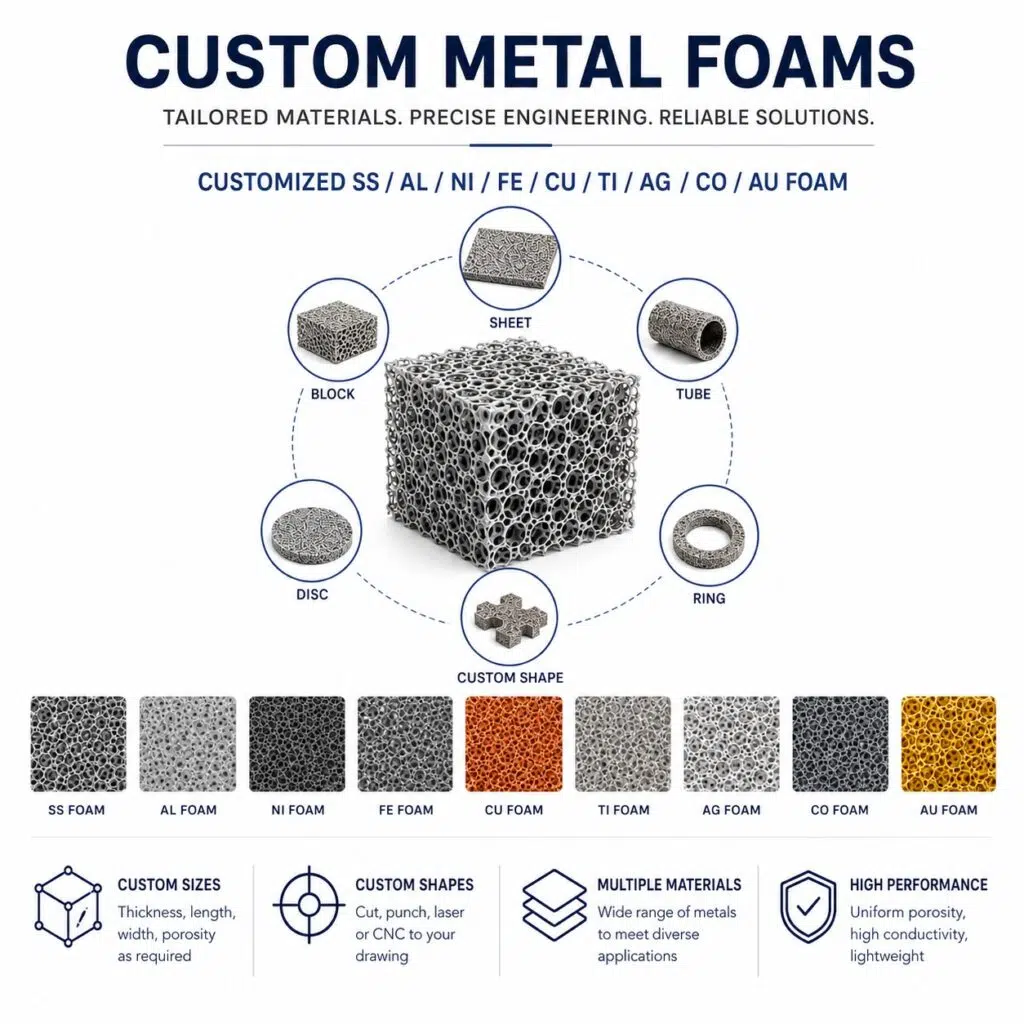
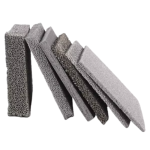
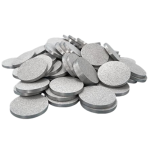
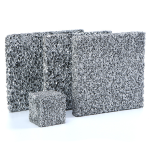
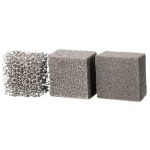
Um verschiedene Metallschäume anzupassen, klicken Sie bitte auf das Bild unten für weitere Details:
 |
 |
 |
 |
 |
 |
 |
 |