






Highly Porous Open Cell Nickel Zinc Foam
Introducción
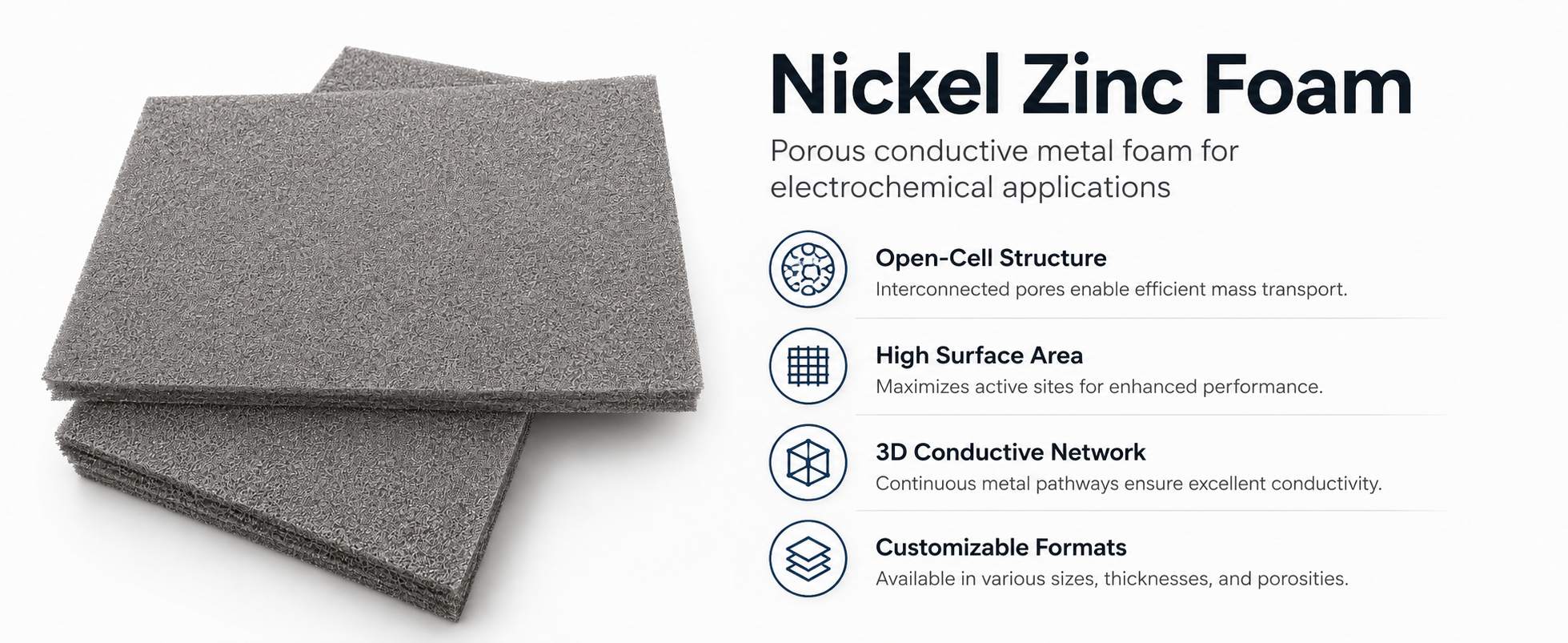
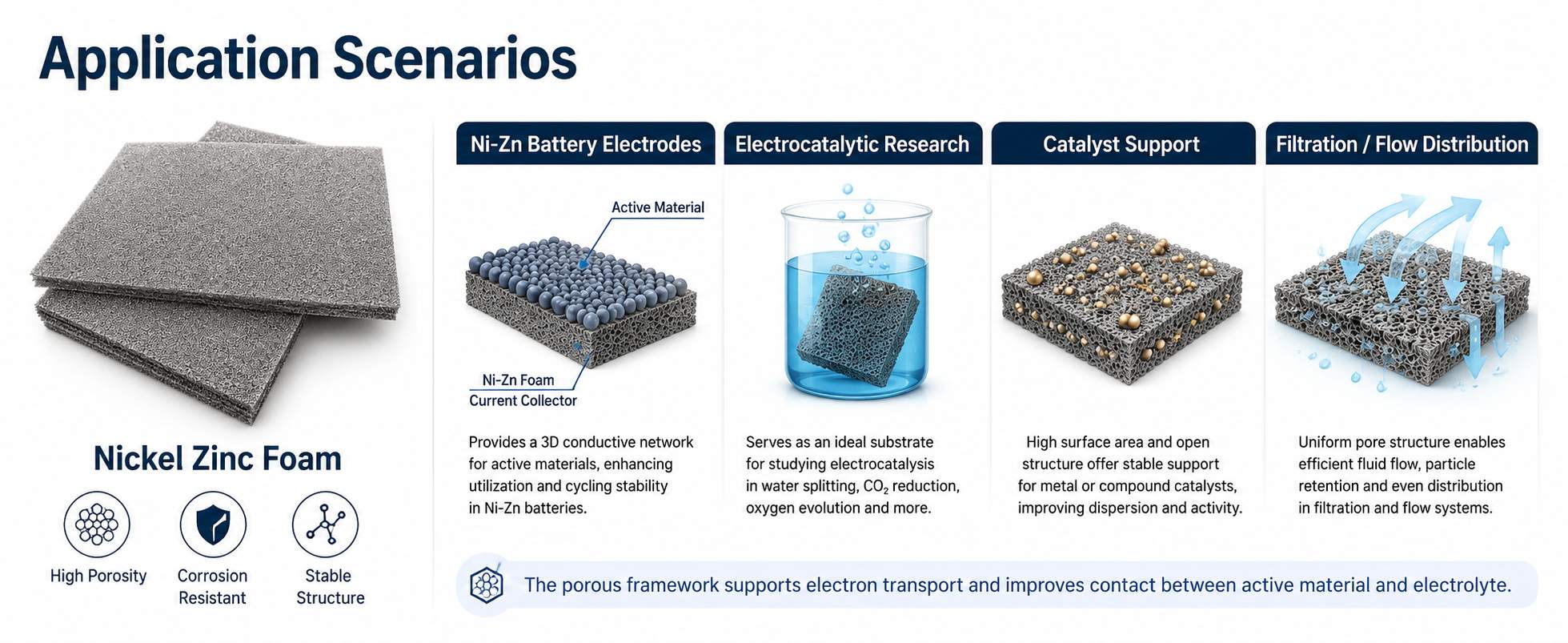
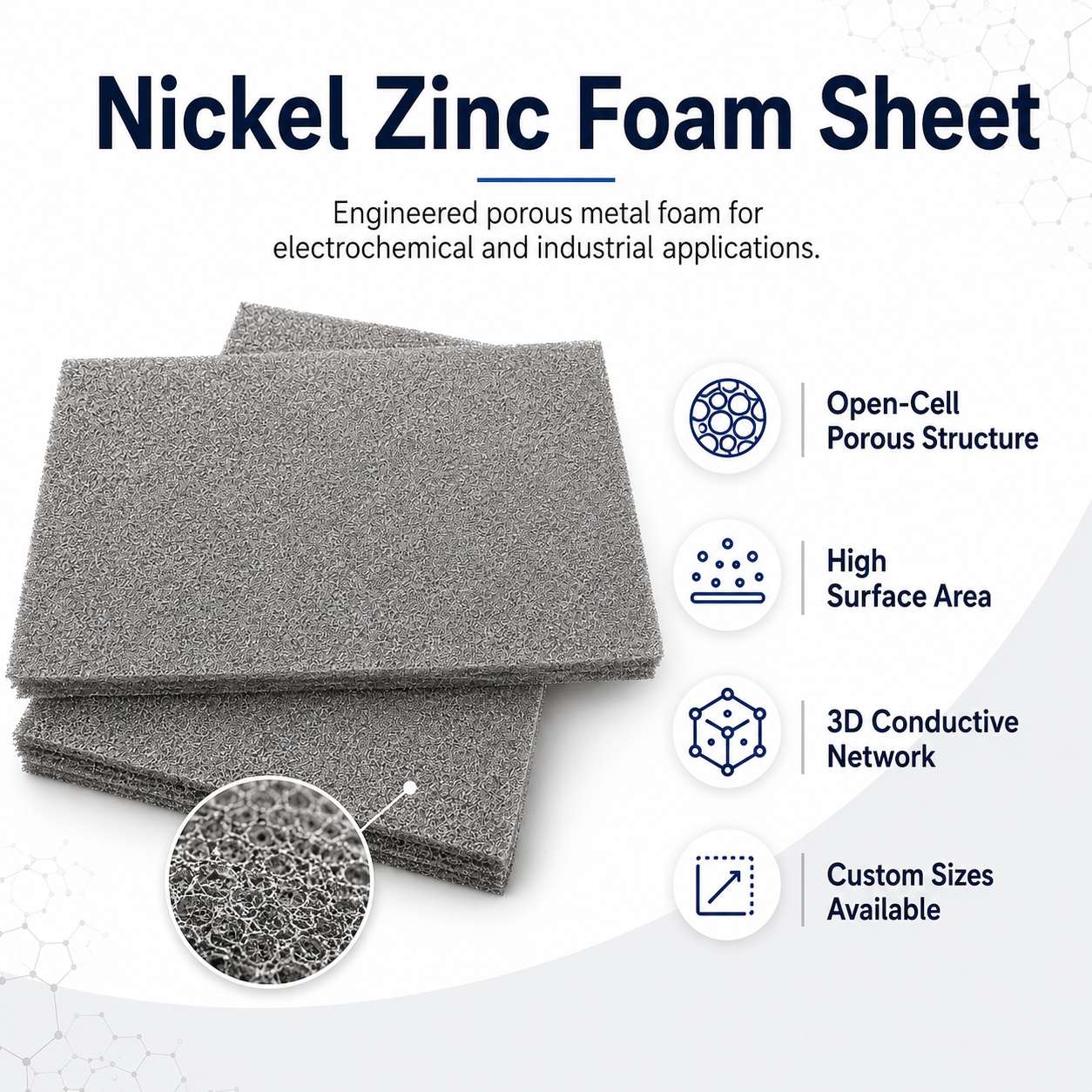
- Nickel zinc foam (Ni‑Zn foam) is a 3D open‑cell porous metal foam designed as a high‑surface‑area current collector and active substrate for rechargeable Ni‑Zn batteries and hybrid supercapacitors. Its interconnected Ni‑Zn skeleton provides excellent electrical conductivity and abundant reaction sites, improving charge/discharge efficiency and reducing internal resistance. The foam structure allows uniform electrolyte penetration and fast ion transport, making it suitable for high‑power and high‑cycle‑life energy‑storage devices.
- Ni‑Zn foam can be supplied in different thicknesses, pore sizes (PPI) and sheet or roll formats, and can be further coated with nickel‑zinc hydroxides or oxides to increase capacity. It is widely used in R&D and industrial production of alkaline Ni‑Zn batteries, hybrid capacitors and other electrochemical systems where lightweight, corrosion‑resistant and cost‑effective porous electrodes are required.
Especificaciones
| Tipo | Open‑cell Ni‑Zn alloy foam / nickel‑zinc porous metal foam (alkaline battery and electrode material) |
| Purity / Alloy Base | Ni‑Zn alloy system (nickel as main component with zinc as alloying element; Zn content and any minor elements are adjusted to optimize electrochemical performance, corrosion resistance in alkaline media and mechanical strength, depending on specific grade) |
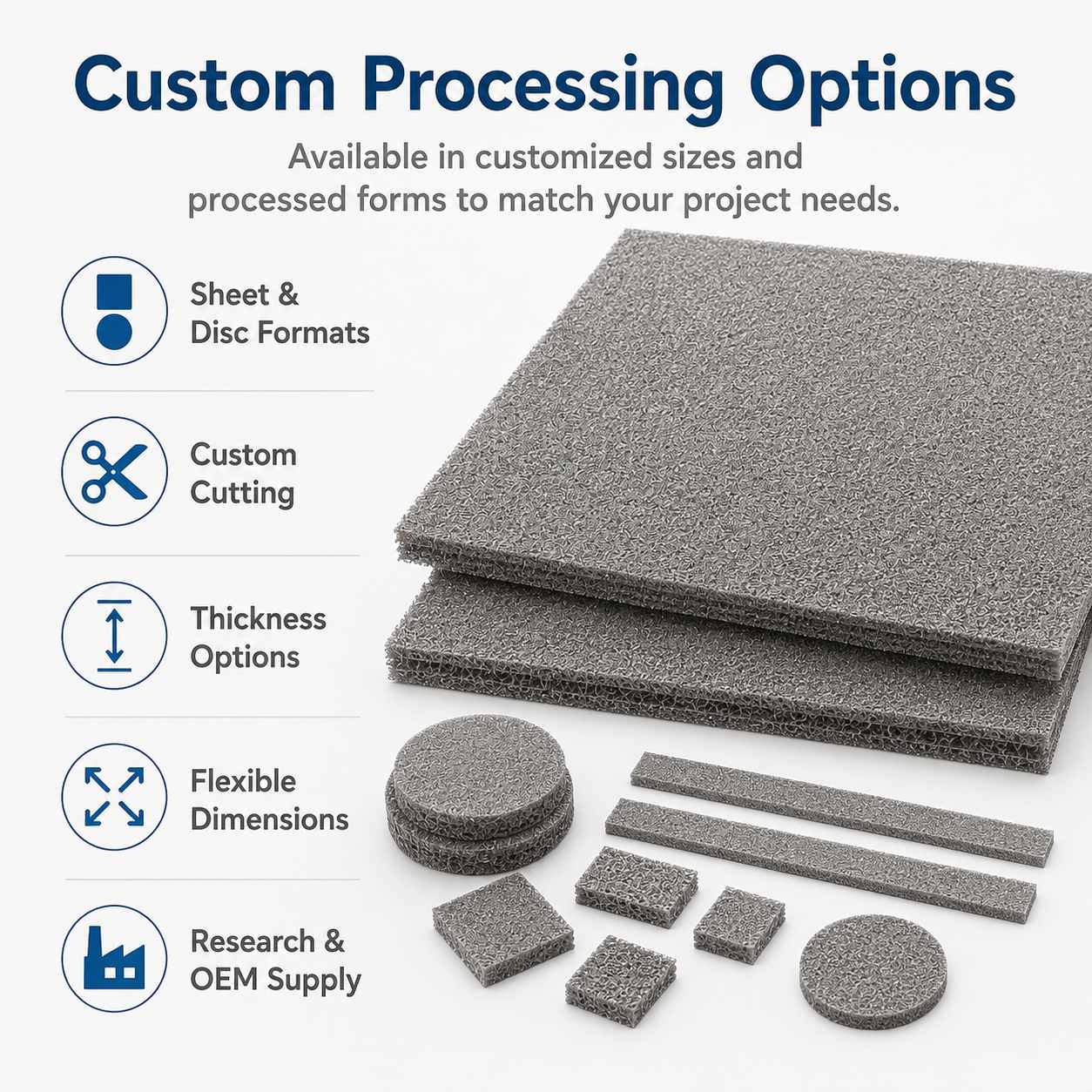
| Formulario | Sheet, plate, strip, block, roll or custom‑cut parts; can be supplied as bulk Ni‑Zn foam or as Ni foam with Ni‑Zn surface alloy / coating produced by electroplating or other metallurgical processes, according to application requirements |
| Tamaño de celda (PPI) | Commonly around 10–80 PPI (pores per inch) for electrochemical applications; coarse (10–30 PPI), medium (30–50 PPI) and fine (50–80 PPI) structures available; other pore sizes and gradients can be customized on request |
| Espesor | Typical foam sheets approx. 0.5–10 mm for electrodes and current collectors; thinner foams for low‑resistance, high‑power electrodes, thicker sections for high‑capacity plates and structured electrodes; customized thickness available according to design requirements |
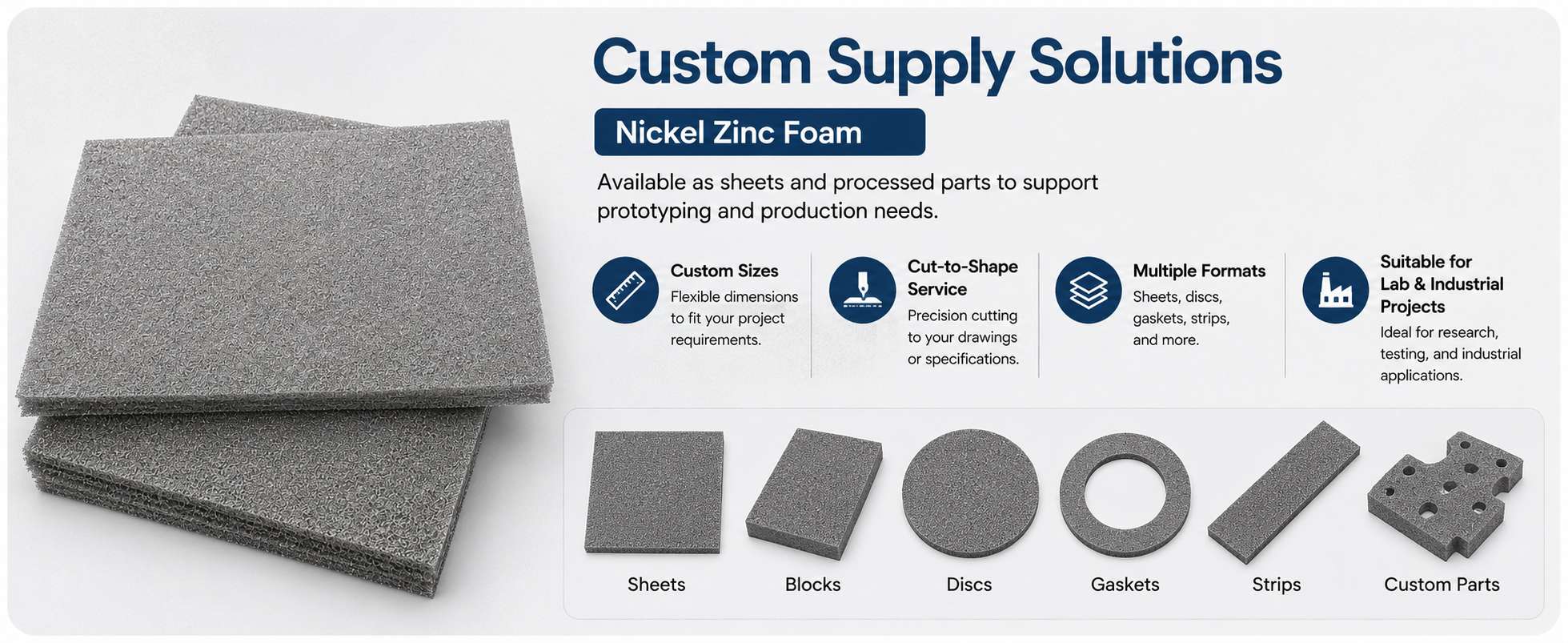
| Tamaño y forma | Standard sheets and blocks (e.g. 50 × 50 mm, 100 × 100 mm, 200 × 300 mm) and strips or discs; can be cut, punched, machined or formed into plates, cylinders, rolls and other geometries based on customer drawings or CAD models for batteries, capacitors and electrochemical cells |
| Porosidad | Typically about 80% – 98% (adjustable); lower porosity for higher strength and current‑carrying capacity, higher porosity for larger surface area, better electrolyte penetration and gas release; porosity tailored to Ni‑Zn batteries, hybrid capacitors and catalyst supports |
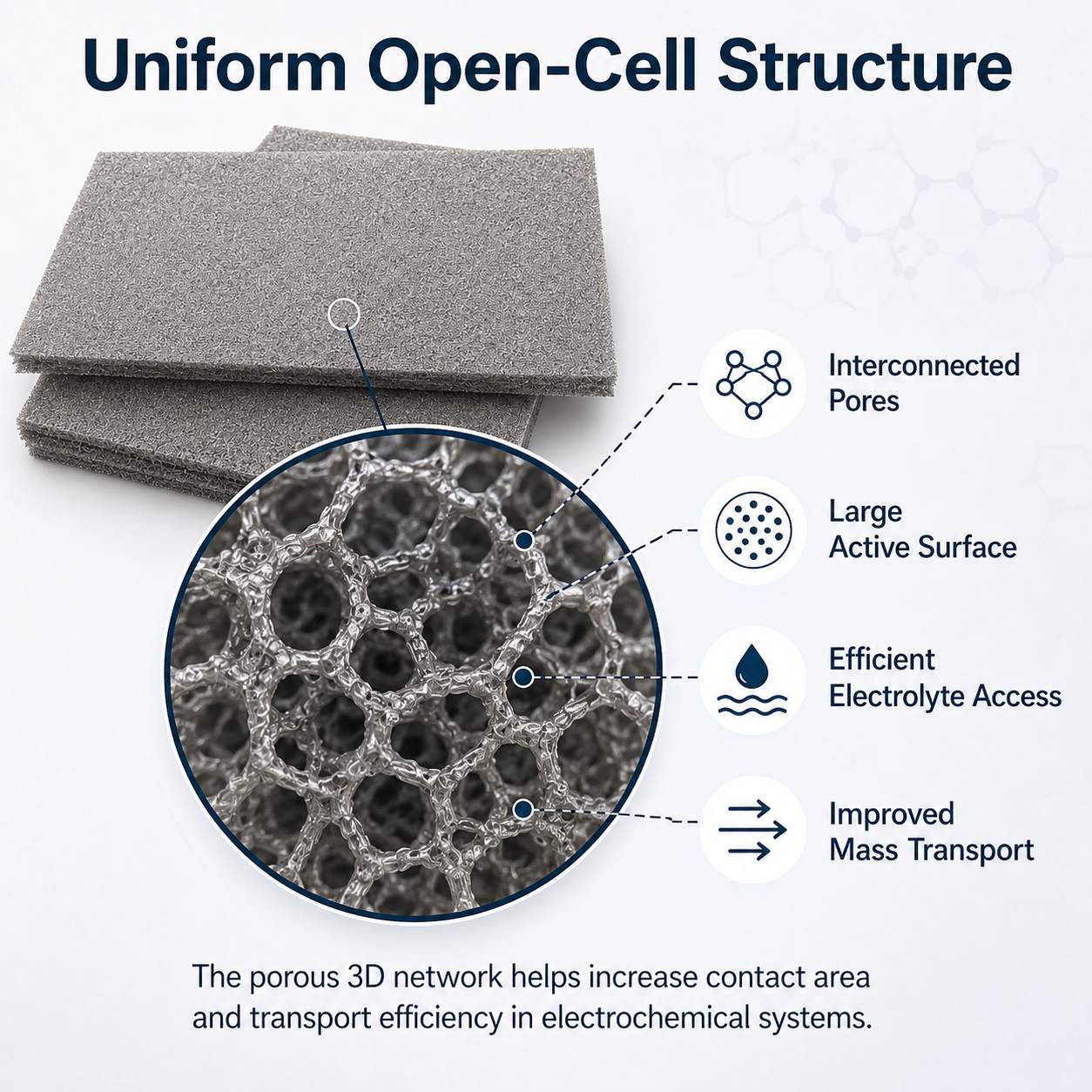
| Tasa de células abiertas | Usually ≥ 90% open‑cell interconnected structure, providing continuous channels for electrolyte flow, ion transport and gas bubble removal; degree of interconnectivity depends on manufacturing process and pore size |
| Densidad volumétrica | Approx. 0.15–1.0 g/cm³ (adjustable via porosity and structure), much lower than dense Ni‑Zn alloys while maintaining metallic connectivity and adequate strength for self‑supported electrodes |
| Densidad superficial | Depending on thickness and porosity, typically about 200–8,000 g/m²; lighter foams for high‑power, low‑mass electrodes, heavier foams for high‑capacity plates and structural current collectors |
| Specific Surface Area | Large effective surface area due to 3D Ni‑Zn skeleton (commonly several hundred to several thousand m²/m³, depending on pore size and porosity), providing abundant active surface for charge‑storage and electrode reactions |
| Thermal Conductivity (Effective) | Effective thermal conductivity lower than dense nickel alloys due to porosity (typically a few to tens of W/m·K, depending on porosity and structure), sufficient for heat dissipation and thermal management in batteries and electrochemical modules |
| Electrical Conductivity | Good metallic conductivity, somewhat reduced compared with dense nickel due to pores and zinc content, but sufficient for use as a self‑supported current collector and electrode substrate in Ni‑Zn batteries, supercapacitors and other alkaline systems |
| Mechanical Strength (Compressive) | Compressive strength depends on porosity and pore architecture; typically from about 1 MPa up to several MPa for common electrode‑grade foams; higher‑density foams provide higher strength and stiffness, while higher‑porosity foams offer better mass transport |
| Average Tensile Strength (N/20 mm) | Porous Ni‑Zn foam generally shows lower tensile strength than dense alloys; thin strips typically reach tens of N/20 mm depending on porosity and orientation. Actual values should be confirmed for each specific product, thickness and application |
| Temperature Resistance | Suitable for long‑term operation in alkaline and neutral aqueous electrolytes at typical battery temperatures from room temperature up to approx. 60–80 °C; not intended for very high‑temperature structural service; exact limits depend on alloy composition and environment |
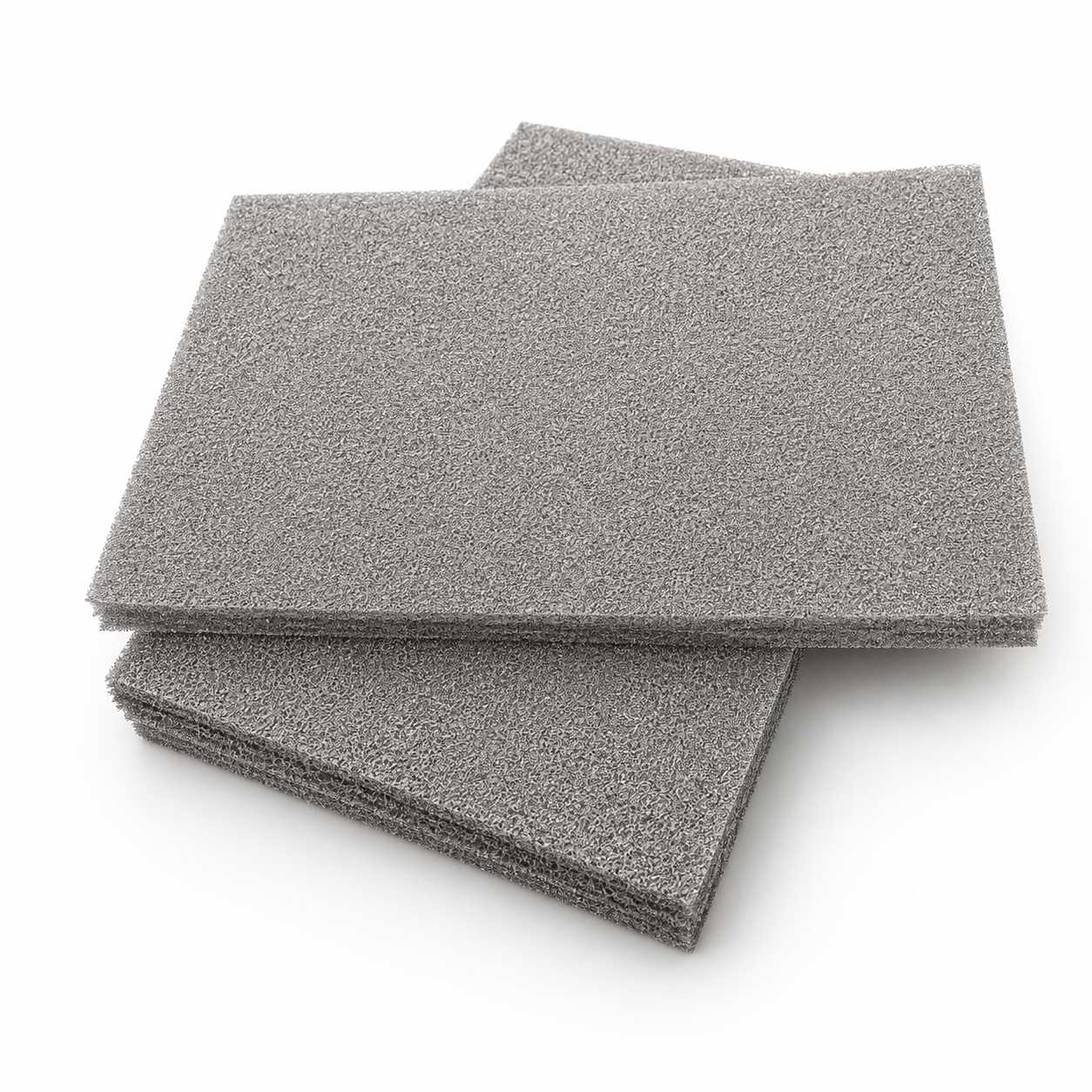
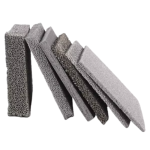
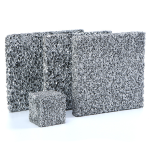
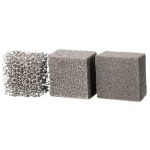
| Apariencia | Metallic gray to gray‑silver Ni‑Zn surface with 3D sponge‑like open‑cell structure; generally uniform pore distribution without obvious defects such as large blind holes, cracks or severe deformation. Surface can be supplied cleaned, activated or pre‑treated for electrode coating |
| Chemical Composition | Ni‑Zn alloy (nickel‑based with zinc) or Ni foam with Ni‑Zn alloy layer, depending on manufacturing route; Ni provides conductivity and mechanical strength, Zn participates in electrochemical reactions and can influence corrosion behavior; exact composition defined by product grade or customer specification |
| Corrosion & Alkali Resistance | Designed for use in alkaline electrolytes (e.g. KOH, NaOH) typical of Ni‑Zn and related systems; corrosion behavior depends on alloy composition and operating conditions. For highly aggressive or special media, suitability should be evaluated and additional protection or coatings may be required |
| Flexibilidad | Thin and medium‑porosity foams can be slightly bent, rolled or compressed; stiffness and brittleness increase with thickness and lower porosity. Repeated sharp bending may cause local fracture of the foam skeleton, so handling should follow electrode‑grade guidelines |
| Elongation Rate (%) | Macroscopic elongation is limited compared with dense ductile alloys because of the porous network, typically a few percent level depending on structure and direction; designs should mainly rely on compressive and bending performance rather than large tensile strains |
| Processability | Can be cut, punched, laser‑cut, welded or spot‑welded; surface can be coated or modified by electroplating, chemical deposition, dip‑coating and slurry‑coating to load active Ni‑Zn, Zn‑rich or other electrode materials; easy integration into battery plates and electrode assemblies |
| Surface Treatment / Coating (Optional) | Optional treatments include alkaline cleaning, electrochemical activation, Zn‑rich or Ni‑Zn coating, additional transition‑metal or conductive coatings, and protective layers to improve capacity, cycling stability and corrosion resistance in alkaline environments |
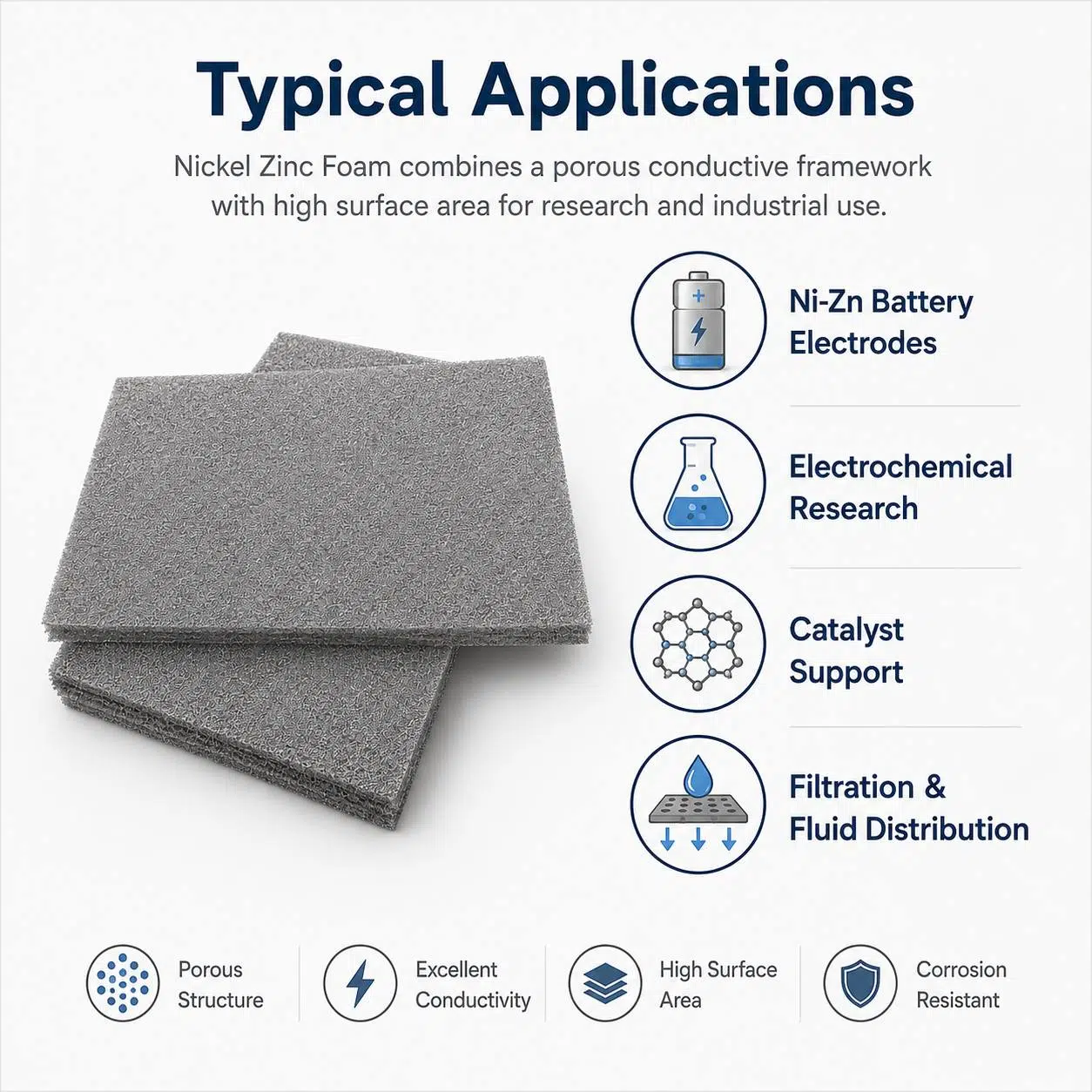
| Typical Electrochemical Applications | Current collectors and substrates for Ni‑Zn rechargeable batteries, alkaline batteries and hybrid supercapacitors; supports for Ni‑Zn and Zn‑based active materials; porous electrodes for electrochemical energy‑storage and conversion systems requiring high surface area and good conductivity |
| Other Industrial Applications | 3D conductive frameworks for experimental energy‑storage devices, electroplating or electrodeposition substrates, porous conductors and supports in electrochemical reactors and test cells |
| Main Features & Advantages | Combines high porosity and large surface area with good metallic conductivity in a Ni‑Zn alloy system; 3D interconnected network enables efficient electrolyte penetration, ion transport and gas release; suitable as a lightweight, self‑supported current collector and electrode substrate to enhance capacity, power performance and cycle life in Ni‑Zn and related alkaline energy‑storage systems |
Dimensión (Espesor* Longitud*Anchura)
| 0,08 mm*300 mm*200 mm | 0,2 mm × 200 mm × 300 mm | 0,3 mm × 200 mm × 300 mm |
| 0,5 mm × 200 mm × 300 mm | 0,7 mm × 200 mm × 300 mm | 0,9 mm*200 mm*300 mm |
| 1,0 mm × 200 mm × 300 mm | 1,3 mm*200 mm*300 mm | 1,5 mm × 200 mm × 300 mm |
| 1,7 mm*200 mm*300 mm | 2,0 mm × 200 mm × 300 mm | 5 mm × 200 mm × 300 mm |
| 10mm*200mm*300mm | 30mm*200mm*300mm | El tamaño se puede personalizar. |
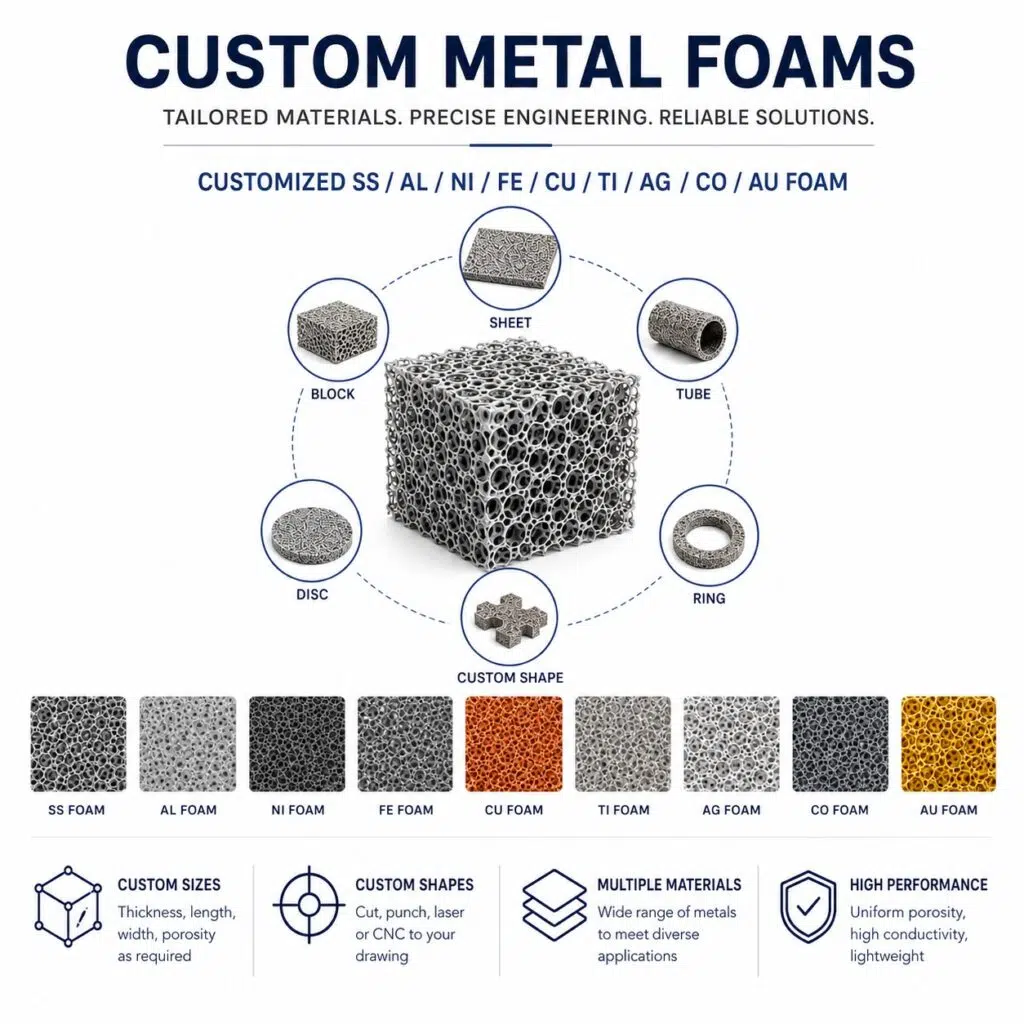
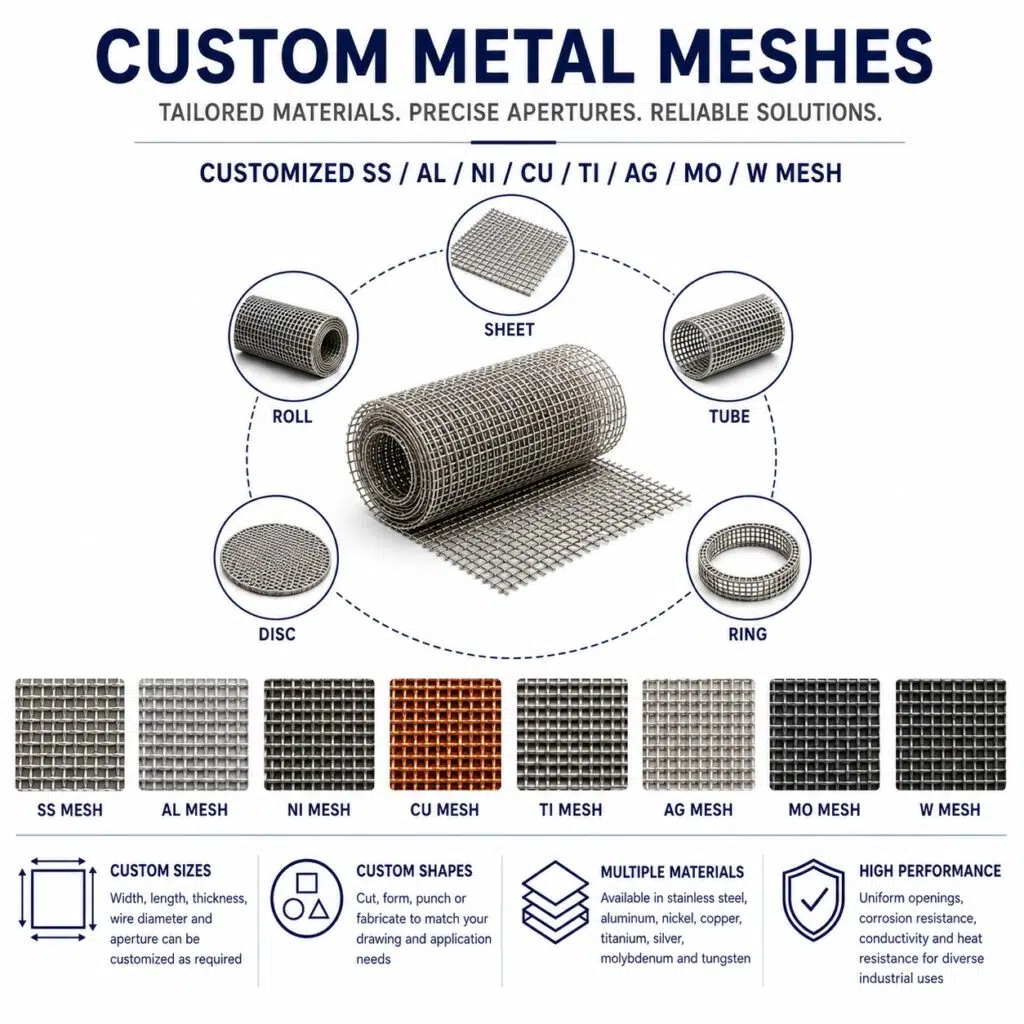
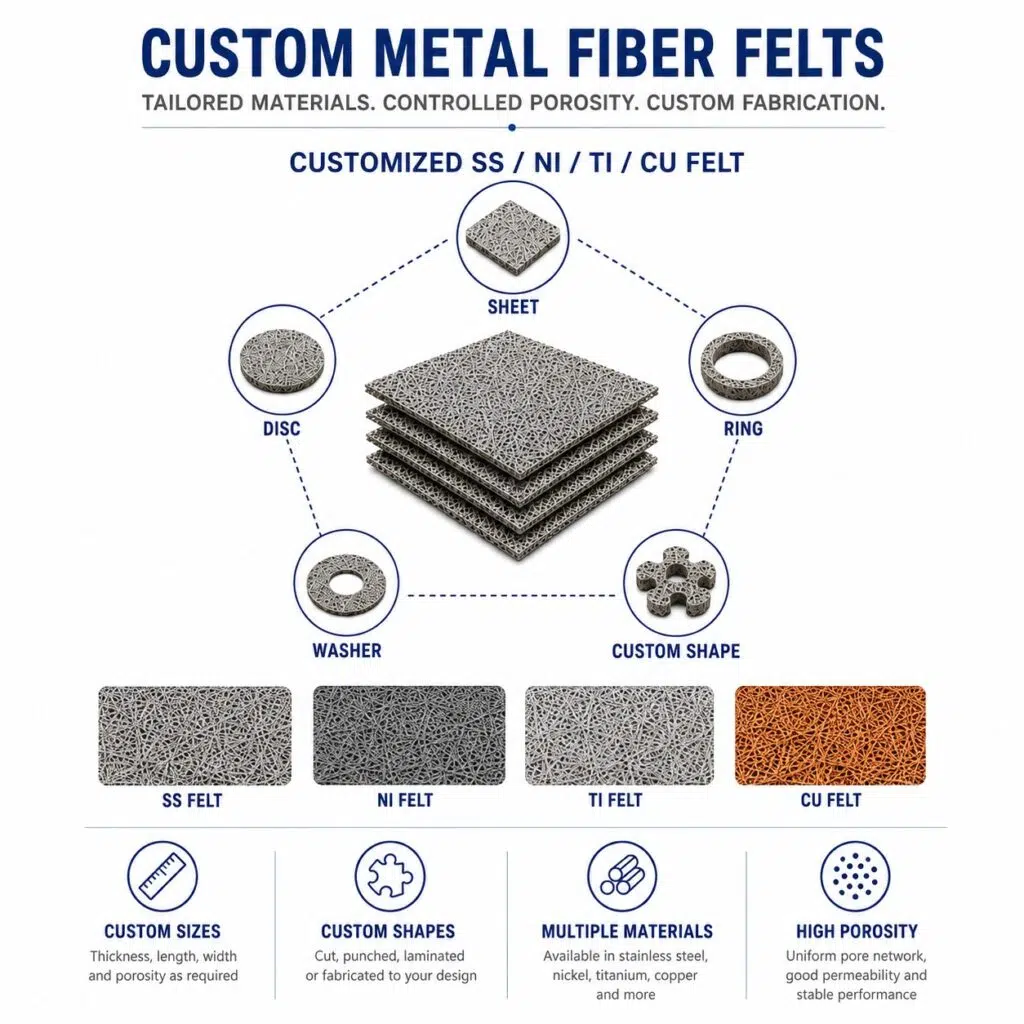
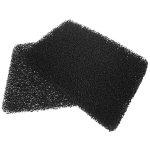
Para personalizar diversas espumas metálicas, haga clic en la imagen siguiente para obtener más información:
 |
 |
 |
 |
 |
 |
 |
 |