






Highly Porous Open Cell Zinc Foam
はじめに
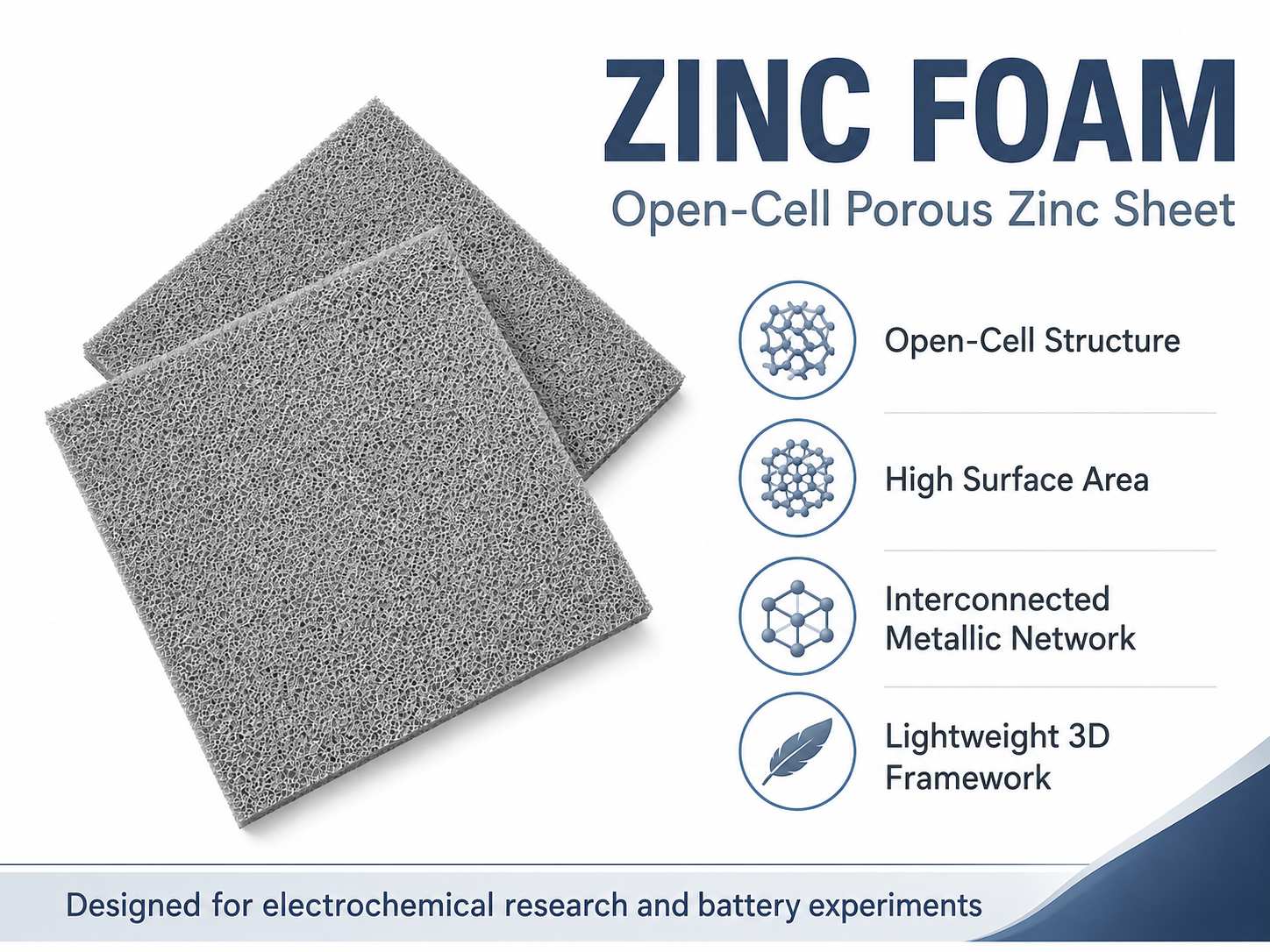
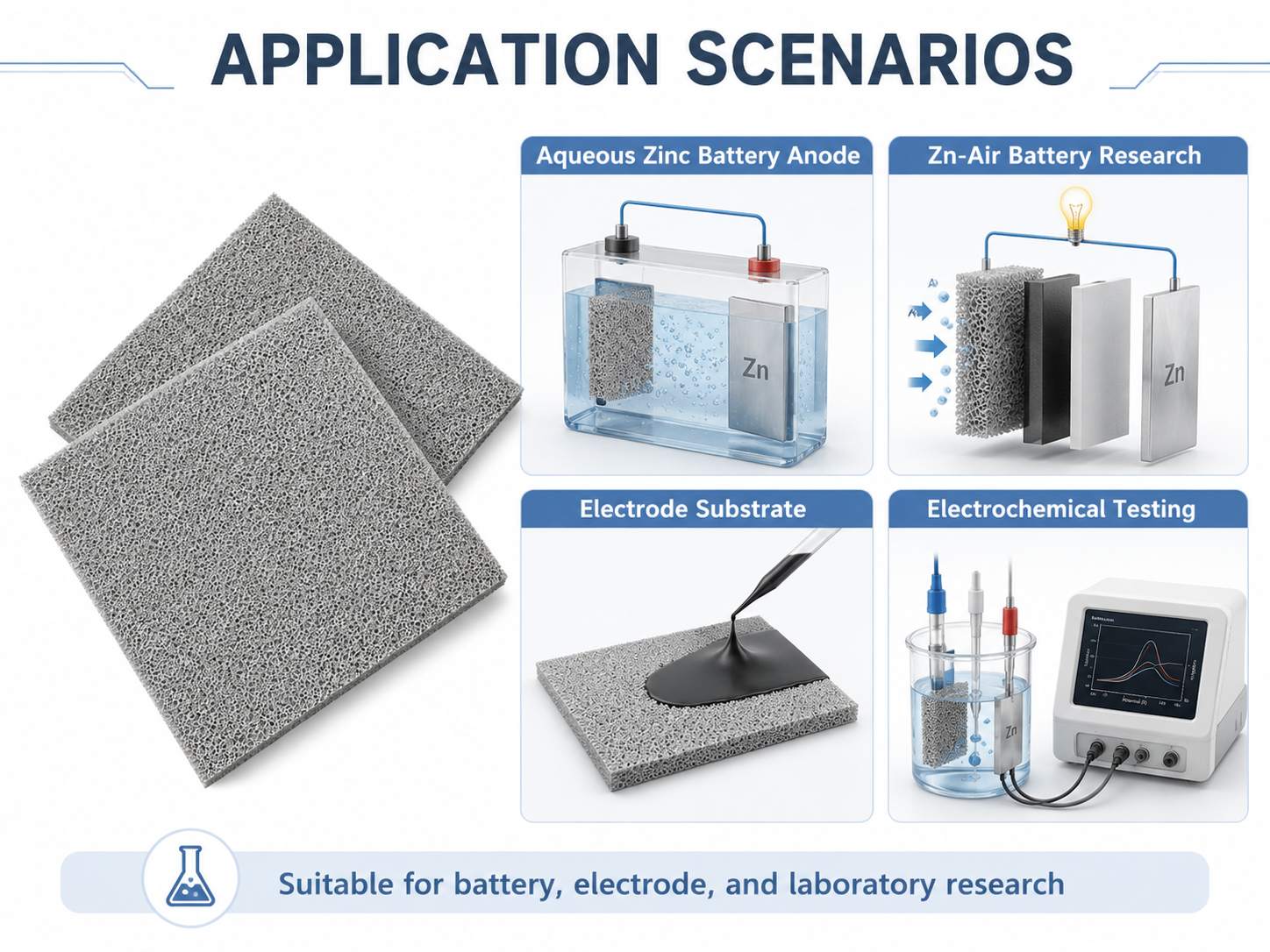
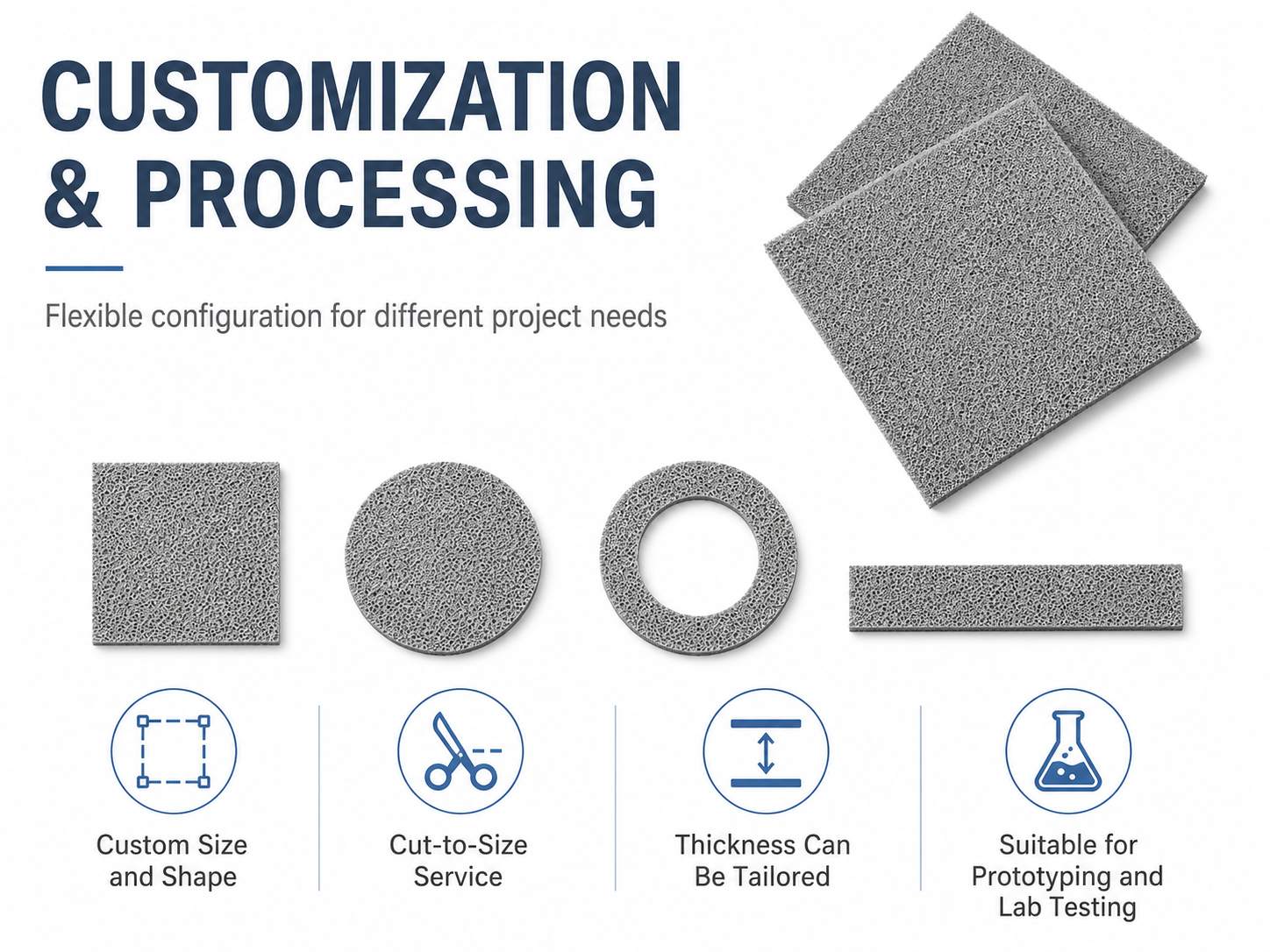
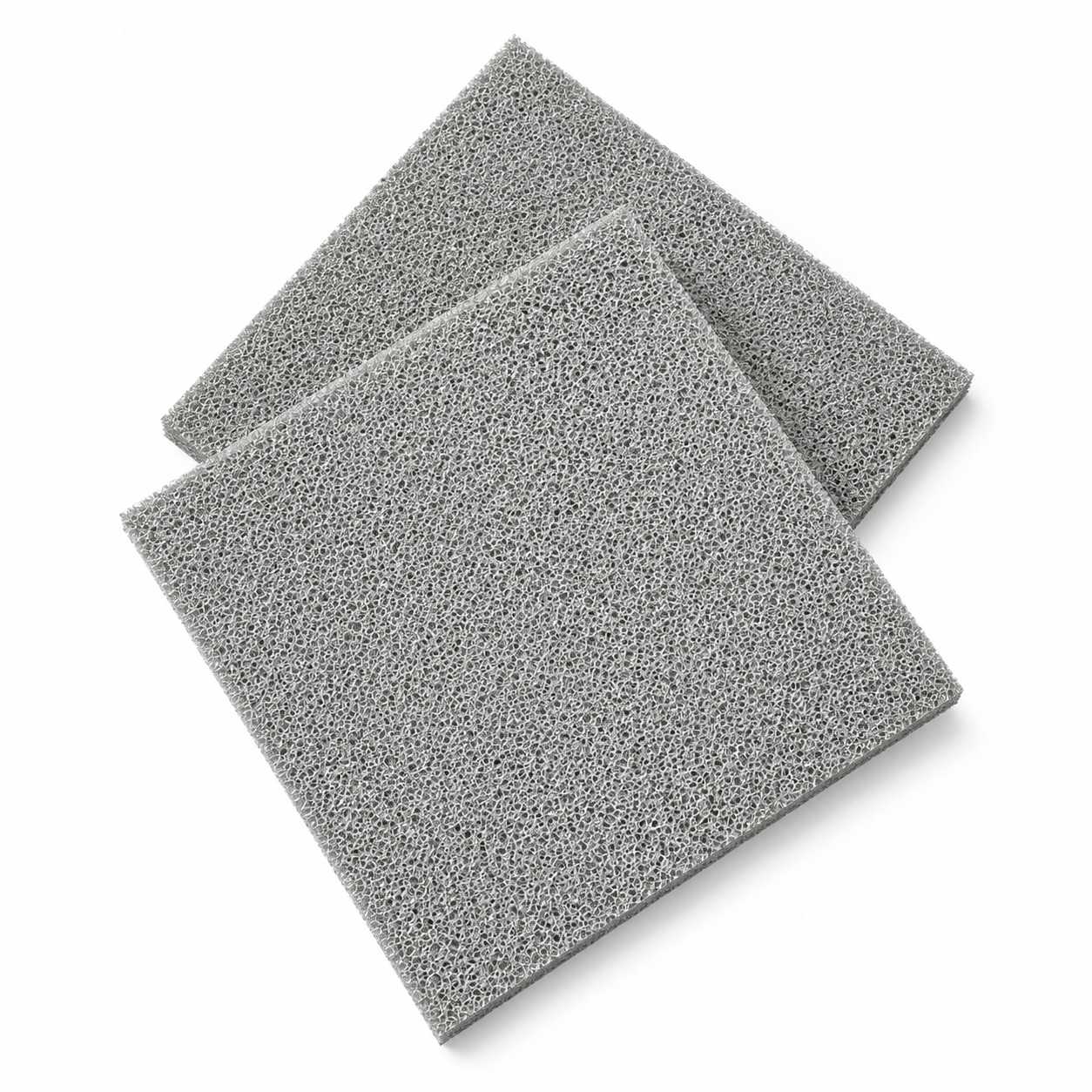
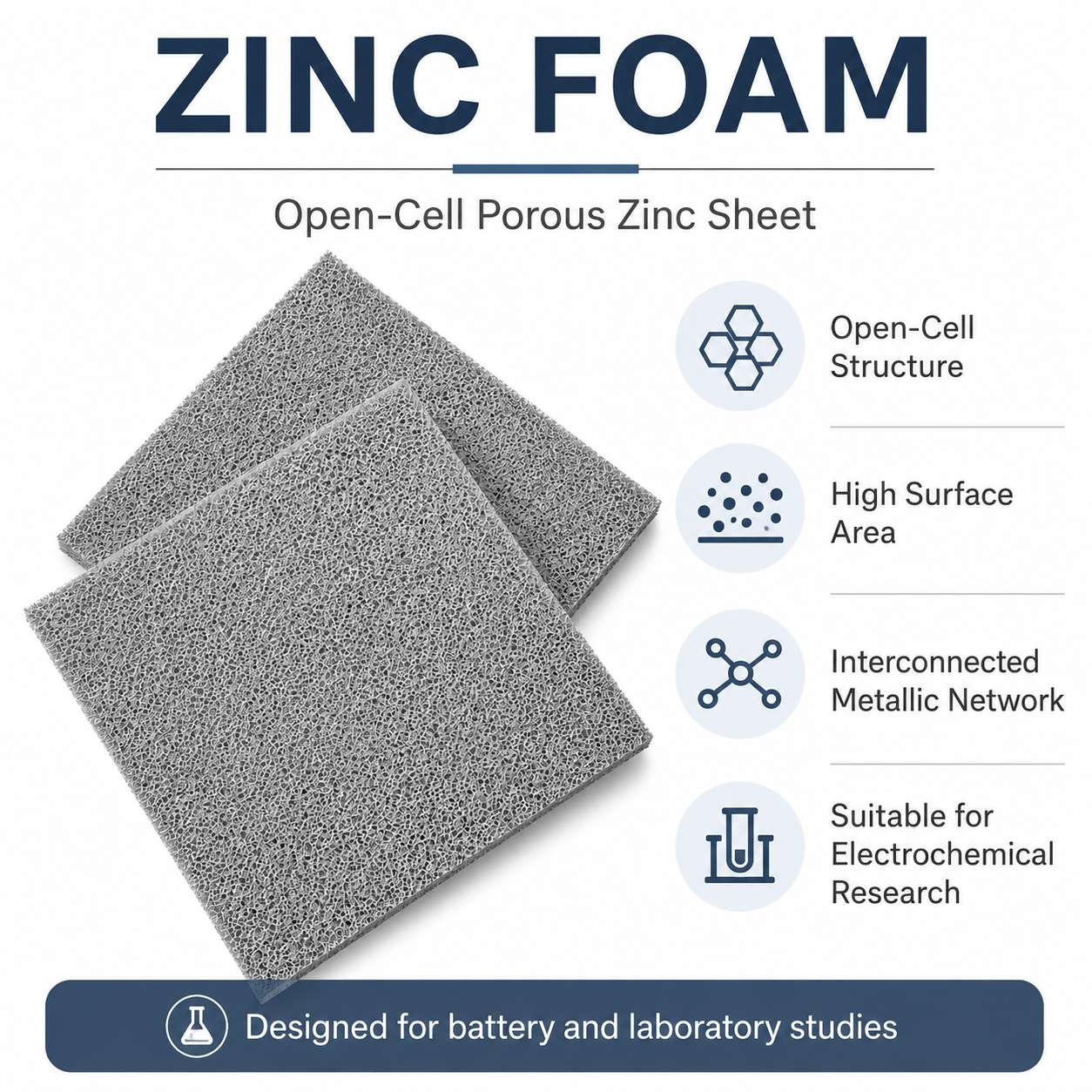
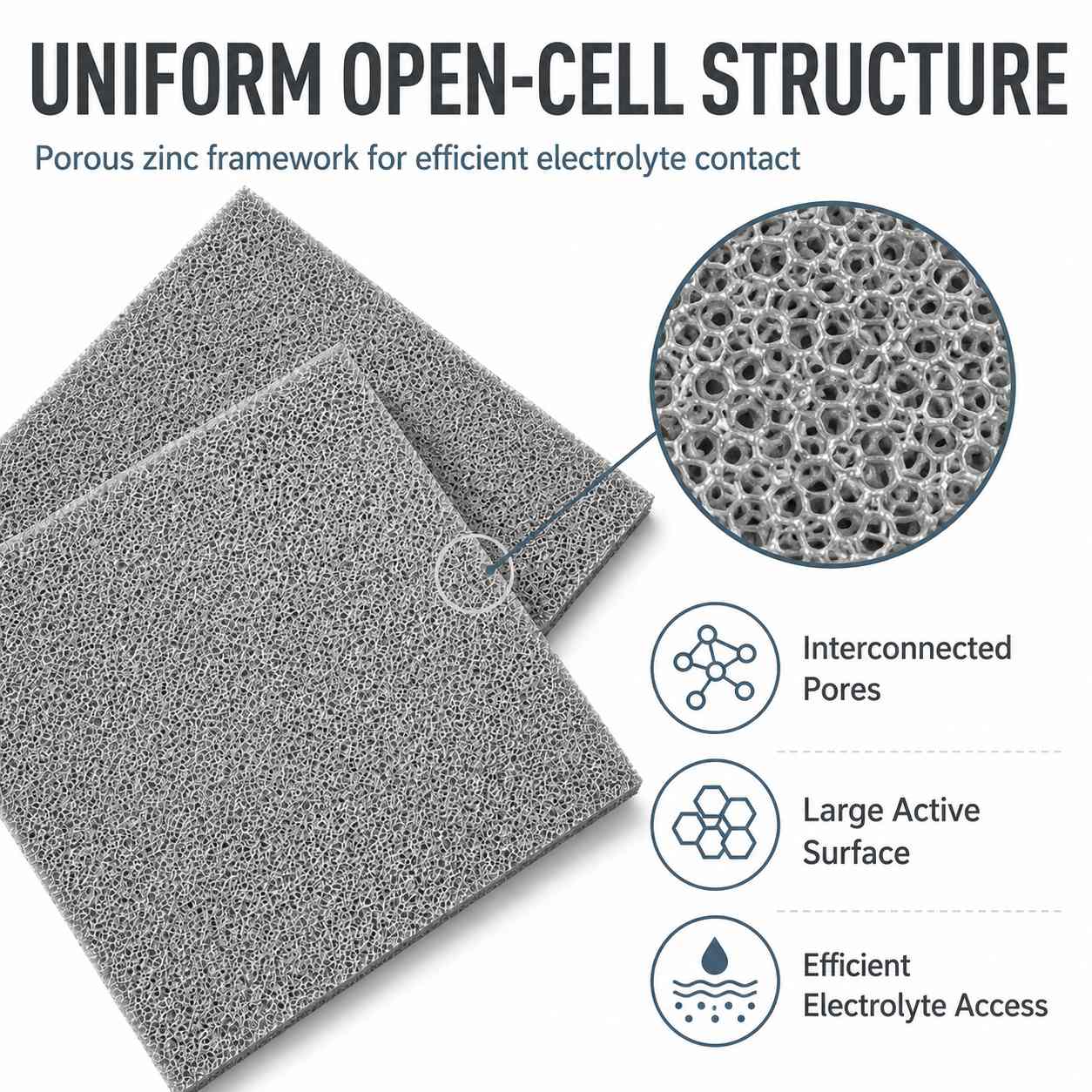
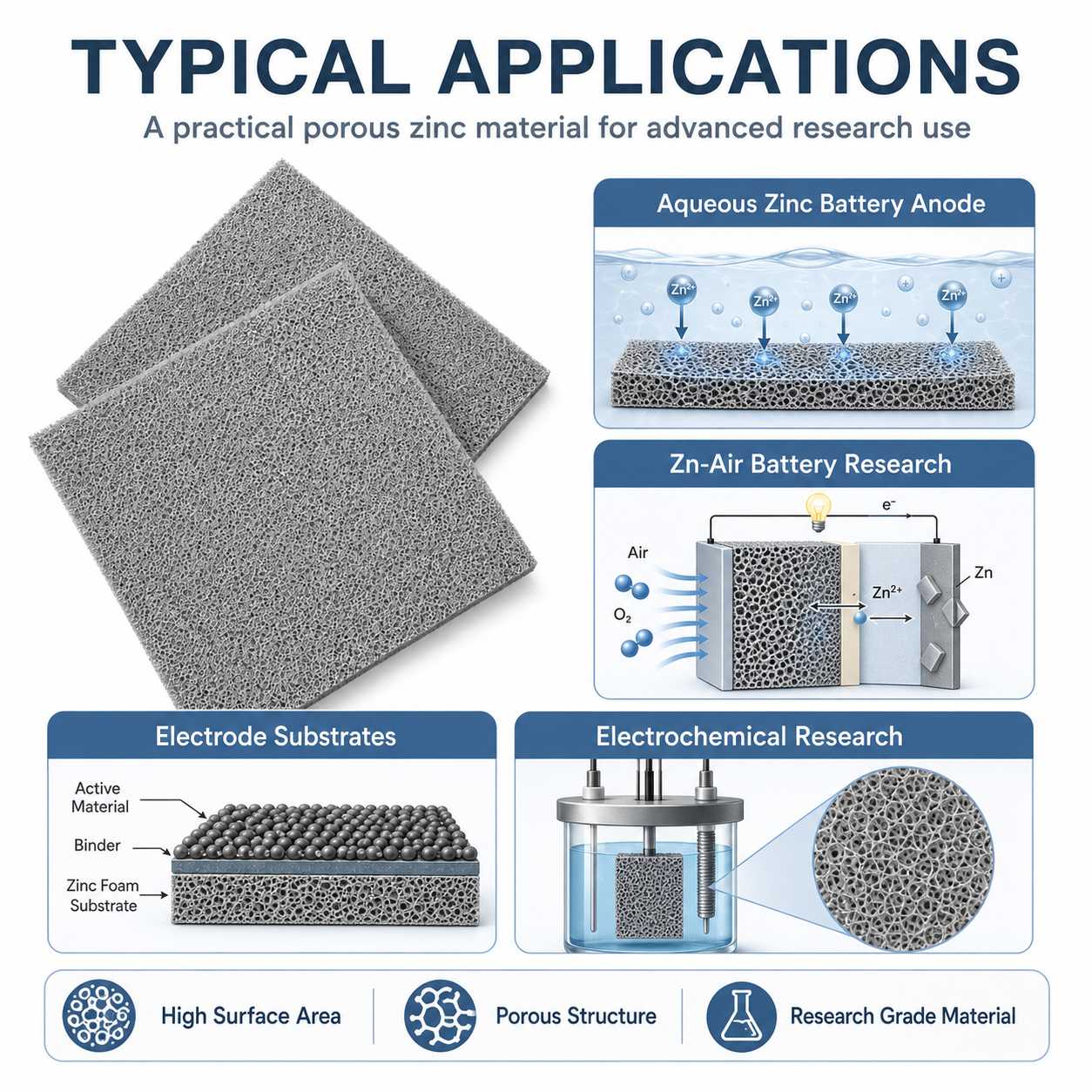
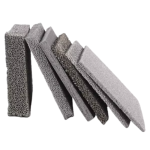
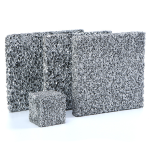
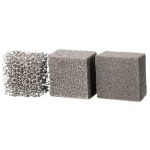
- Zinc Foam is an open‑cell porous zinc metal with a 3D interconnected structure, high porosity and large specific surface area. Made from high‑purity zinc (typically ≥99.9%), it offers good electrical conductivity, low density and excellent electrolyte penetration, making it ideal as an anode or current collector in zinc‑ion and alkaline batteries, electrochemical electrodes, electroplating and corrosion‑protection systems. Zinc foam can be supplied in sheets or custom‑cut parts with adjustable thickness, pore size (PPI) and density.
- With uniform pores and stable mechanical strength, Zinc Foam improves mass transfer and reaction efficiency in electrochemical and catalytic applications. It is widely used as a catalyst support, in fuel cells, sensors, filtration, gas diffusion layers and lightweight conductive structures. The material is easy to cut, punch and form, and is suitable for laboratory research, pilot production and industrial projects that require a high‑surface‑area, conductive and corrosion‑resistant zinc metal foam.
仕様
| タイプ | Open cell zinc metal foam |
| 純度 | Zn ≥ 99.9% (high‑purity zinc; other grades on request) |
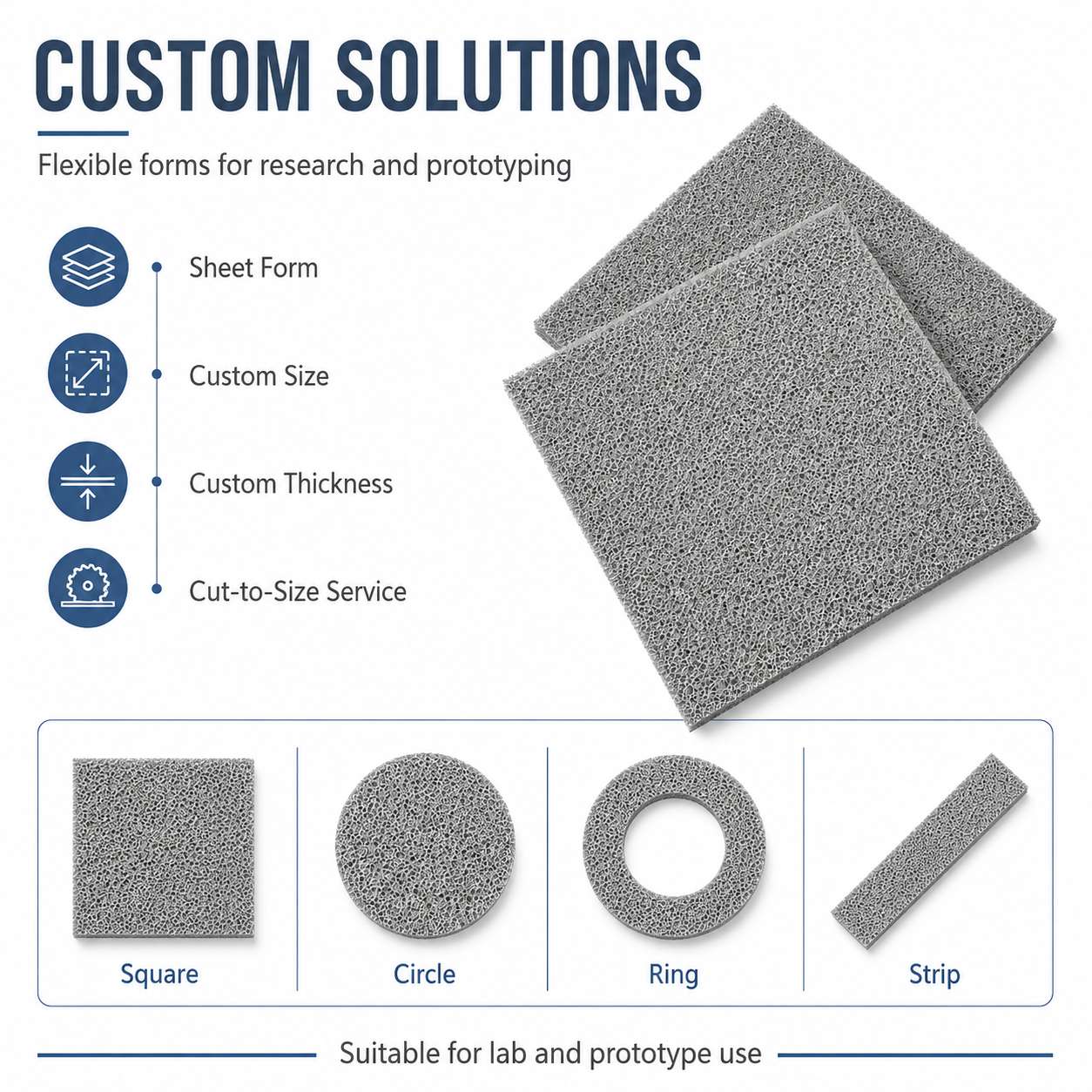
| フォーム | Sheet, roll, or custom‑cut blocks/parts depending on size & thickness |
| セルサイズ(PPI) | Typically 10–80 PPI; other pore sizes can be customized |
| 厚さ | Standard: approx. 0.5–20 mm; other thicknesses can be customized |
| サイズと形状 | Common sheets: e.g. 100 × 100 mm / 200 × 300 mm; can be cut or made into different shapes as per request |
| 多孔性 | Typically about 70% – 97%, depending on grade and PPI |
| 開放セル率 | Usually ≥ 95% (most cells interconnected) |
| 体積密度 | Approx. 0.2–1.0 g/cm³ (adjustable by porosity and structure) |
| 表面密度 | Approx. 100–4000 g/m², depending on thickness and density |
| Thermal Conductivity (Effective) | Typically around 1–20 W/m·K (strongly depends on porosity; bulk zinc ~ 116 W/m·K) |
| Mechanical Strength (Compressive) | Typically about 1–5 MPa (varies with density and pore size) |
| Average Tensile Strength (N/20 mm) | Vertical ≥ 15, horizontal ≥ 10 (typical for thin, flexible foam strips; can vary with product) |
| Temperature Resistance (Inert Atmosphere / Vacuum) | Generally ≥ 350–400 ℃ for long‑term use (zinc melting point ~419.5 ℃; actual usable temperature depends on application and environment) |
| 外観 | Metallic silver‑gray zinc, uniform color, without obvious defects such as heavy oxidation spots, blind holes, through holes, large cracks, etc. |
| Chemical Composition | Zn ≥ 99.9%; typical metallic impurities (Pb, Cd, Fe, Cu, etc.) each usually ≤ 0.05% (exact limits depend on grade/standard) |
| Electrical Conductivity | Good electrical conductivity; bulk zinc resistivity ~5.9 × 10⁻⁸ Ω·m (effective value decreases with porosity and foam structure) |
| Corrosion Resistance | Good corrosion resistance in many neutral and mildly alkaline environments; sacrificial anode behavior in some systems; not suitable for strong acids, strong oxidizing media or environments where zinc dissolution is undesirable |
| 柔軟性 | Certain flexibility for thin, low‑density sheets; can be bent and slightly compressed, but brittleness increases with thickness and low porosity |
| Elongation Rate (%) | Typically low elongation compared with ductile metals; for thin, high‑porosity foam, vertical ≈ 2–4%, horizontal ≈ 3–5% (reference values) |
| アプリケーション | Battery anodes and current collectors (zinc‑ion, alkaline batteries), electrocatalyst supports, electroplating and corrosion‑protection electrodes, fuel cell and electrochemical components, filtration, gas diffusion media, sound absorption, heat dissipation and lightweight structural parts requiring conductive porous zinc material |
ディメンション (厚さ* 長さ*幅)
| 0.08mm*300mm*200mm | 0.2mm*200mm*300mm | 0.3mm*200mm*300mm |
| 0.5mm×200mm×300mm | 0.7mm×200mm×300mm | 0.9mm*200mm*300mm |
| 1.0mm×200mm×300mm | 1.3mm*200mm*300mm | 1.5mm×200mm×300mm |
| 1.7mm*200mm*300mm | 2.0mm×200mm×300mm | 5mm×200mm×300mm |
| 10mm*200mm*300mm | 30mm*200mm*300mm | サイズはカスタマイズ可能です |
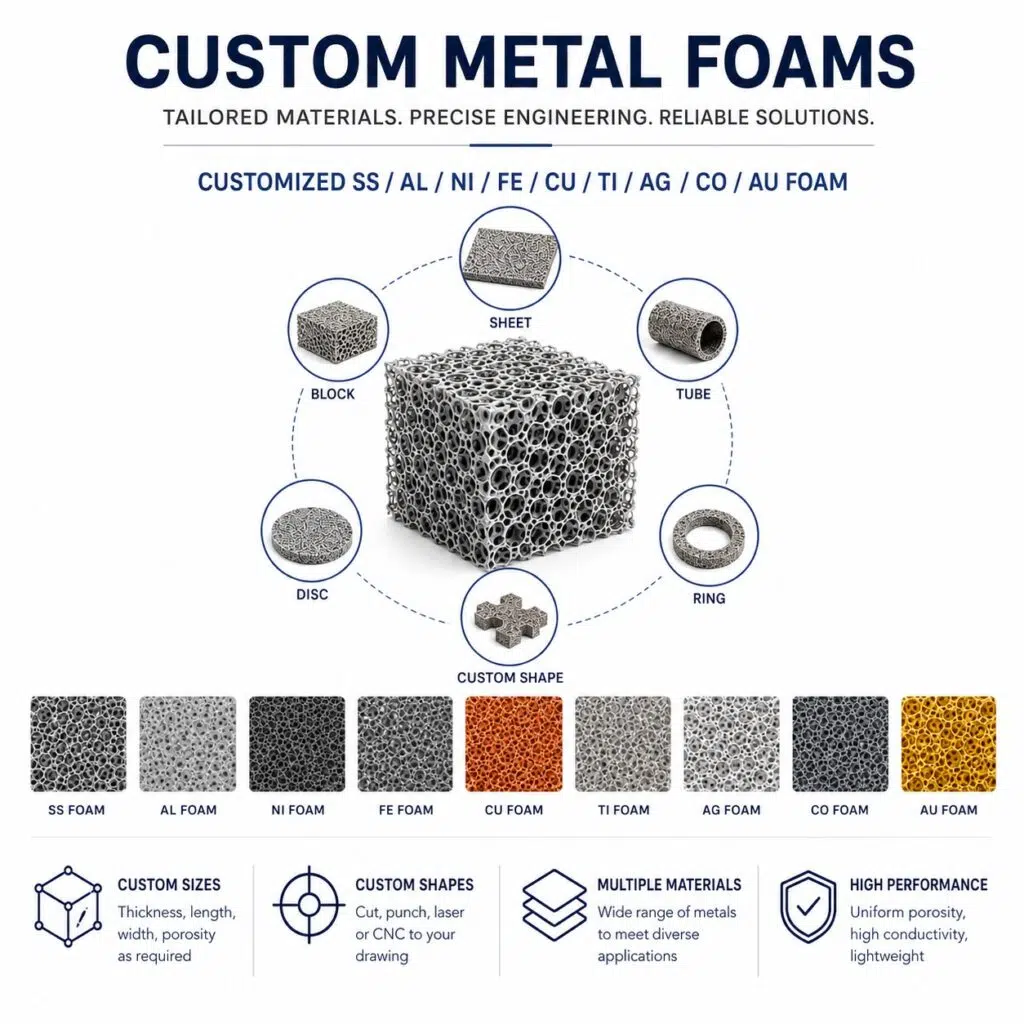
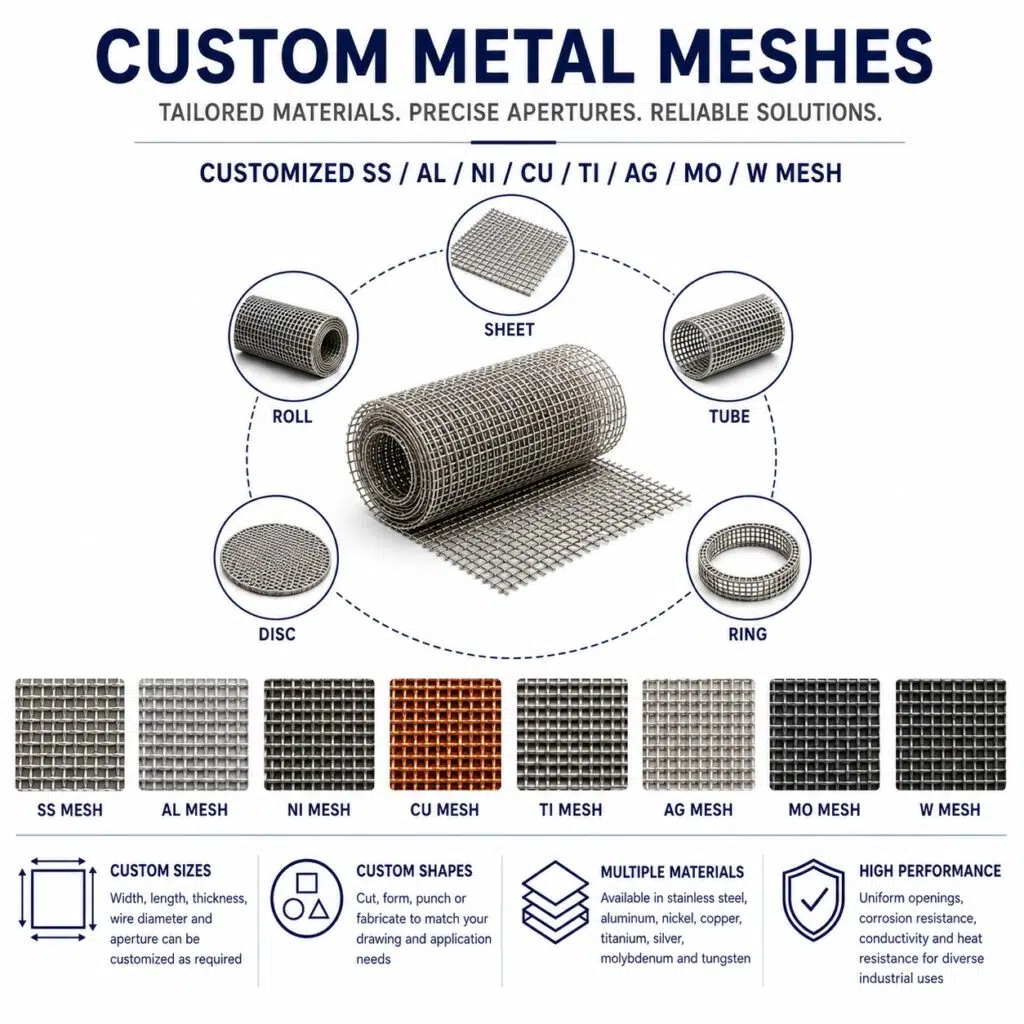
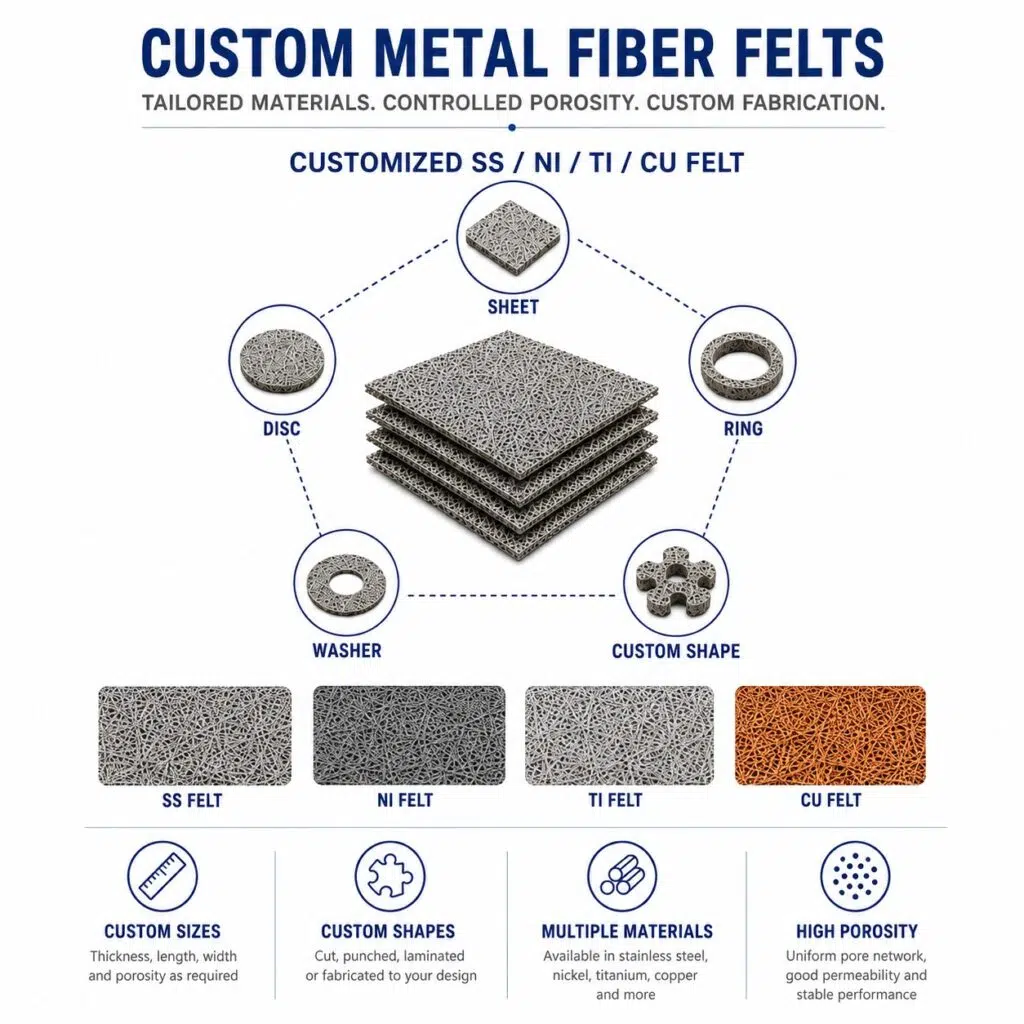
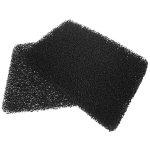
各種金属フォームのカスタマイズについては、詳細はこちらの画像をクリックしてください:
 |
 |
 |
 |
 |
 |
 |
 |