








In a world increasingly driven by clean energy and high‑reliability power systems, traditional battery materials are reaching their limits. Researchers and manufacturers are actively searching for new electrode structures that can dramatically improve performance, extend cycle life, and enhance safety—without completely changing the existing battery chemistry.
Against this backdrop, Oqitop New Material Co., Ltd.’s high‑performance nickel fiber felt has entered the laboratory of the University of Barcelona in Spain and successfully helped its research team upgrade the nickel–metal hydride (MH‑Ni) battery. By using nickel fiber felt as the positive electrode skeleton / current collector, our material has replaced conventional nickel foam, delivering stronger adhesion of the active material, higher utilization, a cycle life of several thousand cycles, and excellent vibration resistance.
From Nickel Foam to Nickel Fiber Felt: A Key Materials Upgrade
In conventional Ni‑MH batteries, nickel foam has long been the mainstream choice for the positive electrode skeleton and current collector. While it offers a basic porous and conductive structure, it also shows clear limitations in advanced applications:
- Active material may not adhere firmly, leading to detachment after long‑term cycling
- Pore structure and effective surface area are not fully optimized, restricting active material utilization
- Limited mechanical robustness under long‑term charge/discharge and vibration, affecting cycle life and reliability
The University of Barcelona’s electrochemical research team has been focusing on improving the structure and materials of Ni‑MH batteries. Their objective was clear: find a new positive electrode skeleton / current collector that could replace nickel foam, significantly boost performance, and provide long‑term stability—without changing the basic MH‑Ni chemistry.
This is exactly where Oqitop’s nickel fiber felt came in.
Designed for High‑Performance Ni‑MH: The Advantages of Oqitop Nickel Fiber Felt
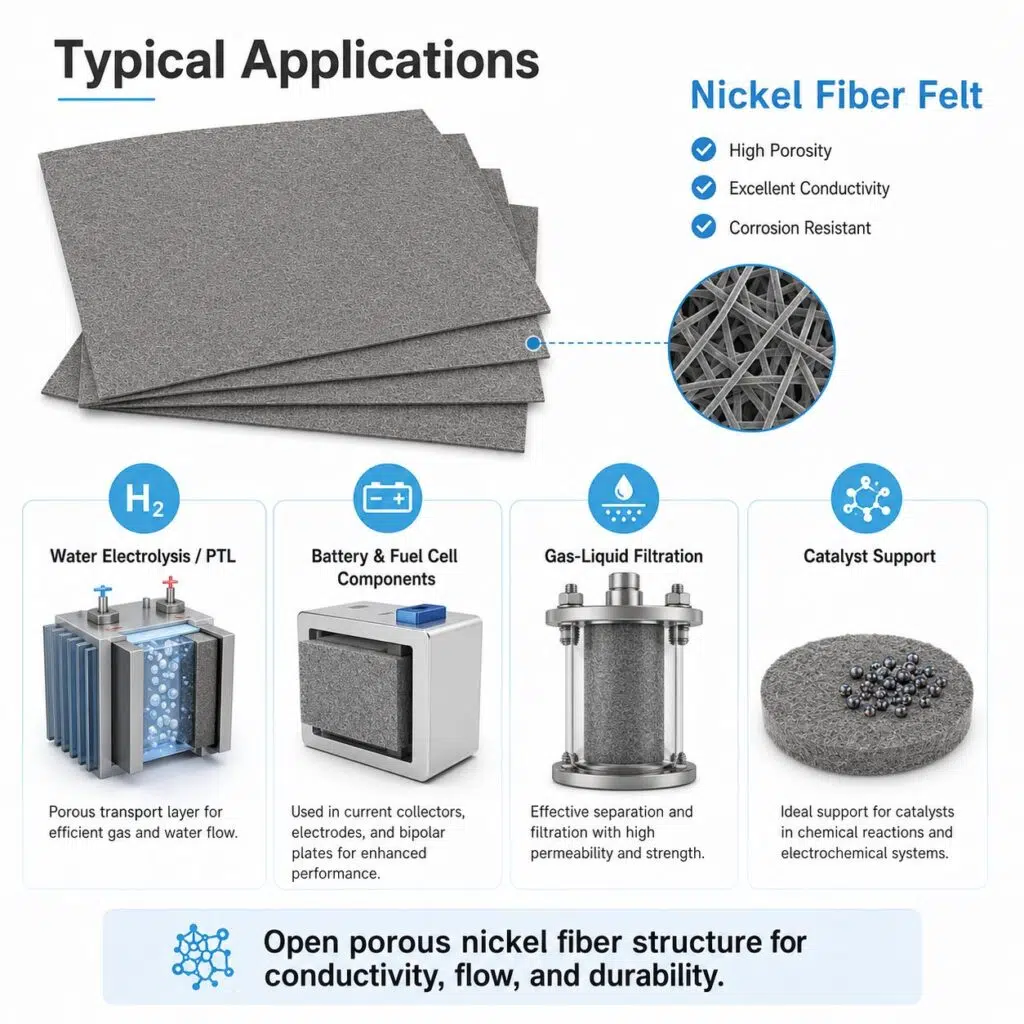
Oqitop New Material Co., Ltd. specializes in metal fibers and porous metal materials. Our nickel fiber felt is produced from high‑purity nickel through precise fiber manufacturing and controlled sintering, forming a three‑dimensional, fully interconnected conductive network. This unique structure aligns perfectly with the needs of the Ni‑MH positive electrode:
1. 3D Conductive Network for Uniform Current Distribution
The sintered nickel fibers form a continuous three‑dimensional network with excellent conductivity:
- More uniform current distribution across the electrode
- Reduced local current hotspots and polarization
- Improved consistency of electrochemical reactions across the entire electrode
- Enhanced capability for higher rate charge/discharge
2. High Porosity and Optimized Pore Structure
Nickel fiber felt features high, controllable porosity and well‑connected pores:
- Active material slurry can penetrate deeply into the internal skeleton
- Larger effective surface area increases the electrochemically active interface
- Active material takes part in reactions more completely, significantly improving utilization
3. Strong Active Material Adhesion and Stable Cycling
Thanks to its fiber network and surface morphology, nickel fiber felt provides a more “anchored” and interlocked interface between the skeleton and the active material:
- Stronger mechanical interlocking between the coating and the metal framework
- Much less active material peeling or pulverization during long‑term cycling
- Slower internal resistance increase and better capacity retention over time
4. Excellent Vibration and Shock Resistance
For applications exposed to vibration or impact (such as automotive, power tools, and industrial equipment), mechanical stability of the electrode is critical:
- Nickel fiber felt offers better toughness and structural integrity compared with conventional foams
- The electrode structure remains stable under vibration and mechanical shock
- Battery performance is maintained reliably over thousands of cycles, even in demanding environments
Project Achievements at the University of Barcelona
Working with Oqitop, the University of Barcelona selected our nickel fiber felt as the positive electrode skeleton / current collector for a series of Ni‑MH cell prototypes. Through systematic testing, they obtained several key results:
- Successful Replacement of Nickel Foam
Nickel fiber felt fully replaced nickel foam as the positive skeleton / current collector without changing the basic MH‑Ni chemistry or overall manufacturing framework. Electrode preparation remained stable, with high process compatibility. - Firm Attachment of Active Material
Microscopic and post‑cycling cross‑sectional analyses showed that the active material adhered more firmly to the nickel fiber felt. Even after long‑term cycling, the electrode surface remained intact and cohesive, outperforming the nickel foam reference. - Higher Active Material Utilization
Under identical paste formulation and electrode loading conditions, cells using nickel fiber felt delivered higher discharge capacity and a more stable voltage plateau, indicating a clear improvement in active material utilization. - Cycle Life Reaching Several Thousand Cycles
Under standard conditions and moderate C‑rates, Ni‑MH cells built on nickel fiber felt achieved stable long‑term cycling with a service life of several thousand cycles. Capacity fade was slow and progressive, pointing to a robust and durable electrode system. - Outstanding Vibration Resistance
In vibration and mechanical shock tests, the nickel fiber felt‑based electrodes showed superior structural stability. Internal connections remained reliable, and electrical performance fluctuations were minimal, demonstrating excellent suitability for real‑world dynamic environments.
These results have not only earned high recognition from the University of Barcelona research team, but also opened up new possibilities for upgrading Ni‑MH technology in various fields, from transportation and power tools to backup and emergency power systems.
Beyond Material Supply: A Technical Partner in Electrode Innovation
Throughout the collaboration, Oqitop did more than ship materials. We worked closely with the University of Barcelona to:
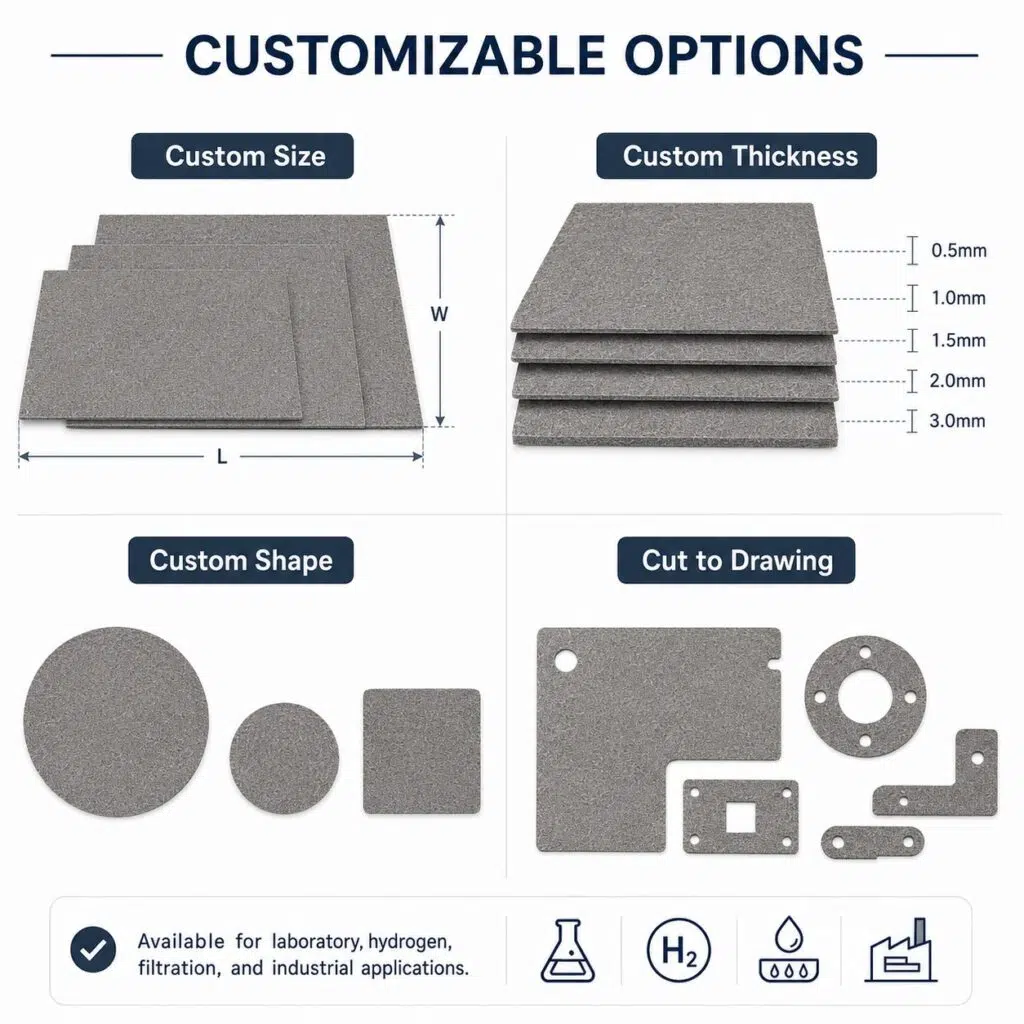
- Provide nickel fiber felt in different thicknesses and porosities
- Help optimize the match between felt structure and active material slurry
- Offer recommendations on coating, impregnation, and drying processes
- Balance mechanical strength, flexibility, and porosity to suit their specific cell design
This end‑to‑end cooperation—from material selection and process adaptation to performance verification—demonstrates Oqitop’s role not just as a supplier, but as a long‑term technical partner in electrode innovation.
Looking Ahead: Upgrading Ni‑MH Batteries Worldwide
Despite the rapid growth of lithium‑ion technology, Ni‑MH batteries still play an important role in applications that demand high safety, wide operating temperature ranges, and strong tolerance to abuse and overcharge.
By introducing Oqitop nickel fiber felt as a new‑generation positive electrode skeleton / current collector, traditional Ni‑MH batteries can be significantly upgraded:
- Higher active material utilization
- Cycle life extended to several thousand cycles and beyond
- Stronger resistance to vibration and mechanical stress
- Improved overall reliability and safety margins
Oqitop New Material Co., Ltd. is ready to extend the successful experience with the University of Barcelona to partners worldwide:
- For research institutions:
We offer customizable nickel fiber felt parameters and technical support for cutting‑edge electrochemical research. - For battery manufacturers:
We support a smooth transition from nickel foam to nickel fiber felt, providing process suggestions and stable mass‑production supply. - For system integrators and end users:
We help enable more reliable Ni‑MH battery solutions with longer life and higher stability.
If you are facing limitations with nickel foam or seeking to significantly improve the performance and durability of your Ni‑MH batteries, Oqitop’s nickel fiber felt may be the key component that unlocks your next level of competitiveness.
—
Oqitop New Material Co., Ltd.
Specialized in advanced metal fiber materials, providing a solid foundation for global energy storage innovation.