








In the push toward clean energy, fuel cells are at the heart of many next‑generation power systems—from vehicles and backup power to distributed energy. But as operating conditions become harsher, traditional carbon‑based diffusion layers are reaching their limits. High voltages, acidic environments, and long service lifetimes place extreme demands on the materials inside a fuel cell.
To meet these challenges, researchers at Seoul National University (SNU) turned to a new solution: Oqitop’s titanium fiber felt. By replacing conventional carbon‑based gas diffusion layers (GDLs) with corrosion‑resistant, highly conductive titanium fiber felt, SNU has taken a key step toward more robust, high‑performance fuel cell systems under harsh operating conditions.
The Challenge: Fuel Cells Under Harsh Conditions
In many real‑world applications, fuel cells no longer operate under mild, “ideal” conditions. Instead, they are exposed to:
- High voltages, especially during start‑stop cycles or fault conditions
- Strongly acidic environments from proton exchange membranes and electrolyte
- Long‑term operation with frequent load changes and dynamic gas supply
- Elevated humidity and temperature variations
Under these conditions, traditional carbon‑based diffusion layers face serious issues:
- Carbon corrosion at high potentials, leading to structural degradation
- Loss of electrical conductivity over time
- Changes in pore structure, causing uneven gas distribution and localized flooding or drying
- Reduced long‑term power output and unstable cell performance
Seoul National University’s fuel cell research team needed a more stable, metallic diffusion layer material that could survive high‑voltage and acidic conditions, maintain conductivity, and ensure uniform gas transport over thousands of operating hours.
Oqitop Titanium Fiber Felt: Built for Corrosive, High‑Voltage Environments
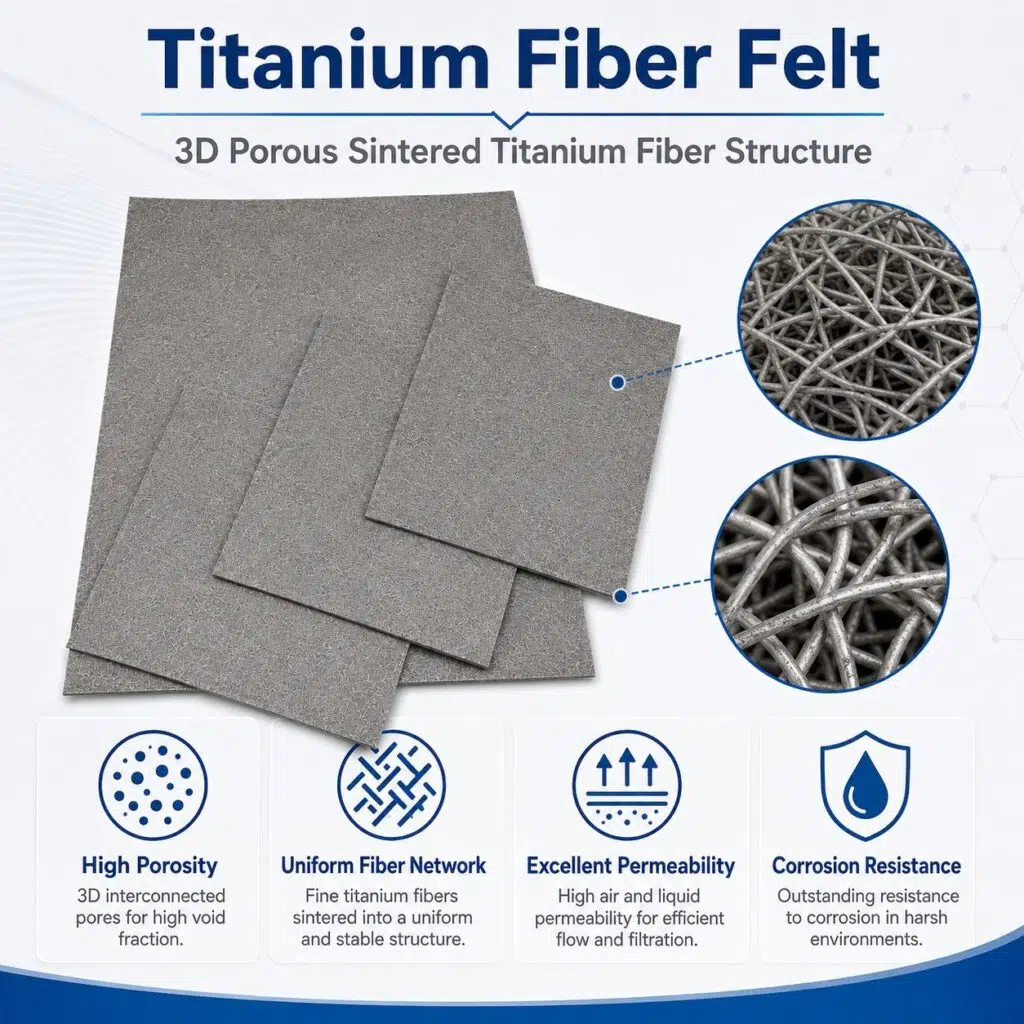
Oqitop New Material Co., Ltd. specializes in advanced metal fiber materials. Our titanium fiber felt is designed for extreme electrochemical environments—especially fuel cells that demand both chemical stability and excellent electrical performance.
By using high‑purity titanium fibers formed into a three‑dimensional sintered network, Oqitop titanium fiber felt offers a combination of properties that carbon‑based diffusion layers struggle to match:
1. Exceptional Corrosion Resistance in Acidic and High‑Voltage Conditions
Titanium is known for its outstanding corrosion resistance, especially in acidic media and electrochemical systems. In a fuel cell environment:
- Titanium fiber felt forms a stable, protective oxide layer that resists chemical attack
- It maintains its structural integrity even under high potentials where carbon materials would corrode
- Long‑term exposure to acidic electrolytes and oxidizing conditions does not cause rapid degradation
For SNU’s research, this meant a diffusion layer that remains reliable over extended operation, rather than gradually decaying and limiting the cell’s service life.
2. Stable Electrical Conductivity Over Time
Where carbon‑based GDLs may lose conductivity as they corrode or change structurally, titanium fiber felt offers:
- A continuous metallic network with low contact resistance
- Stable electrical pathways even after prolonged cycling
- Consistent electron transport between catalyst layer, bipolar plate, and current collectors
This stable conductivity is critical to maintaining voltage output, minimizing ohmic losses, and ensuring that the fuel cell stack behaves predictably in demanding conditions.
3. Uniform Gas Distribution and Water Management
A well‑designed diffusion layer must do more than conduct electrons; it must also manage gases and water effectively. Oqitop titanium fiber felt is engineered with:
- Controlled porosity and pore size distribution
- A three‑dimensional interconnected structure that promotes uniform gas flow
- Tunable thickness and compression characteristics to match stack design
In SNU’s tests, this translated into:
- More uniform distribution of reactant gases (hydrogen and air/oxygen) across the active area
- Reduced risk of local flooding or gas starvation
- More stable cell performance over a wide range of current densities and operating conditions
Uniform gas supply is especially critical under harsh conditions, where even small imbalances can accelerate degradation or trigger local hot spots.
4. Mechanical Robustness and Design Flexibility
Titanium fiber felt is not only chemically stable; it is also mechanically robust:
- It resists compression set and maintains structural integrity under stack clamping forces
- It tolerates thermal cycling and vibration better than fragile carbon structures
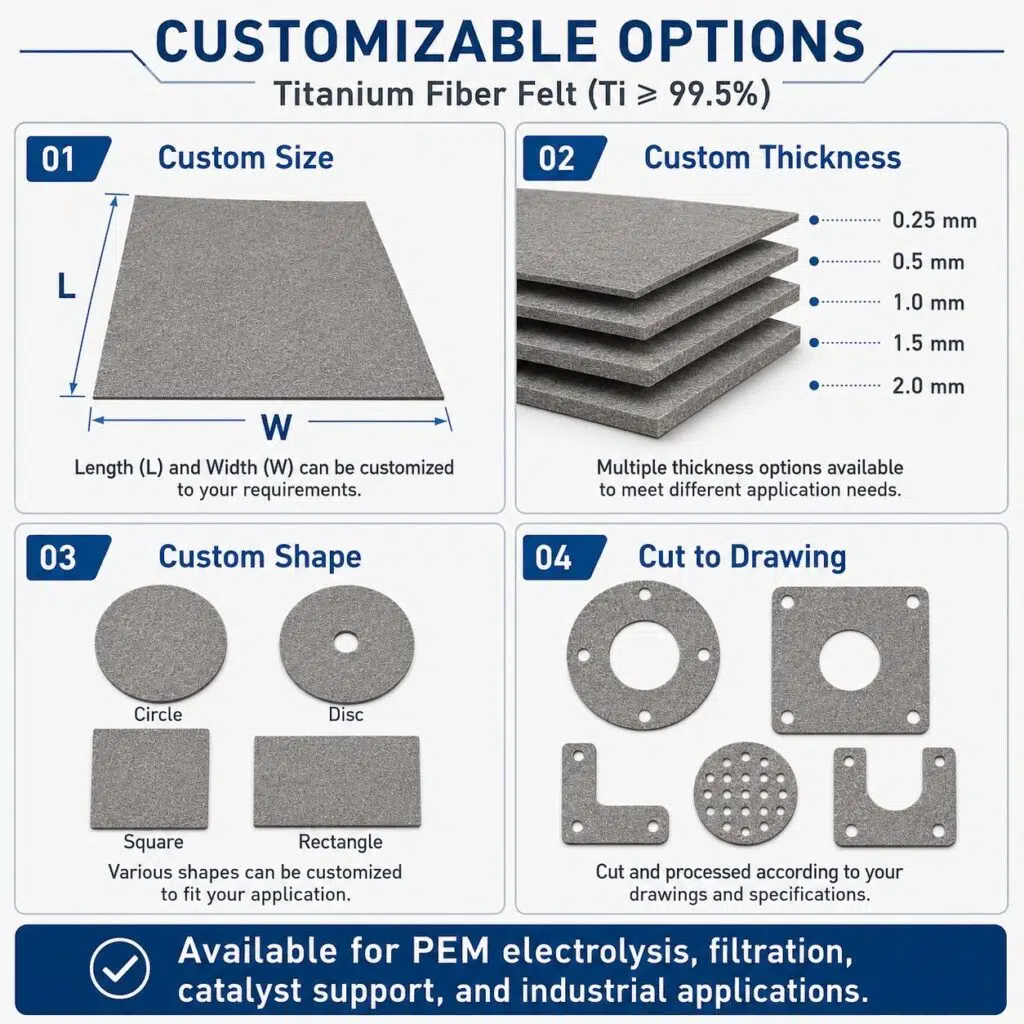
- It can be produced in different thicknesses, densities, and formats to integrate with existing stack designs
This gives fuel cell designers the flexibility to optimize both performance and durability without having to compromise on mechanical reliability.
Collaboration with Seoul National University: From Concept to Validation
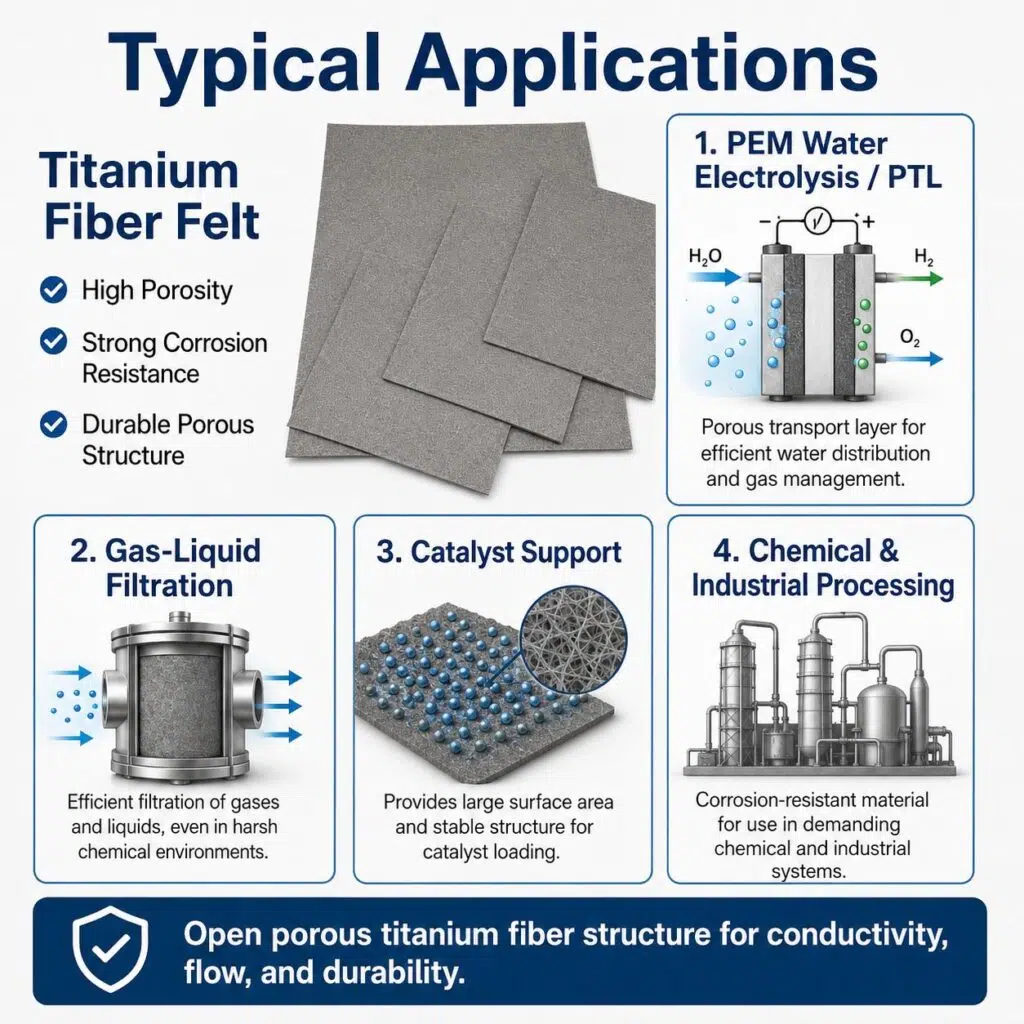
Recognizing the limitations of carbon‑based diffusion layers in harsh operating regimes, the fuel cell team at Seoul National University initiated a collaboration with Oqitop to evaluate titanium fiber felt as an alternative GDL for proton exchange membrane fuel cells (PEMFCs) and related systems.
Throughout the project, Oqitop provided:
- Titanium fiber felt samples with different porosities and thicknesses
- Guidance on compression, contact interfaces, and assembly methods
- Recommendations on integrating metallic diffusion layers into existing cell designs
SNU then performed a series of tests under high voltage, acidic, and dynamic operating conditions to evaluate:
- Corrosion behavior and structural stability of the diffusion layer
- Evolution of electrical resistance over time
- Gas transport performance and pressure drop
- Long‑term power output and voltage stability under cycling
Key Findings
The collaborative work delivered several important outcomes:
- Effective Replacement of Carbon‑Based Diffusion Layers
Titanium fiber felt successfully replaced carbon‑based GDLs in SNU’s test cells without requiring fundamental changes to the fuel cell chemistry. Integration with membranes, catalysts, and bipolar plates was achieved using existing or slightly adapted processes. - Superior Corrosion Resistance
Under accelerated stress tests at high potentials in acidic environments, titanium fiber felt exhibited minimal degradation, in sharp contrast to significant corrosion and property loss in carbon‑based layers. - Stable Conductivity and Performance
Electrical resistance remained stable over extended test periods. Voltage output drift was significantly reduced, and the stack showed more consistent performance during long‑term cycling. - More Uniform Gas Distribution
Electrochemical mapping and performance diagnostics indicated a more even current distribution across the active area, reflecting improved gas distribution and water management enabled by the engineered pore structure of the titanium fiber felt.
These results confirmed that Oqitop’s titanium fiber felt offers a credible, high‑reliability alternative to carbon‑based diffusion layers for fuel cells operating in harsh conditions.
Beyond Material Supply: Oqitop as a Technical Partner
For Oqitop, the collaboration with Seoul National University is more than a case of material delivery; it is a demonstration of our role as a technical partner in advanced energy systems. We work closely with researchers and engineers to:
- Customize titanium fiber felt properties (fiber diameter, porosity, thickness) to specific stack designs
- Optimize interfaces with catalyst layers and bipolar plates
- Co‑develop testing protocols to evaluate real‑world durability and performance
Through such partnerships, we help bridge the gap between laboratory innovation and practical implementation in fuel cells and other electrochemical systems.
Enabling the Next Generation of Fuel Cells
As fuel cells move into more demanding, high‑value applications—such as heavy‑duty vehicles, stationary backup power, and industrial energy systems—the need for durable, corrosion‑resistant, and high‑performance diffusion layers will only grow.
Oqitop titanium fiber felt offers a compelling pathway to:
- Replace carbon‑based diffusion layers in harsh operating environments
- Enhance corrosion resistance under high voltage and acidic conditions
- Maintain stable electrical conductivity over long lifetimes
- Improve uniform gas distribution and overall cell stability
Oqitop New Material Co., Ltd. is ready to support:
- Universities and research institutes exploring metallic diffusion layers and advanced fuel cell architectures
- Fuel cell manufacturers seeking to upgrade stack durability and reliability
- System integrators and end users who need robust fuel cell solutions for critical applications
If your fuel cell systems are constrained by the limitations of carbon‑based diffusion layers, Oqitop’s titanium fiber felt may be the key material that unlocks the next level of performance and durability.
—
Oqitop New Material Co., Ltd.
Advanced metal fiber solutions for the future of clean energy.