






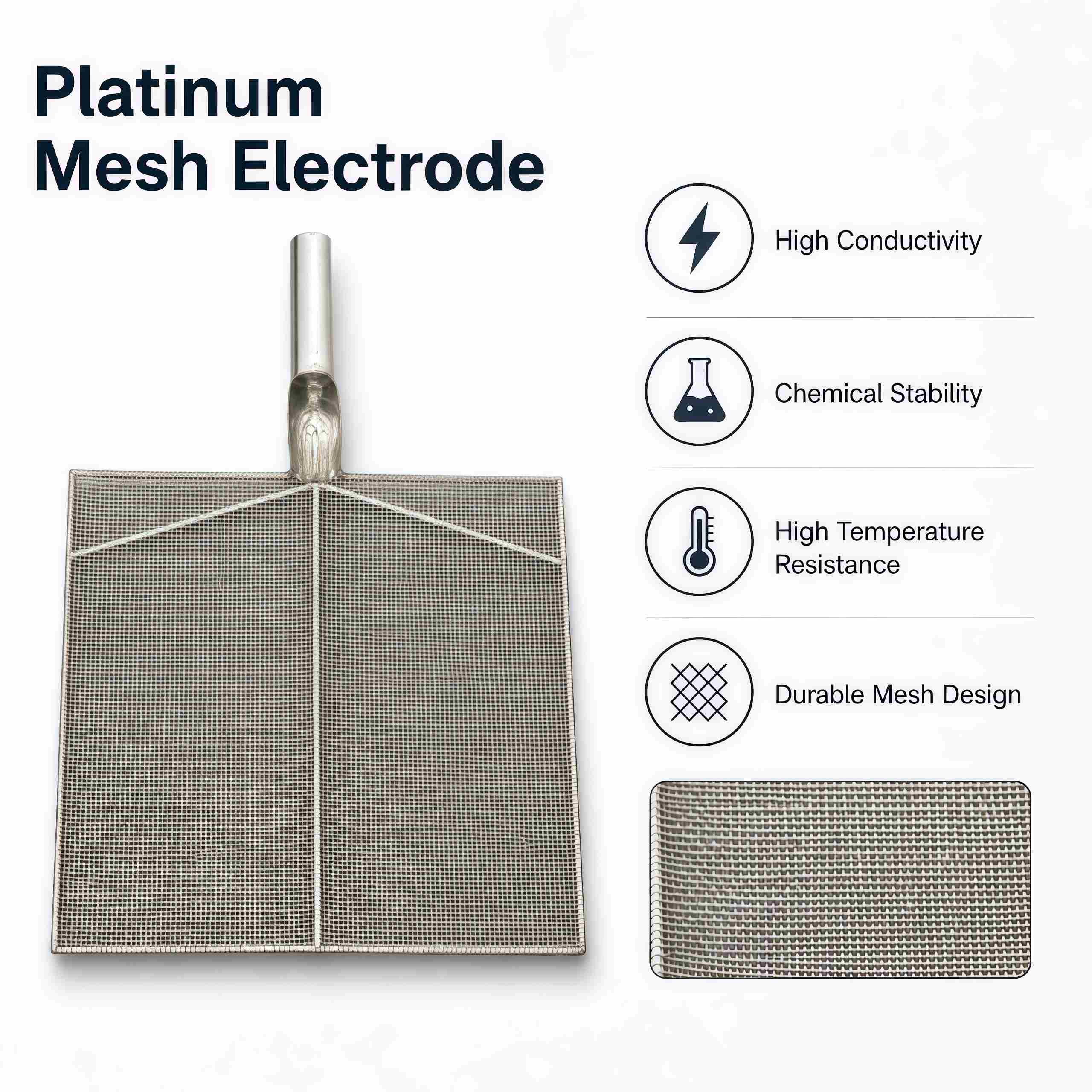
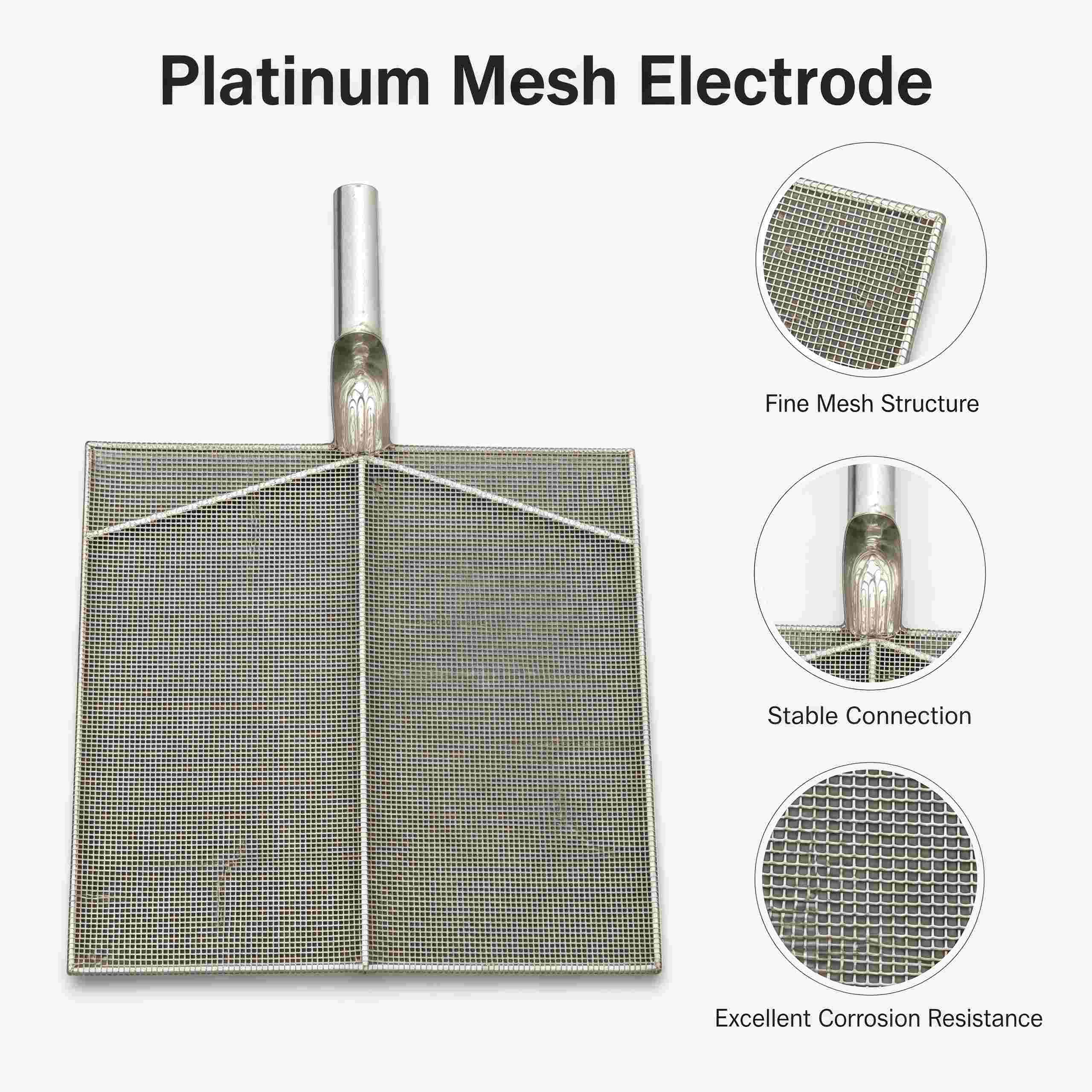
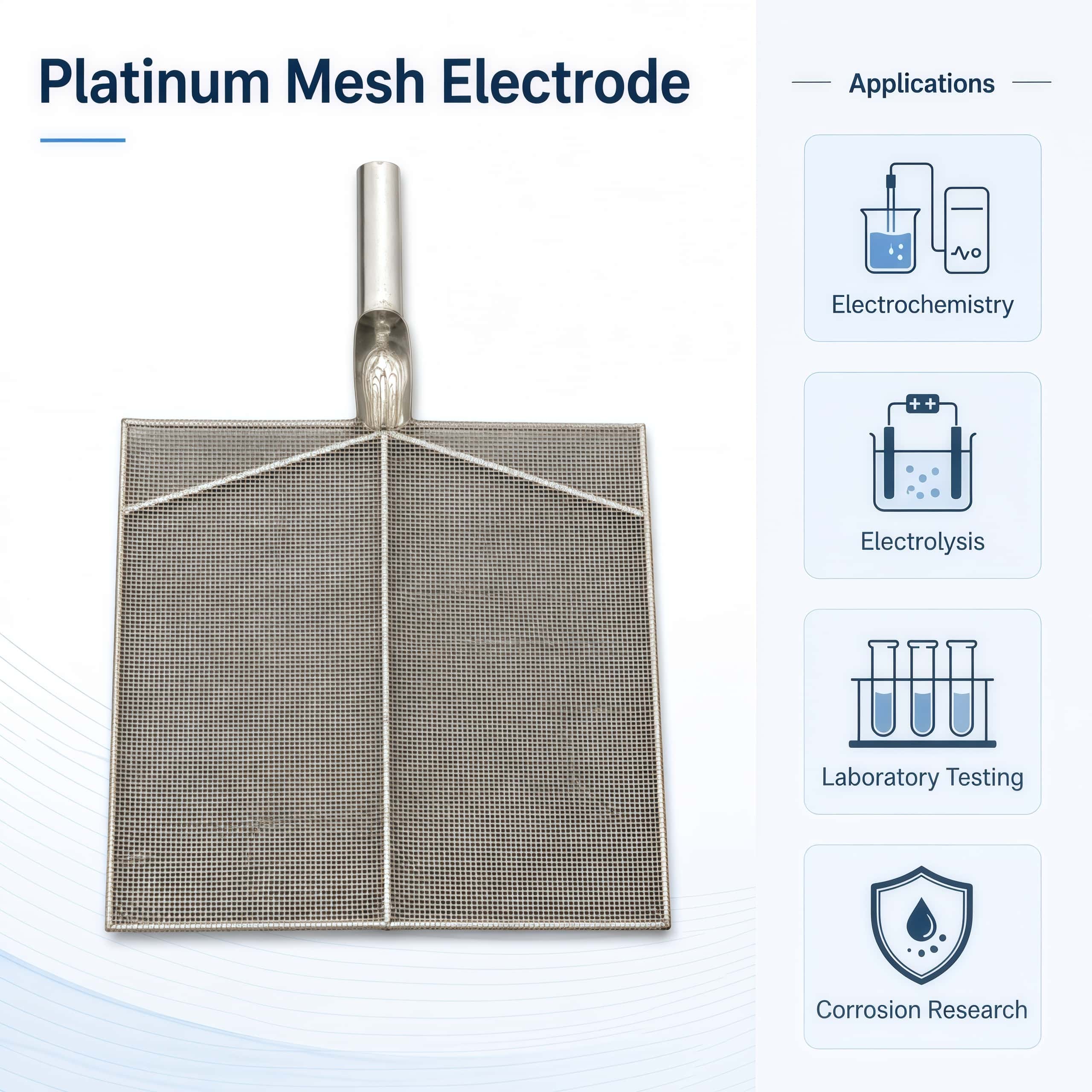
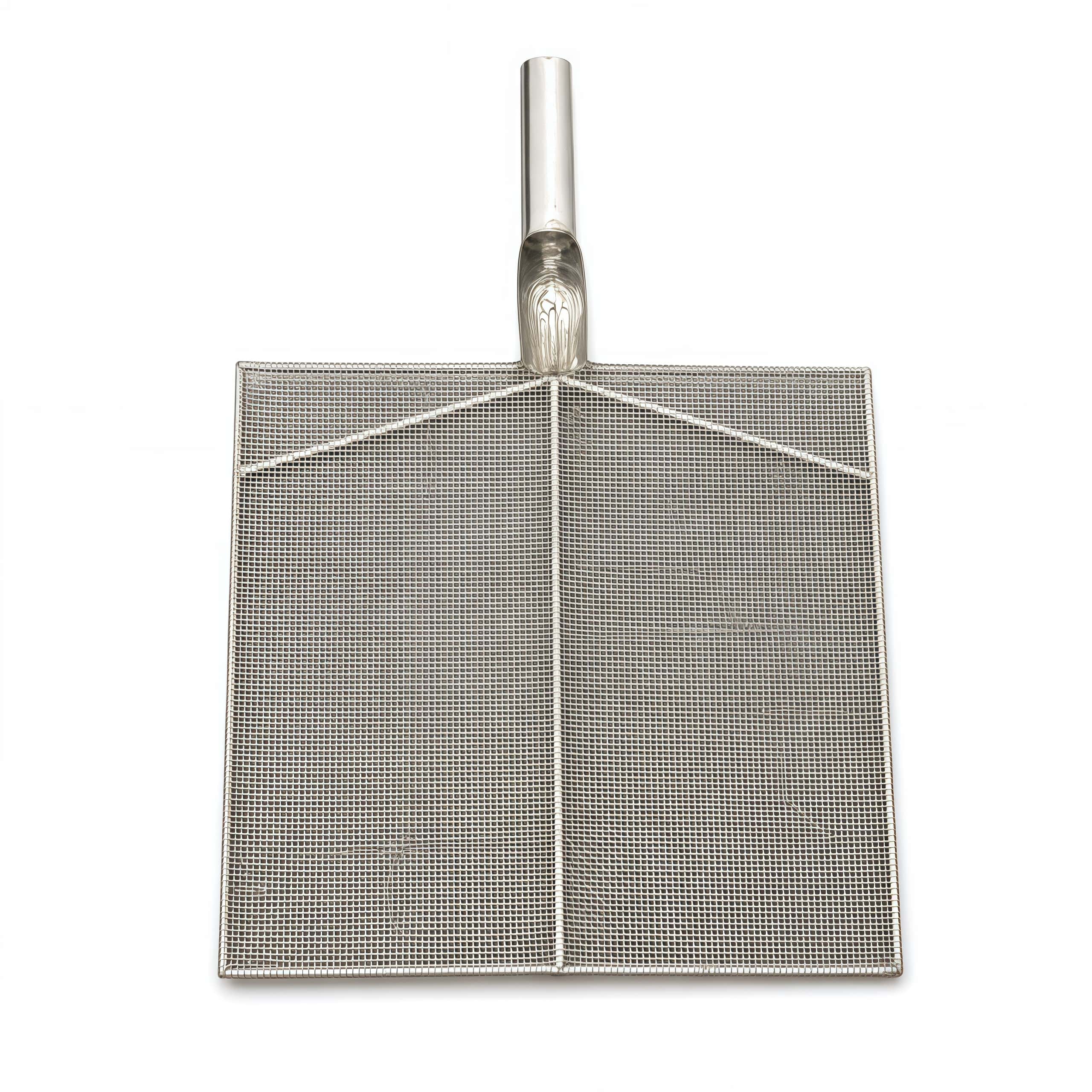
Platinum Mesh Electrode
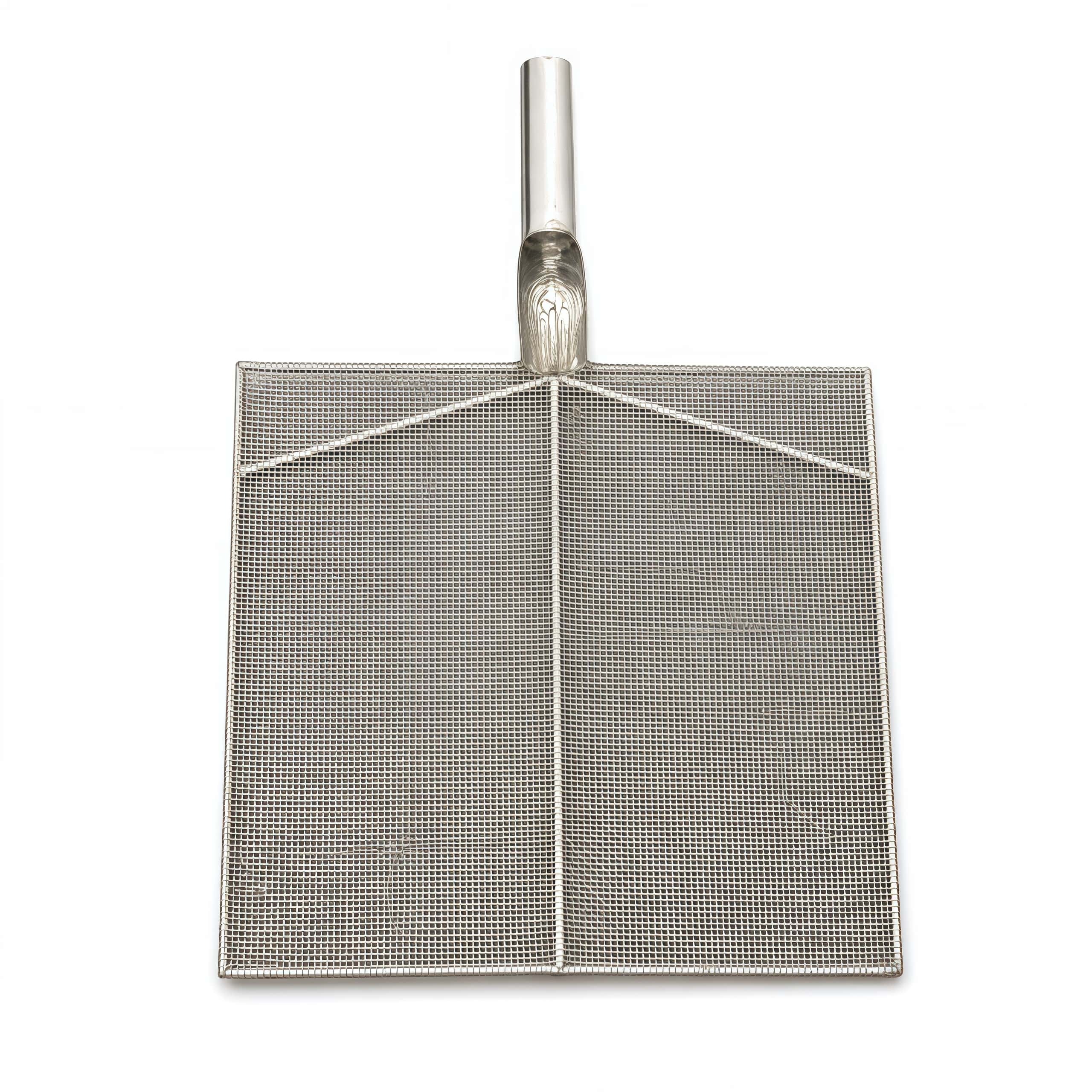
Platinum Mesh Electrode is a high-performance electrode material designed for electrochemical experiments, three-electrode systems, electrolysis, fuel cell research, plating, catalytic testing, and laboratory analysis. Made from high-purity platinum mesh, it provides excellent conductivity, large surface area, strong corrosion resistance, and stable electrochemical performance.
Compared with platinum sheet or platinum wire electrodes, platinum mesh electrodes offer a larger effective surface area, allowing better current distribution and lower current density during electrochemical reactions. This makes them especially suitable as counter electrodes / auxiliary electrodes in electrochemical cells.
Produktbeschreibung
Our high-purity platinum mesh electrode is manufactured from premium platinum material with excellent chemical stability and electrical conductivity. The mesh structure provides a larger active surface area than flat metal sheets, helping improve reaction efficiency and current uniformity.
It can be used as a counter electrode, auxiliary electrode, anode, cathode, or customized electrochemical electrode for laboratory and industrial applications. Custom sizes, mesh counts, wire diameters, handles, PTFE holders, and connection designs are available according to experimental requirements.
Platinum is widely used as a counter electrode because it is chemically inert in many electrochemical systems, and mesh structures provide high surface area for stable current flow. PalmSens notes that platinum is commonly used as a counter electrode because of its inertness, and that mesh structures can provide very large surface area.
Key Features
| Artikel | Description |
|---|---|
| Material | High Purity Platinum / Pt |
| Reinheit | 99.9%, 99.95%, 99.99% available |
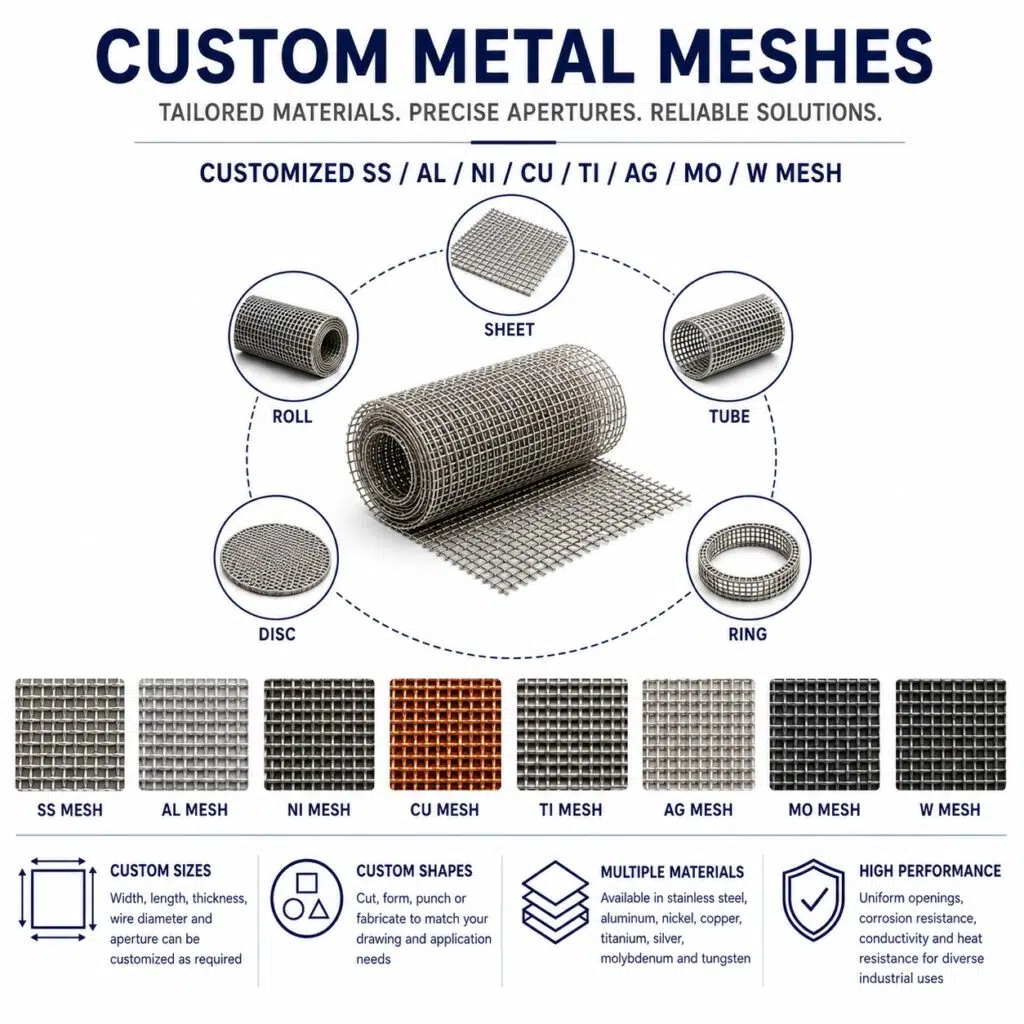
| Structure | Woven platinum mesh / platinum gauze |
| Surface Area | Larger than platinum sheet electrode |
| Conductivity | Excellent electrical conductivity |
| Stability | Good chemical and electrochemical stability |
| Corrosion Resistance | Suitable for many acidic and alkaline systems |
| Customization | Size, shape, wire diameter, mesh count, handle, connector |
Main Advantages
- High-purity platinum material
- Large active surface area
- Excellent conductivity
- Stable electrochemical performance
- Good corrosion resistance
- Suitable for three-electrode systems
- Uniform current distribution
- Easy to clean and reuse
- Custom electrode design available
Applications
| Anwendung | Description |
|---|---|
| Electrochemical Experiments | Used in laboratory electrochemical testing |
| Counter Electrode | Commonly used as auxiliary electrode in three-electrode systems |
| Electrolysis | Suitable for water electrolysis and other electrolytic reactions |
| Fuel Cell Research | Used in fuel cell and energy material testing |
| Battery Research | Suitable for battery material electrochemical analysis |
| Electrocatalysis | Used for catalytic reaction research |
| Electroplating | Used in plating and deposition experiments |
| Corrosion Testing | Used in electrochemical corrosion analysis |
| Sensor Research | Suitable for electrochemical sensor development |
Ossila also lists platinum mesh electrodes for electrochemical applications including fuel cells, water electrolysis for hydrogen production, and sensors, mainly because of their high surface area, conductivity, and chemical inertness.
Common Specifications
| Parameter | Common Options |
|---|---|
| Produktname | Platinum Mesh Electrode |
| Material | Pt / Platinum |
| Reinheit | 99.9% / 99.95% / 99.99% |
| Mesh Size | Customizable |
| Wire Diameter | 0.05 mm / 0.1 mm / 0.2 mm / Custom |
| Electrode Size | 10 × 10 mm, 20 × 20 mm, 30 × 30 mm, Custom |
| Form | Square, rectangular, round, custom shape |
| Handle | PTFE rod, glass tube, metal rod, custom holder |
| Connection | Platinum wire, copper wire, alligator clip, banana plug |
| Usage | Counter electrode, anode, cathode, auxiliary electrode |