







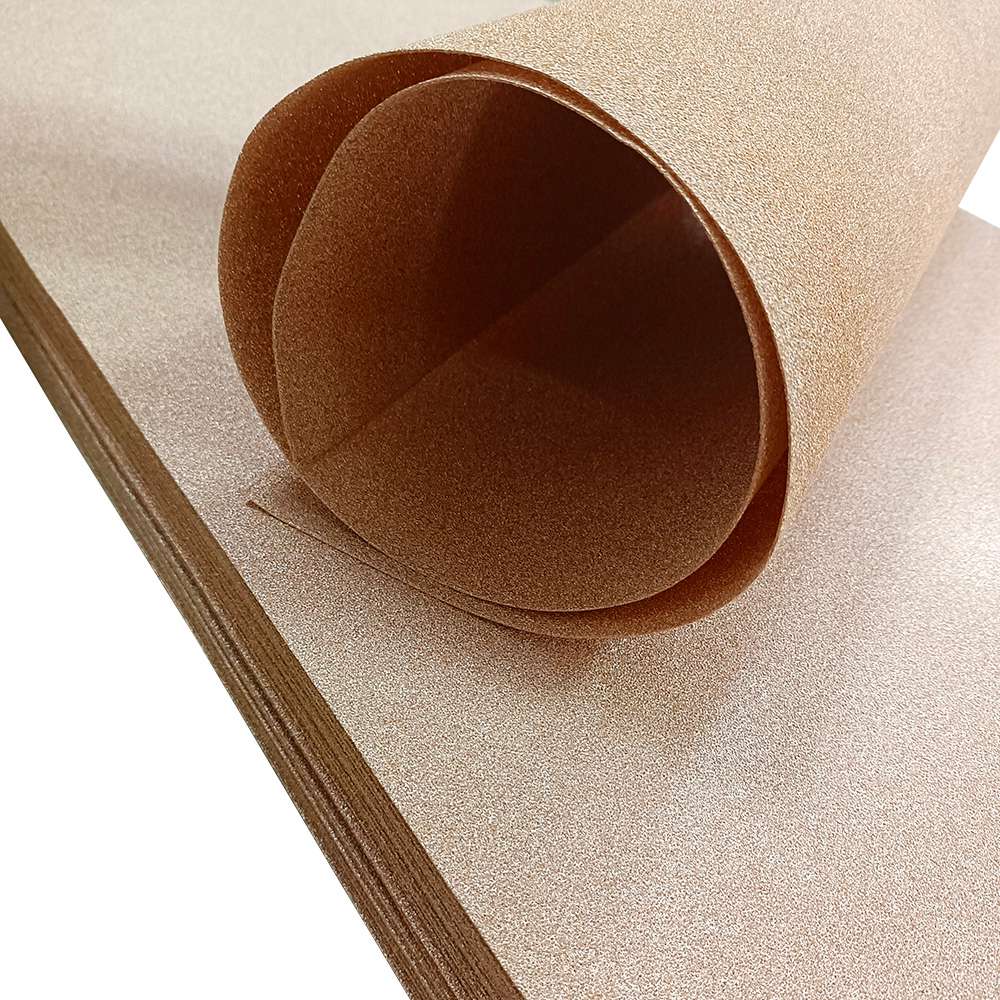
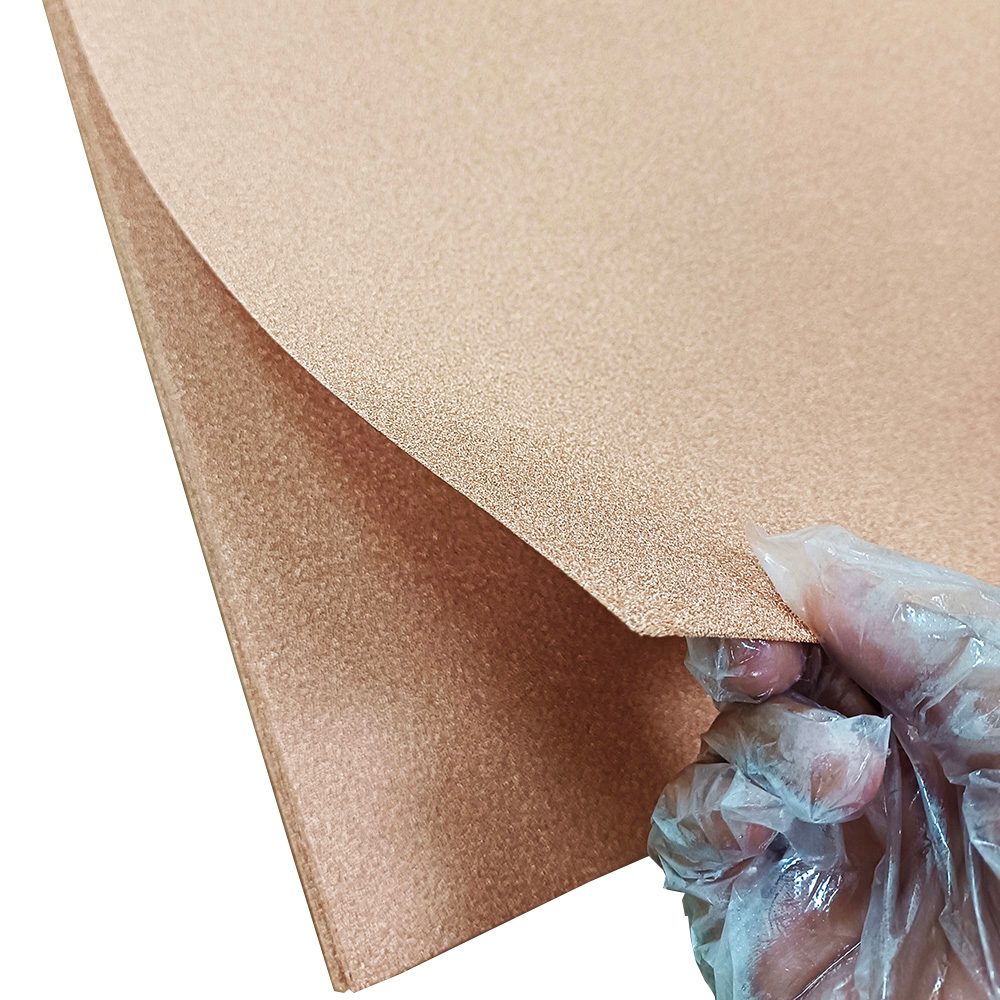
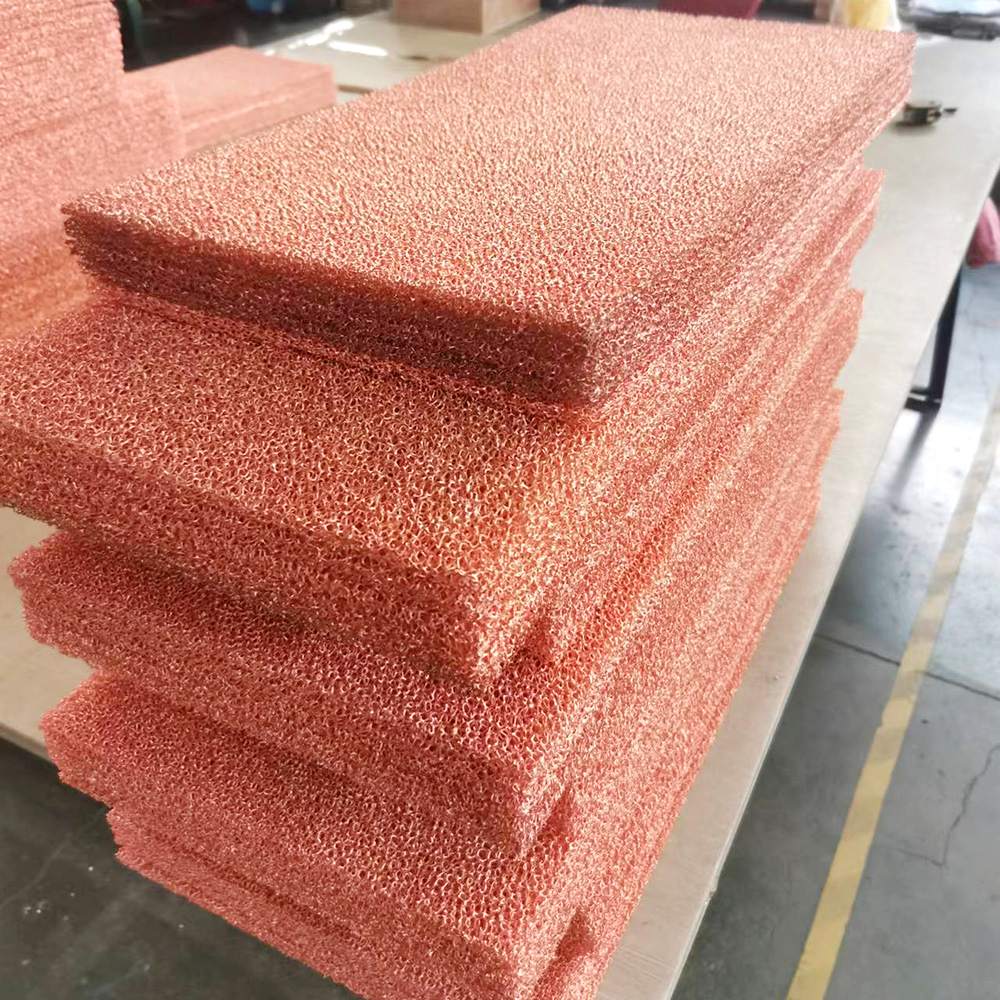
High Thermal Conductivity Cu Copper Foam Cu Metal Foam
Einführung
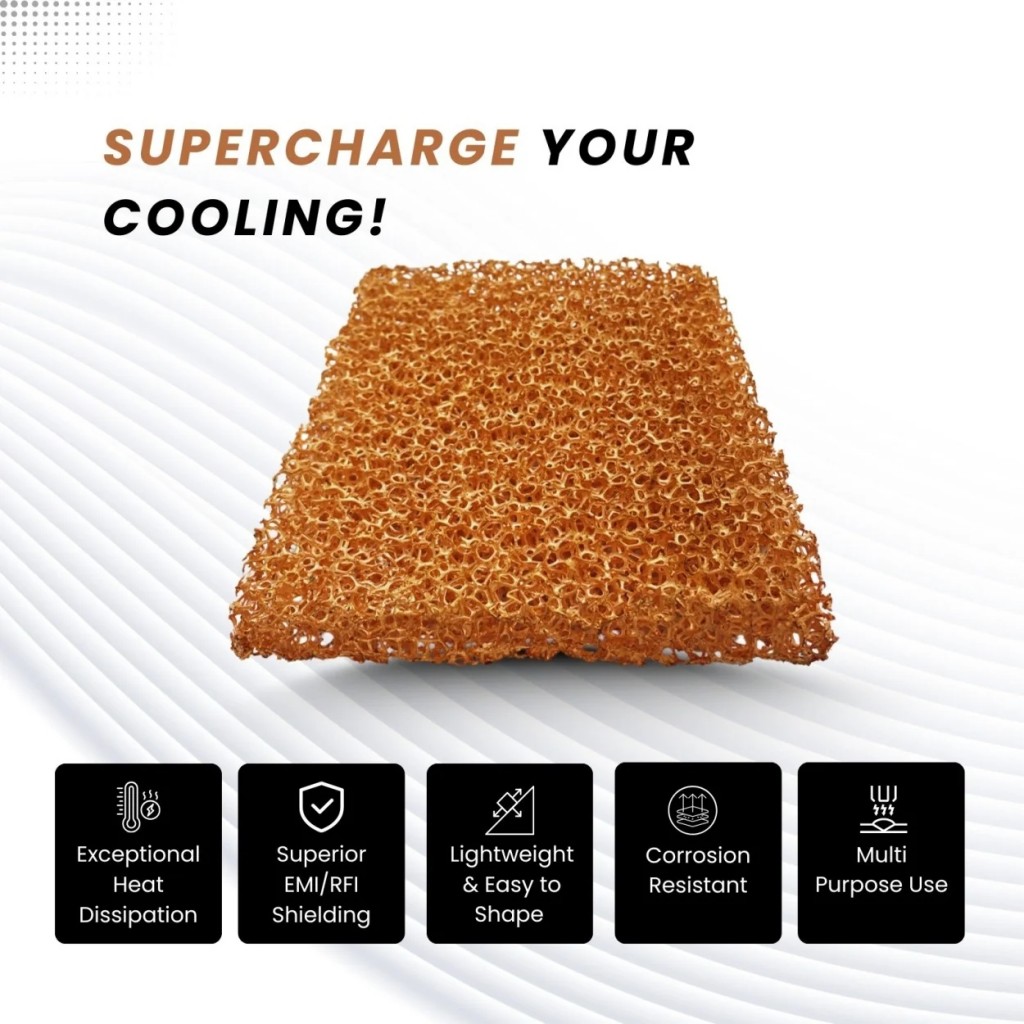
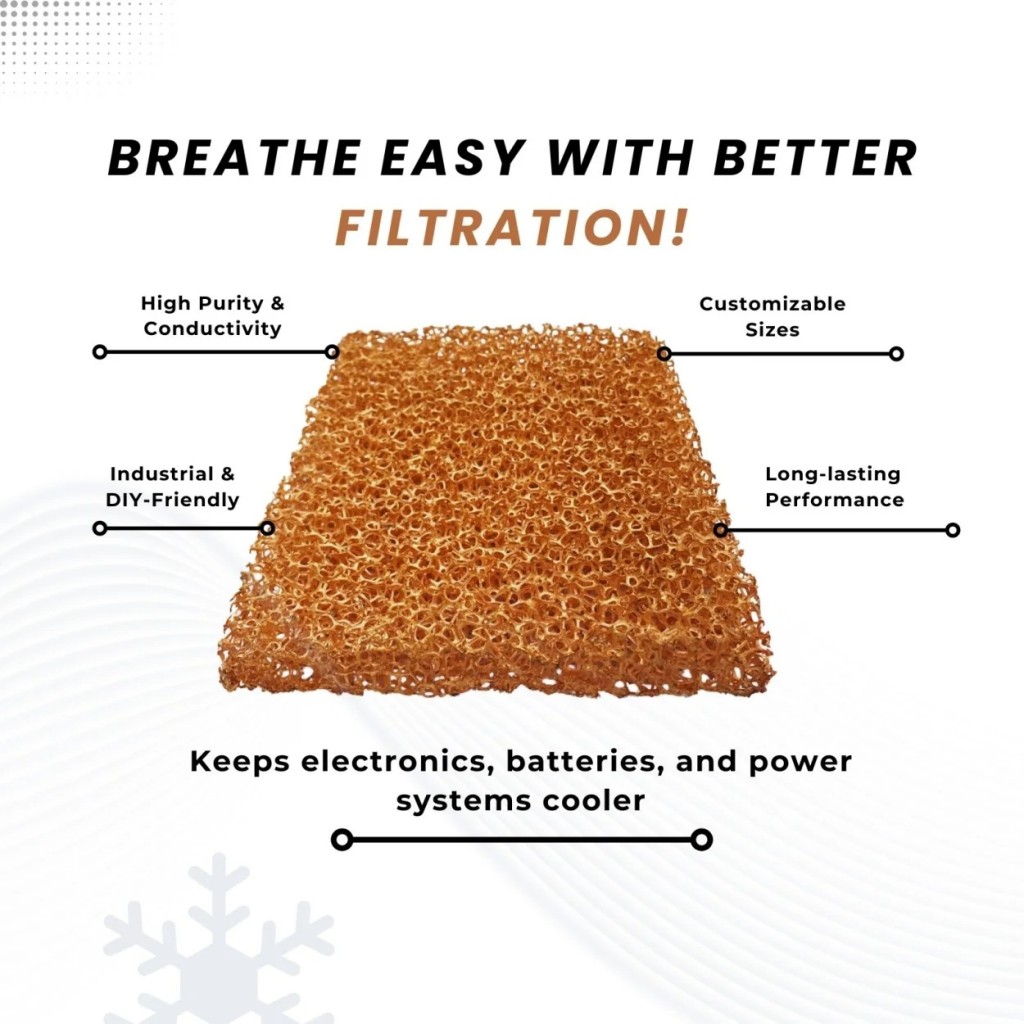
Apart from Aluminum, Copper foam is the most widely used material for making heat sinks, because properties of copper make it suitable for the purpose.Micro-porous copper foam is like an open cell structure, with an extraordinarily large number of interconnected pores distributed uniformly throughout the base copper material.
Advantage:
- Copper foam has great function of conducting heat and electricity, which can be used as the electrode substrate of lithium ion battery or fuel cell or Nickel zinc battery and electric double layer capacitor electrode material.
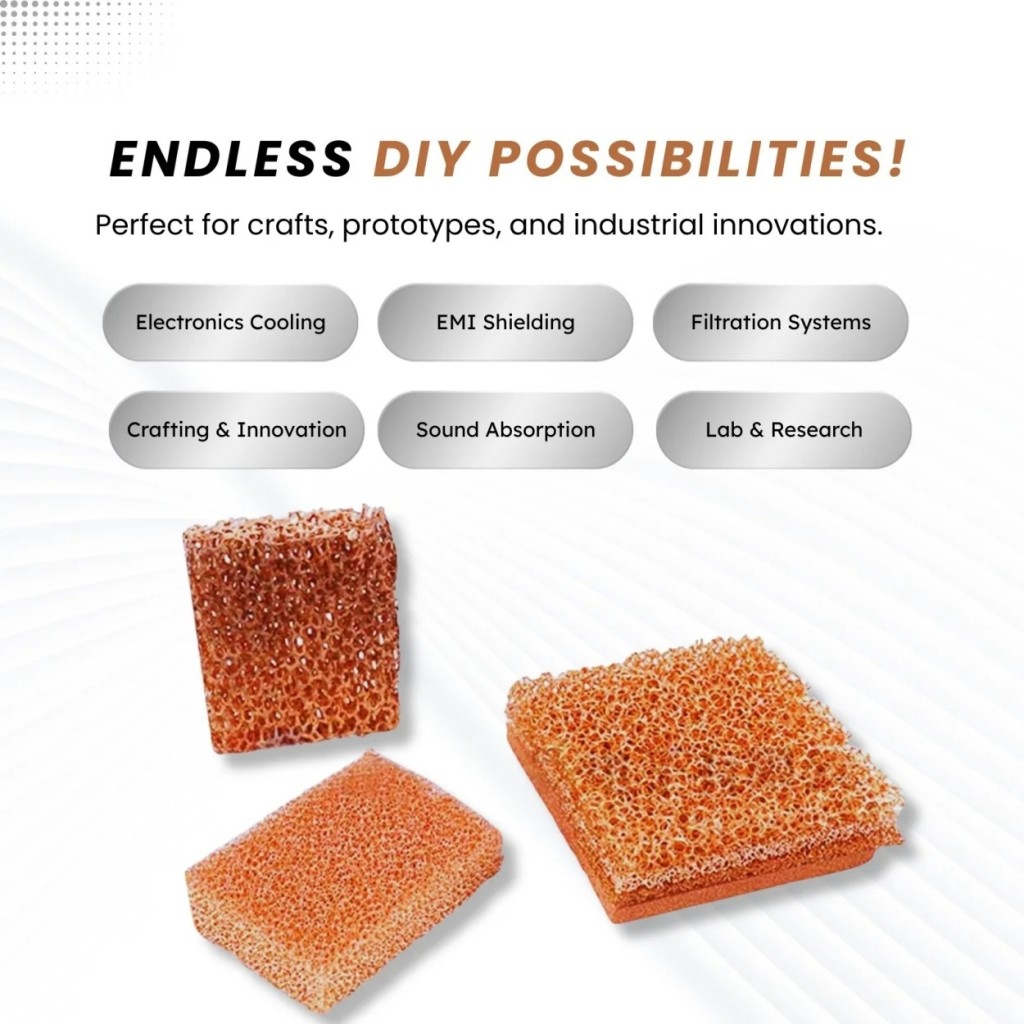
- The copper foam can be also used as Heat sink materials, heat absorption materials, chemical catalyst carrier, electromagnetic shielding materials, filtration materials, damping materials, battery electrode materials, deadening, high-grade decorative materials.
Spezifikationen
| Typ | Offenzellige |
| Reinheit | > 99% |
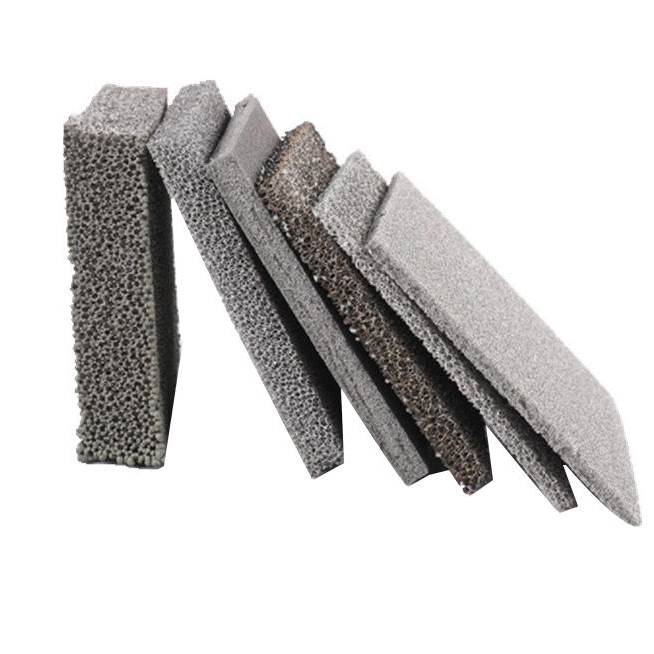
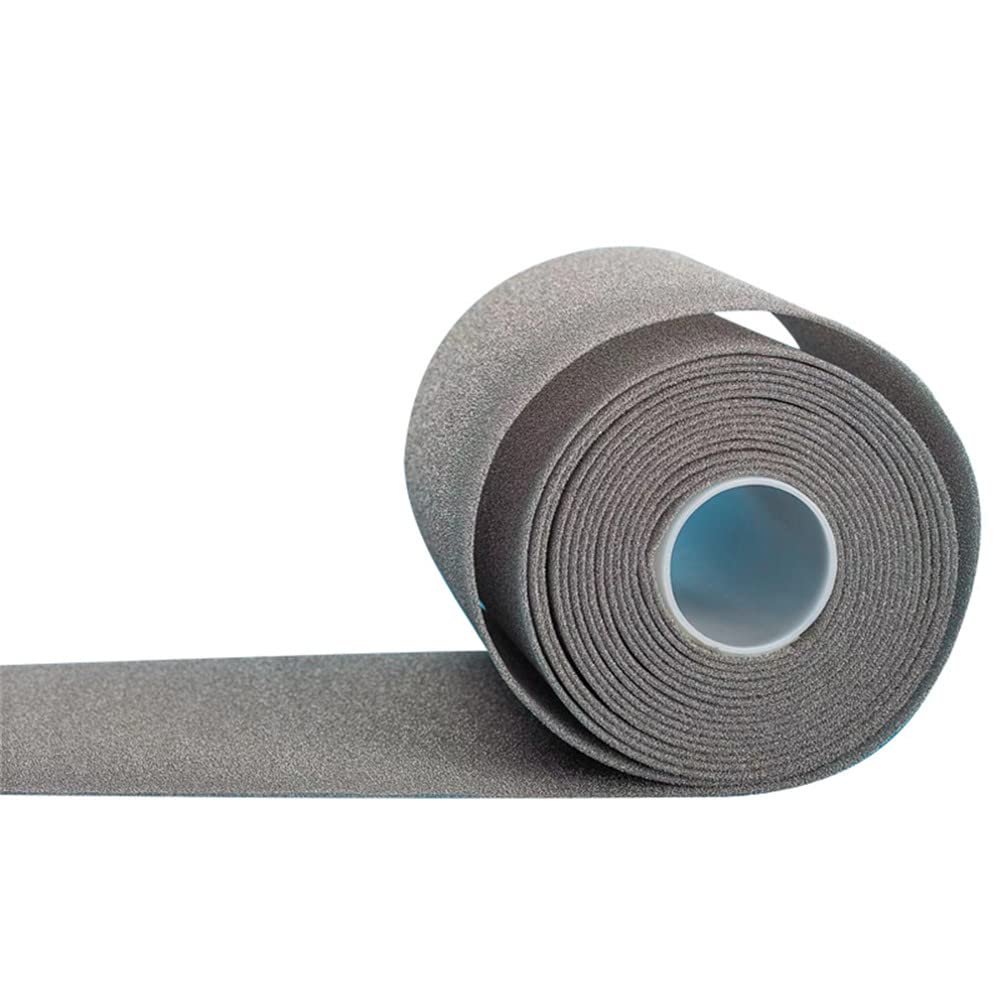
| Formular | Bogen oder Rolle, je nach Größe und Dicke |
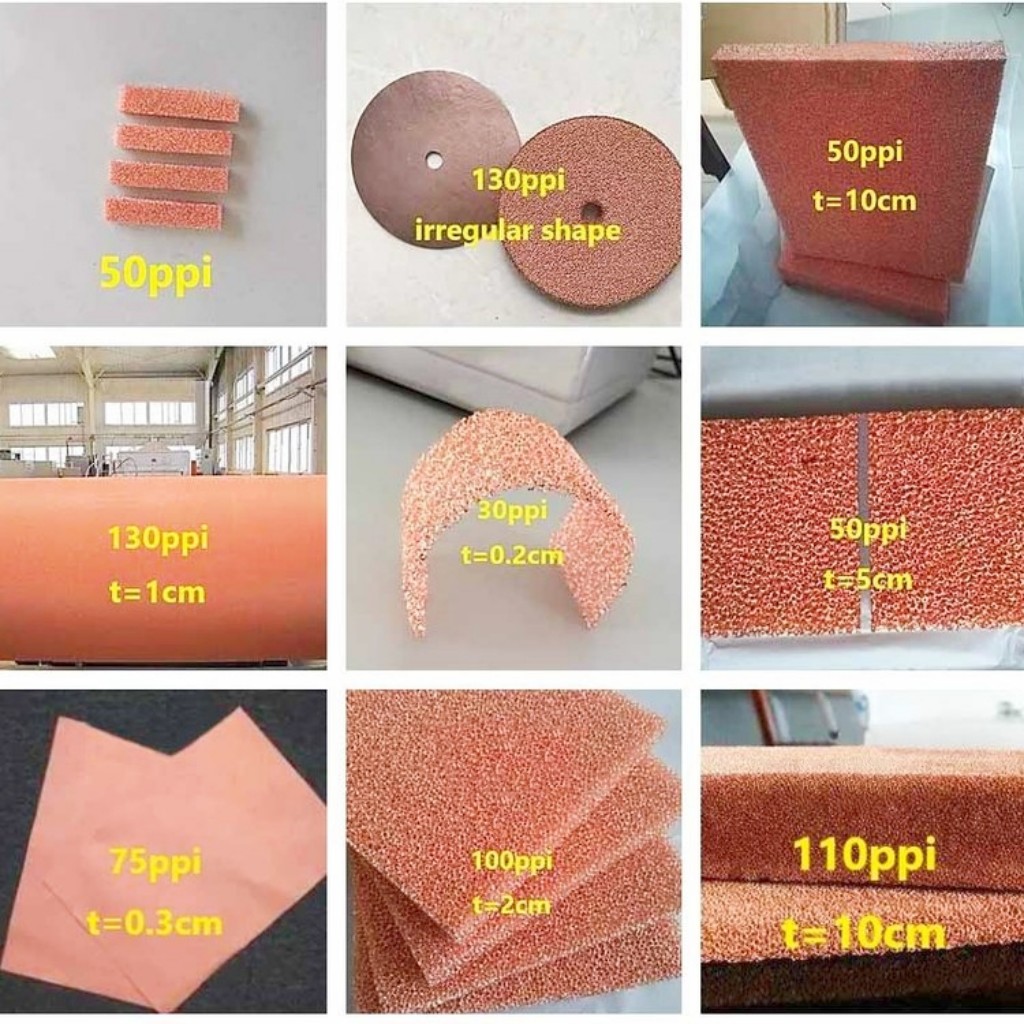
| Zellengröße (PPI) | 10-150PPI, as per request |
| Dicke | Standard: 1–30 mm Extra dünn (30 mm) kann auf Anfrage angepasst werden |
| Größe und Form | Standard: 500*500 mm/200*300 mm; kann auf Wunsch in verschiedenen Formen hergestellt werden |
| Porosität | 95%-98% |
| Offenzellrate | ≥98 % |
| Volumendichte | >0.1g/cm3, as per request |
| Oberflächendichte | 200–2500 g/m², je nach Wunsch |
| Wärmeleitfähigkeit (theoretisch) | >6W/M.K |
| Mechanische Festigkeit (theoretisch) | ≥2.5MPa |
| Tensile Strength (Theoretical) | 5-18MPa |
Dimension (Dicke* Länge*Breite)
| 0.08mm*200mm*300mm | 0,1mm*200mm*300mm | 0,3 mm × 200 mm × 300 mm |
| 0,5 mm × 200 mm × 300 mm | 1,0 mm × 200 mm × 300 mm | 2,0 mm × 200 mm × 300 mm |
| 3,0 mm × 200 mm × 300 mm | 5.0mm*200mm*300mm | 6.0mm*200mm*300mm |
| 8.0mm*200mm*300mm | 10 mm × 200 mm × 300 mm | 20mm*200mm*300mm |
| 23mm*200mm*300mm | 25mm*200mm*300mm | Die Größe kann individuell angepasst werden. |
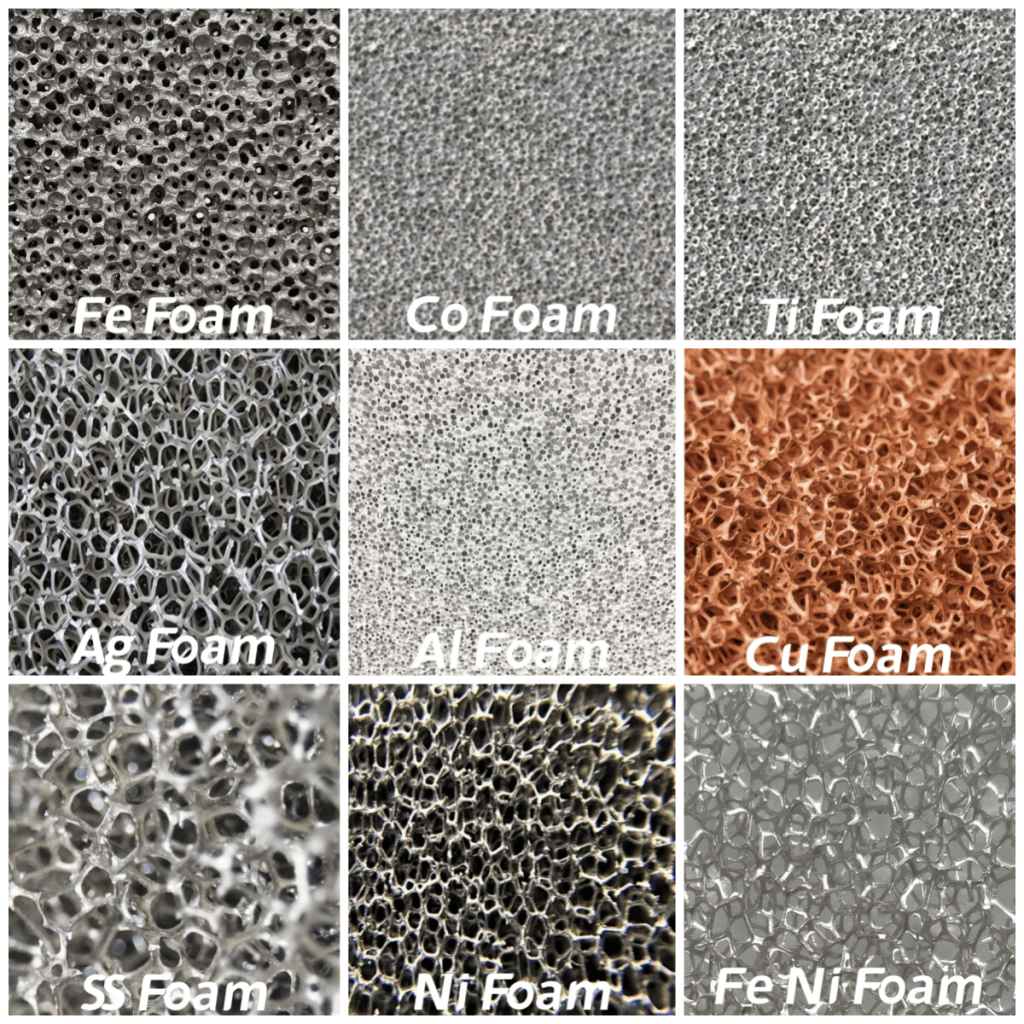
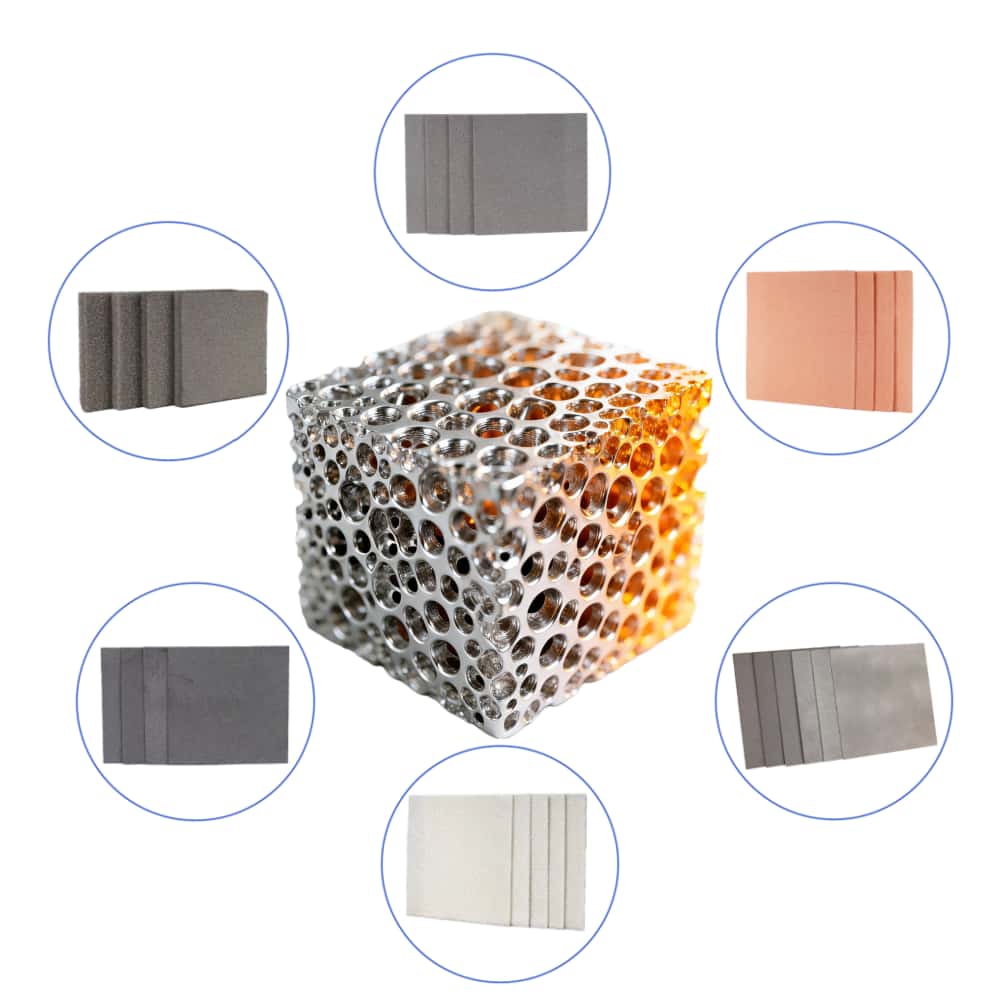
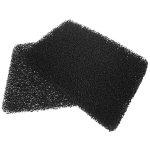
Um verschiedene Metallschäume anzupassen, klicken Sie bitte auf das Bild unten für weitere Details:
 |
 |
 |
 |
 |
 |
 |
 |