







Custom Ceramic Honeycomb
Introduction
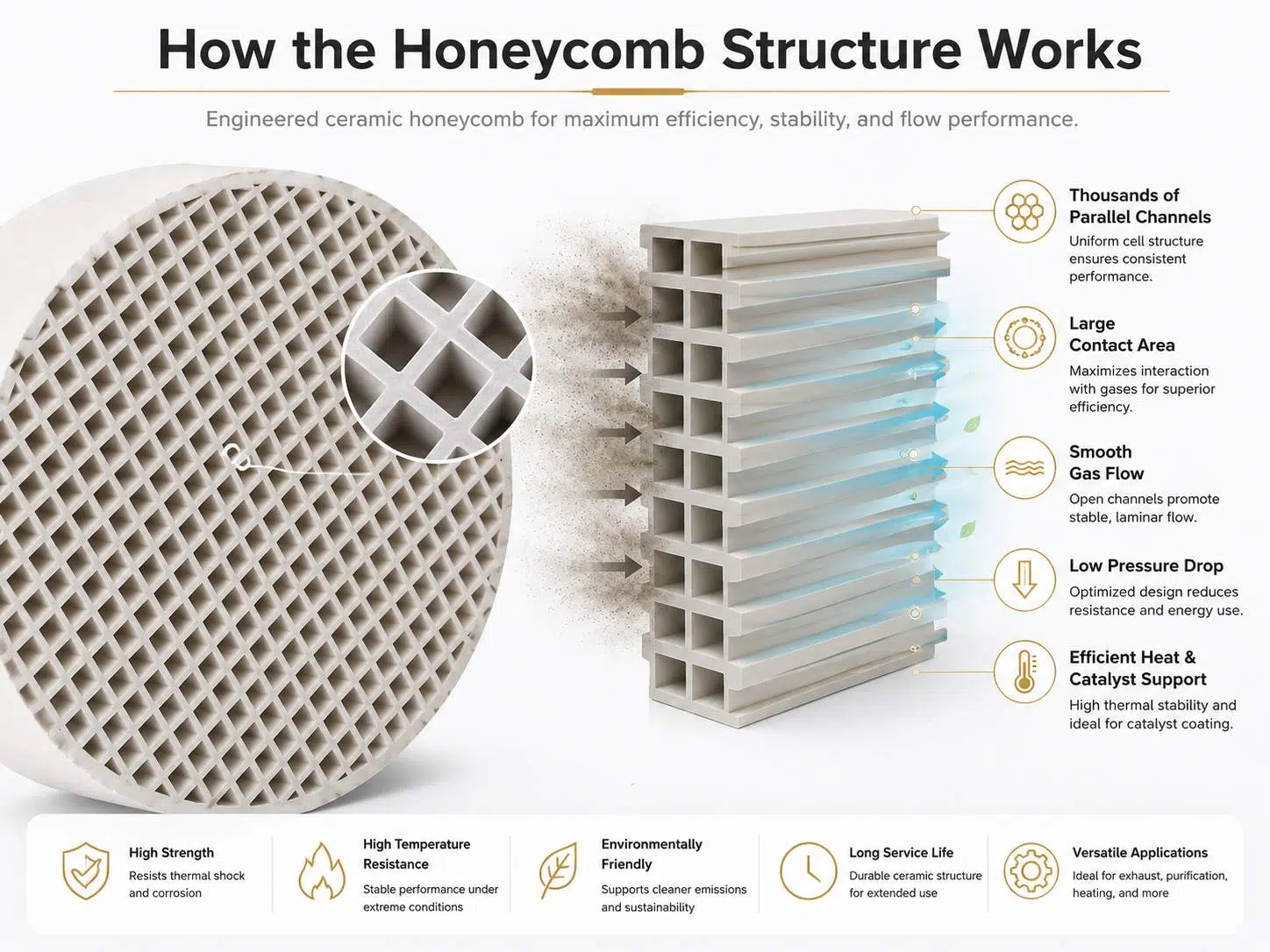
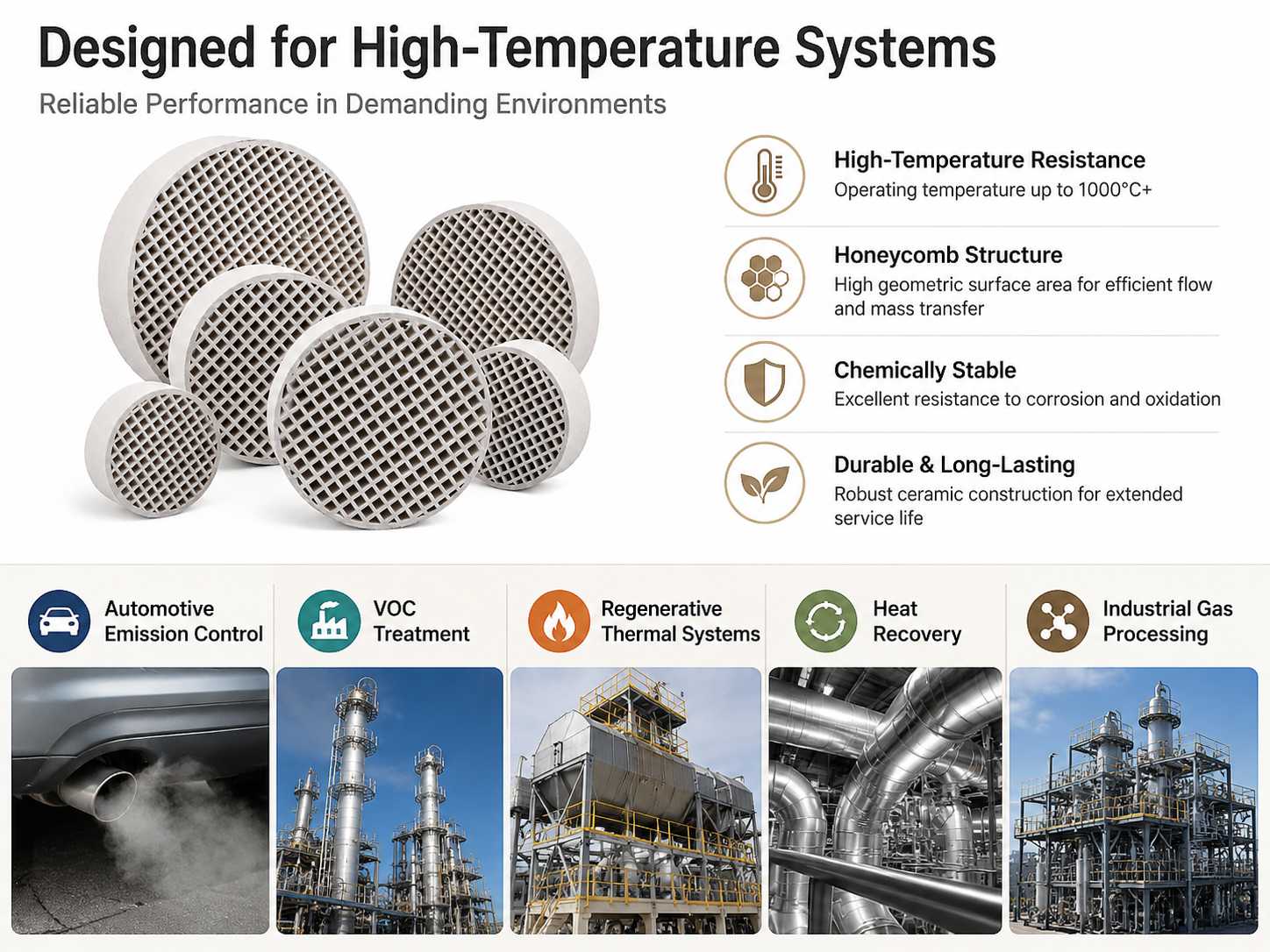
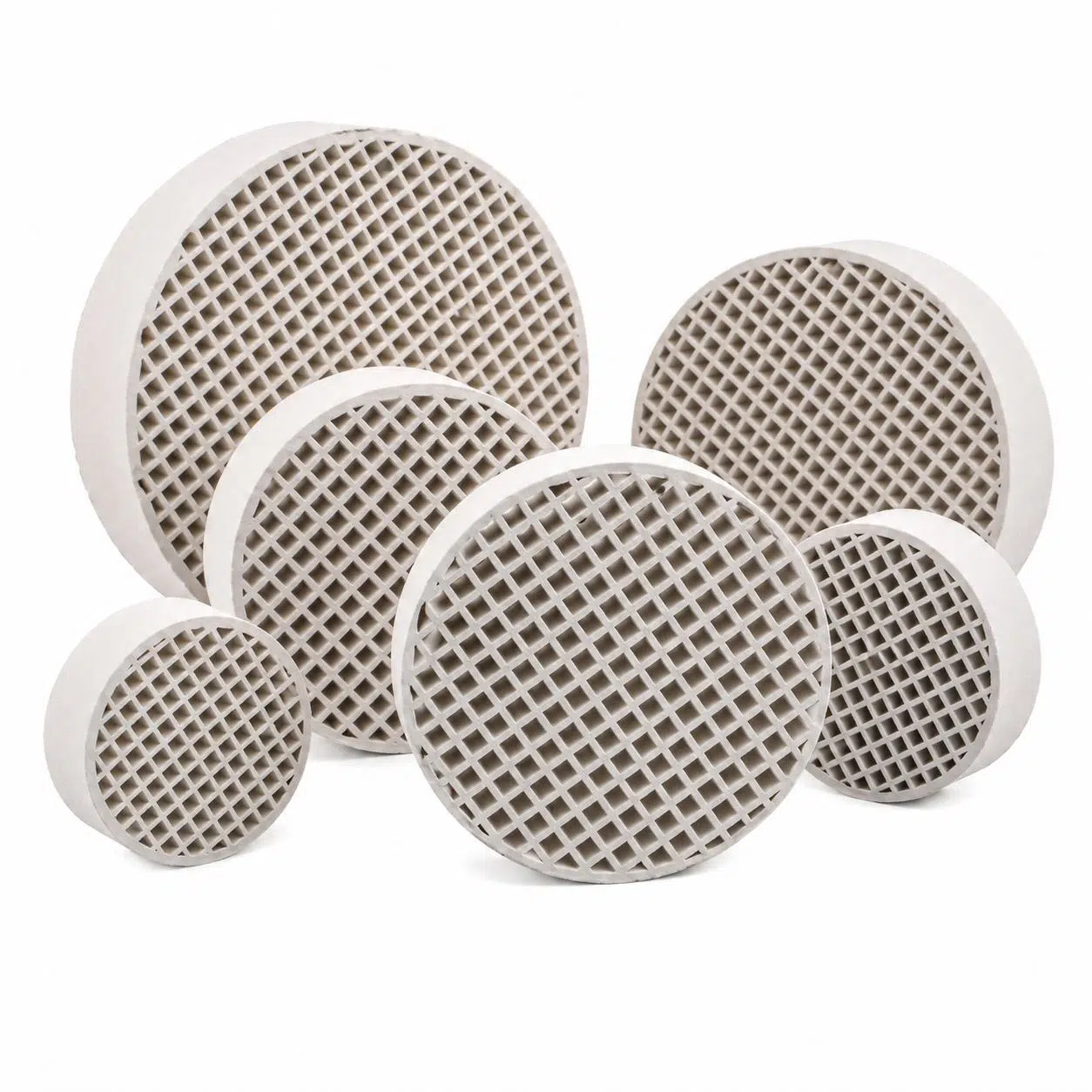
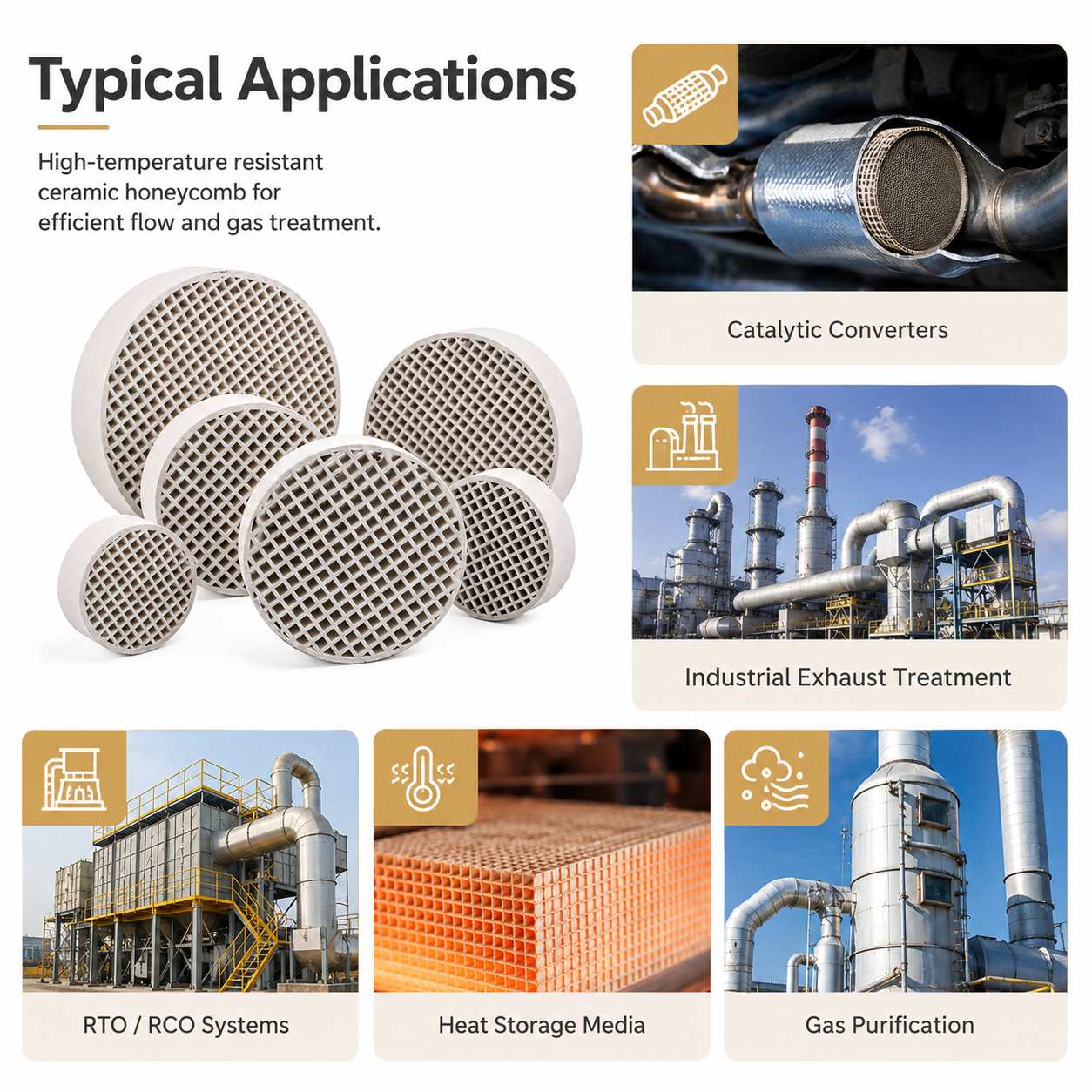
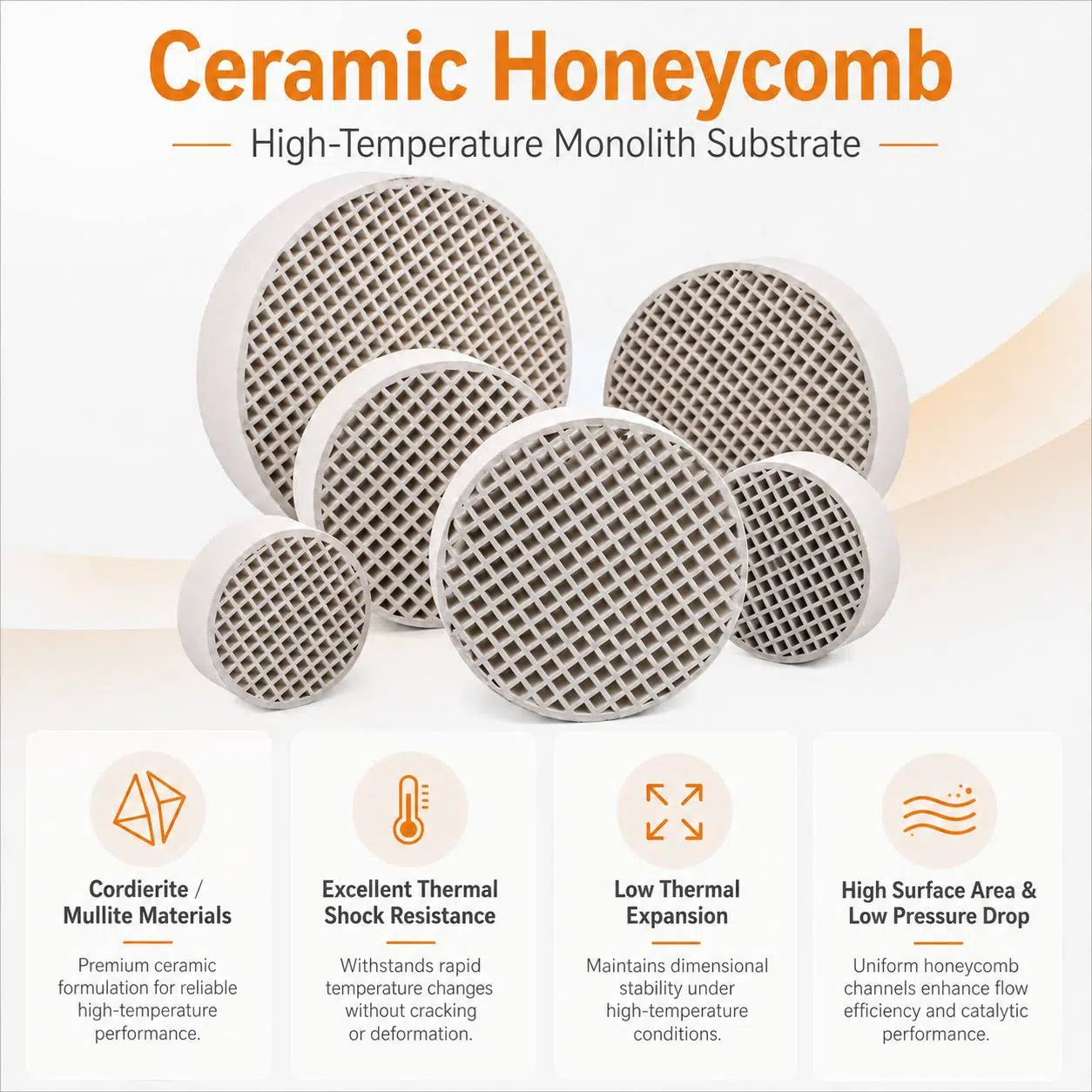
- Our ceramic honeycomb is designed as a high–surface-area, low–pressure-drop substrate for catalytic and filtration applications. Manufactured from high-quality cordierite or alumina-based ceramics and extruded into a multi-channel honeycomb structure, it offers excellent thermal shock resistance and low thermal expansion. The large geometric surface area per volume makes it ideal as a carrier for precious metal catalysts in automotive catalytic converters, diesel particulate filters (DPF/GPF), SCR/DeNOx systems, and industrial VOC treatment equipment.
-
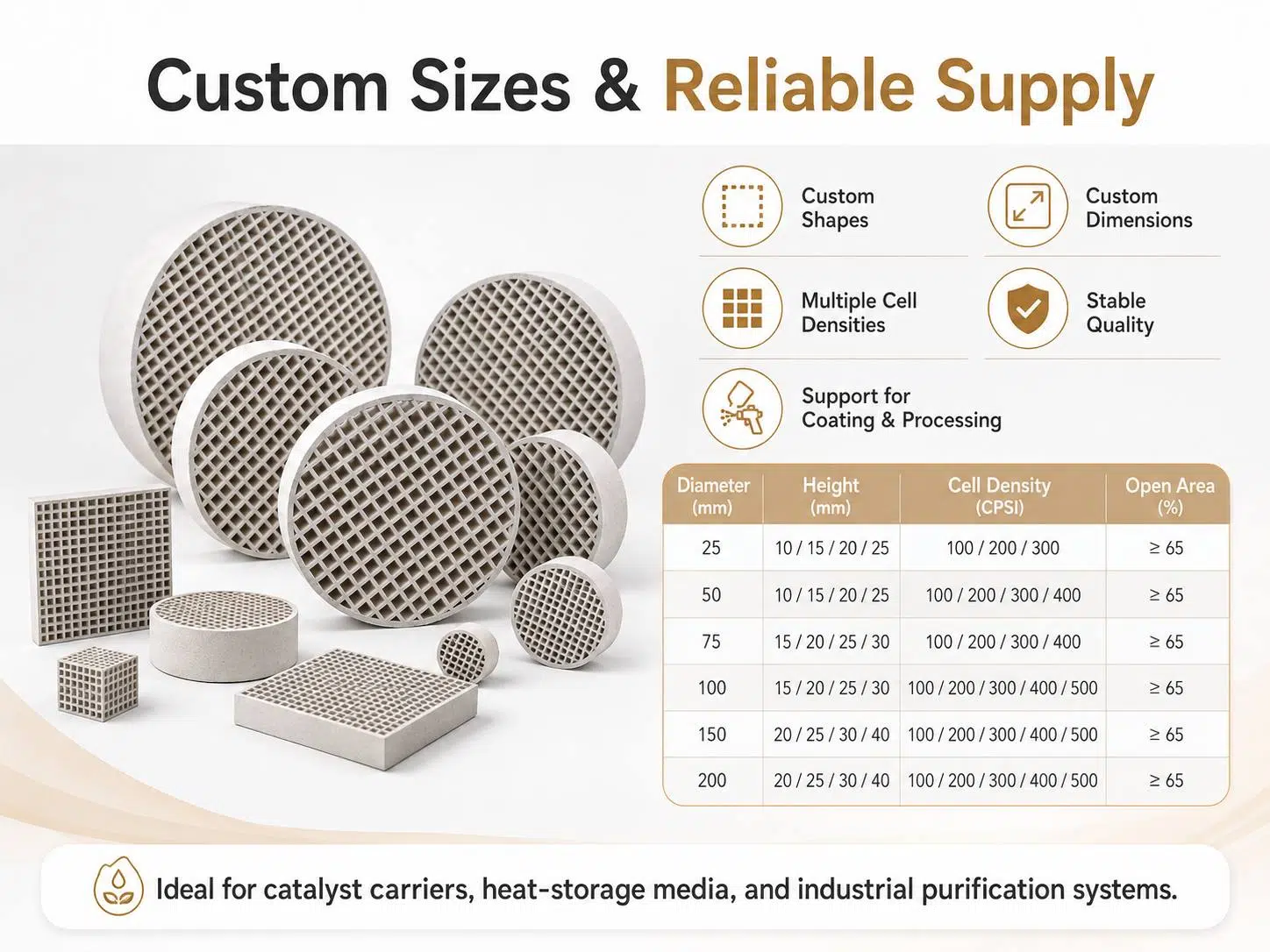
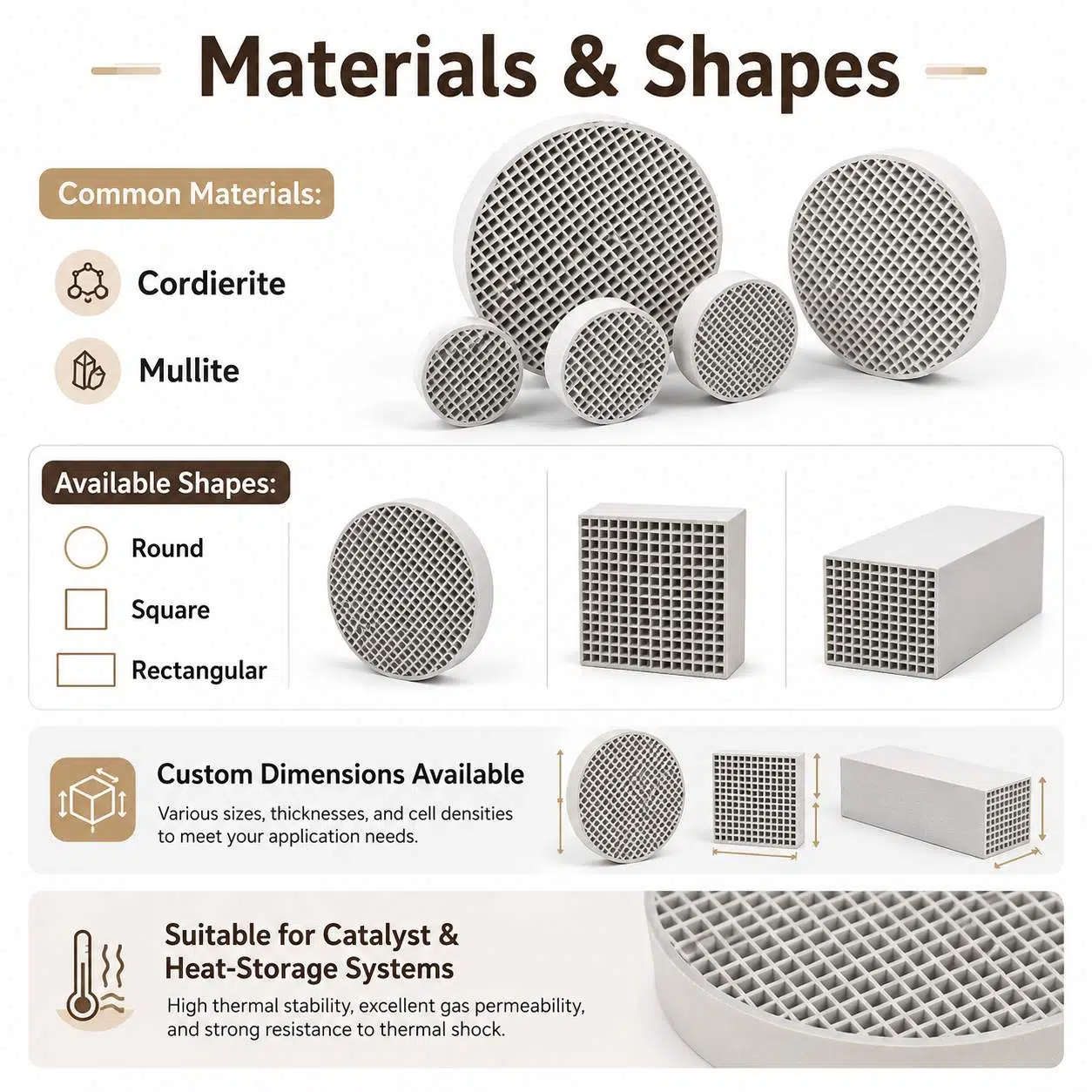
With customizable cell density (CPSI), wall thickness, shape (round, square, rectangular), and block dimensions, our ceramic honeycomb can be precisely matched to your process requirements for pressure drop, conversion efficiency, and filtration performance. It withstands continuous high temperatures and repeated thermal cycling in harsh exhaust environments, ensuring long service life and stable performance. We can supply bare substrates, washcoated substrates, or ready‑to‑coat units to support both R&D projects and large-scale production.
Spécifications
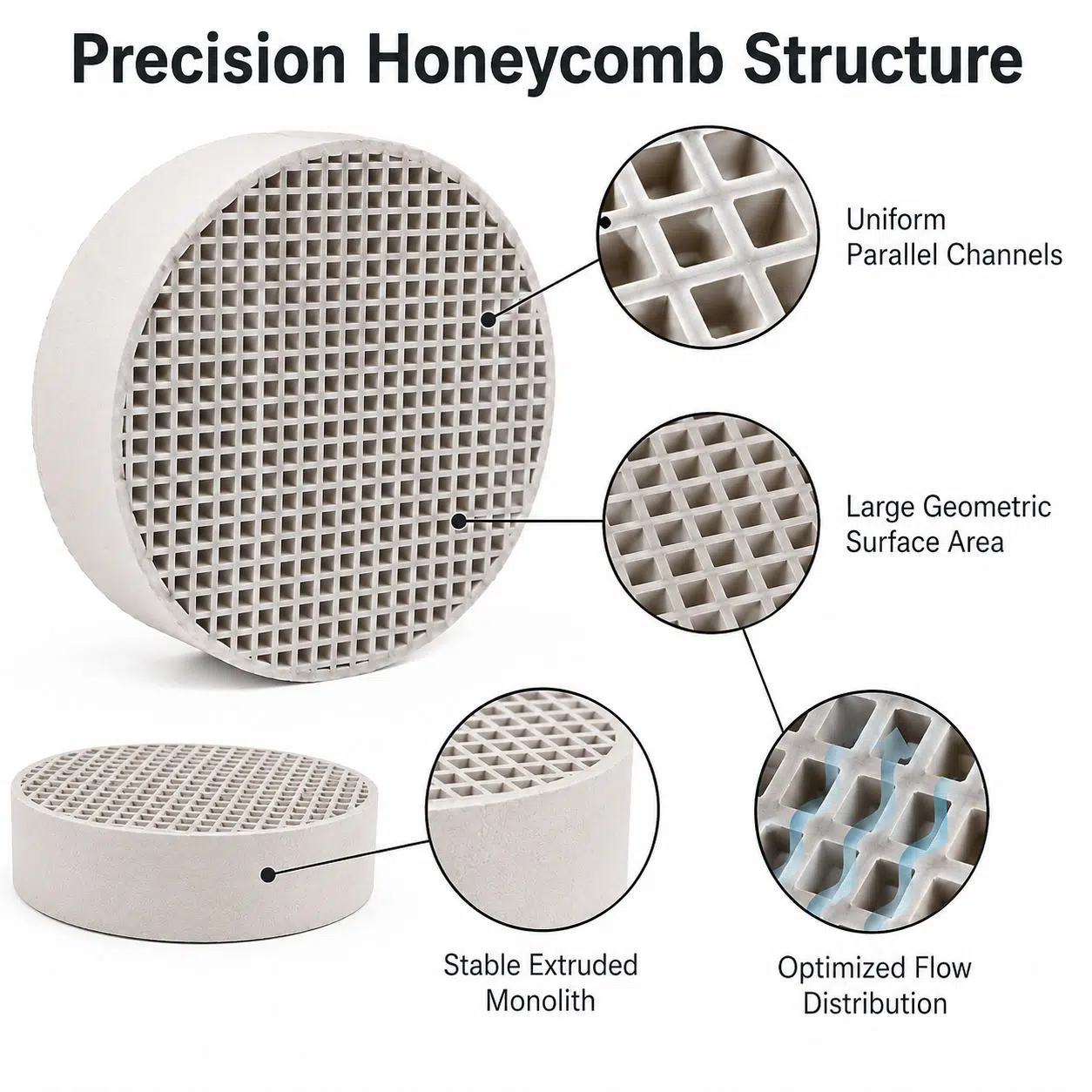
Type Ceramic honeycomb blocks / substrates / filters; supplied as bare honeycomb or coated with washcoat and catalyst layers for use in catalytic converters, DPF/GPF, SCR/DeNOx systems, VOC abatement, heat storage, and high‑temperature filtration applications. Structure Multi‑channel honeycomb structure with straight, parallel cells running through the length of the block; manufactured by extrusion and firing of ceramic body to form a rigid, high‑surface‑area, low‑pressure‑drop monolith suitable for gas flow, filtration, and catalytic reactions. Ceramic Grade Typically cordierite for low thermal expansion and excellent thermal shock resistance; alumina, mullite, silicon carbide (SiC), or other advanced ceramics available for higher temperature, higher strength, or specific chemical resistance requirements. Cell Size / Cell Density Typical cell density from about 25 to 400 cpsi (cells per square inch) or equivalent metric (e.g., 4–62 cells/cm²); smaller cells (higher cpsi) provide larger geometric surface area and higher catalytic efficiency, while larger cells (lower cpsi) reduce pressure drop and minimize clogging. Cell Shape Standard square or hexagonal channels as default; round, rectangular, or custom cell geometries available to meet specific flow, pressure‑drop, and catalytic or filtration requirements. Wall Thickness Typical wall thickness from about 0.1 mm to 0.7 mm (depending on cell density and ceramic grade); thinner walls reduce pressure drop and increase geometric surface area, while thicker walls improve mechanical strength and filtration durability. Overall Thickness / Length Range Honeycomb length (flow direction) typically from about 50 mm to 600 mm or more; wall‑to‑wall dimensions adapted to system design; available in various block heights and lengths according to converter housing, reactor, or filter requirements. Block Size (L × W / Diameter) Available as round, square, or rectangular blocks; common diameters from approx. 50 mm to 400 mm and side lengths from approx. 50 mm to 300 mm; special sizes, multi‑brick assemblies, and custom shapes supplied according to design and installation constraints. Density / Porosity Apparent density and open porosity tailored via cell density, wall thickness, and ceramic composition; designed to balance geometric surface area, catalyst loading capacity, filtration efficiency, and pressure drop according to the target process. Mechanical Properties Good compressive strength and structural integrity at elevated temperatures; high resistance to thermal cycling and vibration when properly supported in a canning or housing system; suitable for automotive, stationary, and industrial exhaust environments. Thermal Properties Low thermal expansion (especially cordierite) for excellent thermal shock resistance; capable of withstanding rapid temperature fluctuations and repeated regeneration cycles in DPF/GPF and catalytic reactors; high‑temperature grades available for very severe duty. Flow & Pressure Drop Straight‑through channels provide low pressure drop and uniform flow distribution; cell density and wall thickness can be optimized to minimize flow resistance while achieving required catalytic performance, filtration efficiency, or residence time. Surface Finish (Core) As‑fired ceramic surface with controlled roughness optimized for washcoat adhesion; channels can be supplied clean, deburred, and free of loose dust; edges can be chamfered or ground to fit into housings and seals. Washcoat & Coating Available bare (uncoated) or with washcoat layers (e.g., γ‑alumina or other high‑surface‑area oxides) for catalyst deposition; can be further coated with precious metals (Pt, Pd, Rh) or base‑metal catalysts depending on NOx, CO, HC, or particulate control requirements. Fire & Temperature Inorganic, non‑combustible ceramic material; suitable for continuous service at high temperatures typical of engine exhaust and industrial furnaces; specific maximum service temperature and thermal shock limits depend on ceramic grade (cordierite, SiC, mullite, etc.). Chemical & Corrosion Resistance Good resistance to typical exhaust gases and many industrial flue gases; specific formulations available for sulfur‑containing, acidic, or otherwise aggressive atmospheres; long‑term stability depends on gas composition, temperature, and catalyst or coating system. Processing & Machining Blocks can be cut to length, ground, chamfered, and machined at the outer surface; end faces can be masked, plugged, or zoned (inlet/outlet plugging) to create wall‑flow filters, flow dividers, or specific flow patterns as required by system design. Dimensional Tolerances Controlled cell density, wall thickness, block diameter/side length, and length; tolerances specified according to project requirements and relevant standards to ensure proper canning, sealing, and minimal bypass or leakage. Standards & Reference Manufactured with reference to relevant automotive, industrial, and environmental standards for ceramic substrates and filters (e.g., ASTM, ISO, and OEM specifications) covering mechanical properties, thermal shock resistance, pressure drop, and durability. Application Range Automotive and truck catalytic converters, diesel and gasoline particulate filters (DPF/GPF), SCR/DeNOx reactors, industrial VOC and odor treatment, biomass and gas‑turbine exhaust purification, regenerative thermal oxidizers (RTO), heat storage beds, and other high‑temperature gas treatment systems. Customization Custom cell density (cpsi), wall thickness, ceramic composition, block size, shape (round, square, oval, custom), end‑face plugging patterns, and coating systems (washcoat and catalyst) according to drawings, process parameters, and performance specifications. Form of Supply Supplied as bare ceramic honeycomb substrates, washcoated substrates ready for catalyst impregnation, fully catalyzed units, or assembled filter modules; optional canning, insulation mats, and mounting accessories can be provided on request. Packaging Honeycomb blocks individually protected with edge guards and shock‑absorbing materials; packed in cartons or wooden crates with moisture‑resistant wrapping and separators to prevent chipping, cracking, or contamination during transport and storage; special packaging available for high‑value or catalyzed parts.
Reference dimensions
| 0.1mm*50mm*50mm | 0.2mm*100mm*100mm | 0.1mm*200mm*200mm |
| 0.2mm*300mm*3000mm | 0.3mm*500mm*500mm | 0.1mm*500mm*1000mm |
| 0.2mm*500mm*2000mm | 0.1mm to 50mm*1000mm*1000mm |
La taille peut être personnalisée. |