







Highly Porous Open Cell Nickel‑Iron‑Chromium‑Aluminum Foam
Introduction
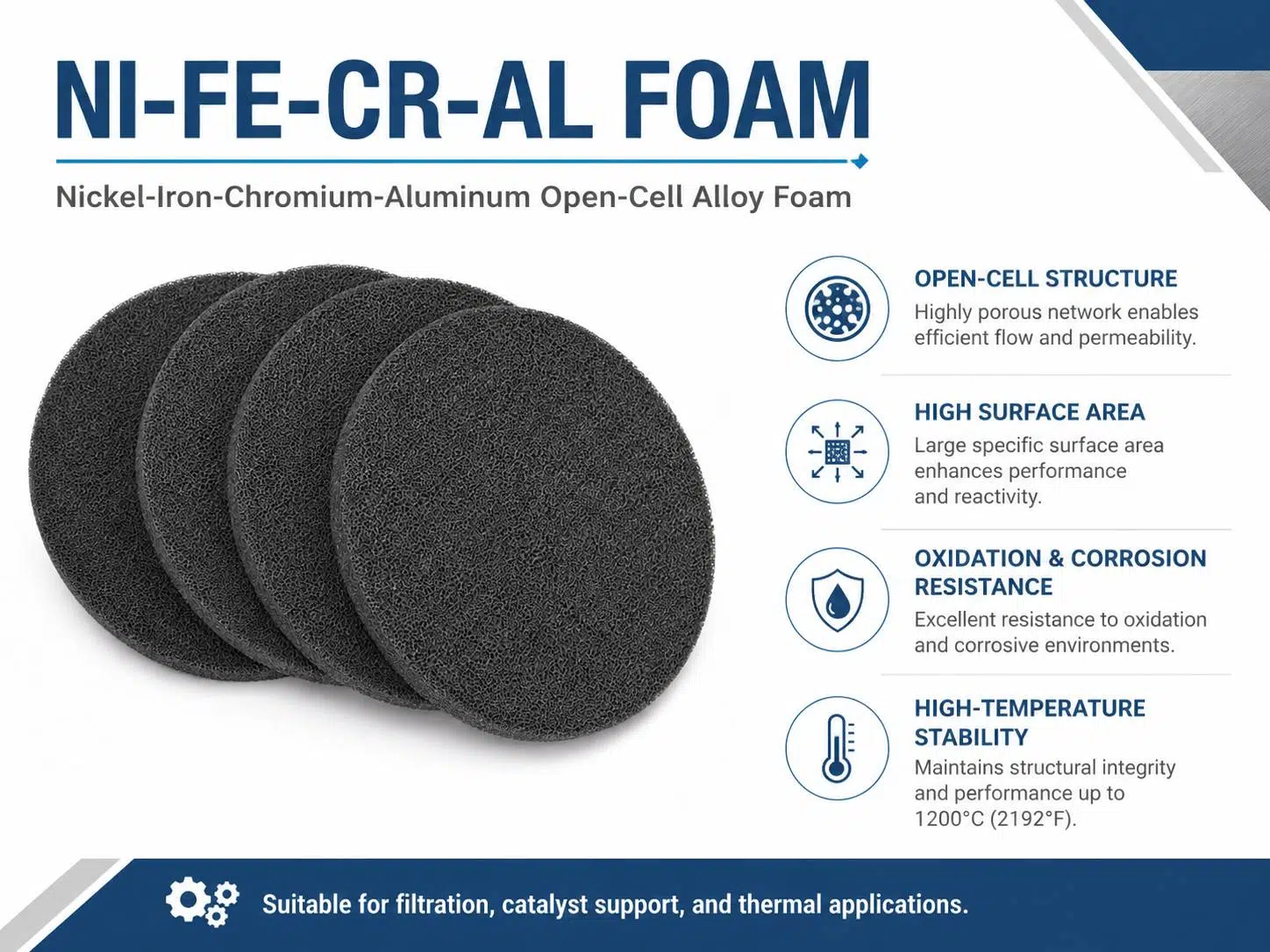
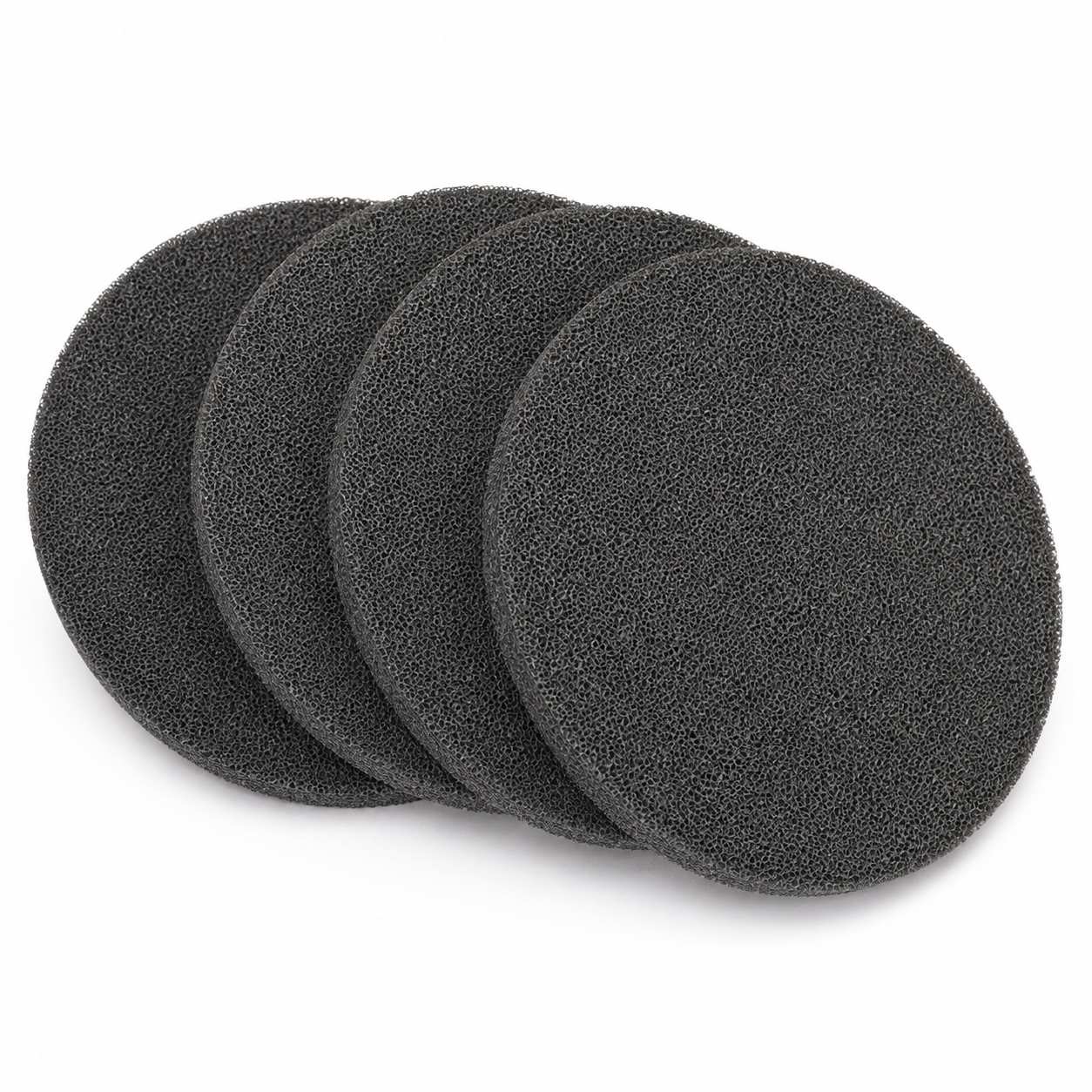
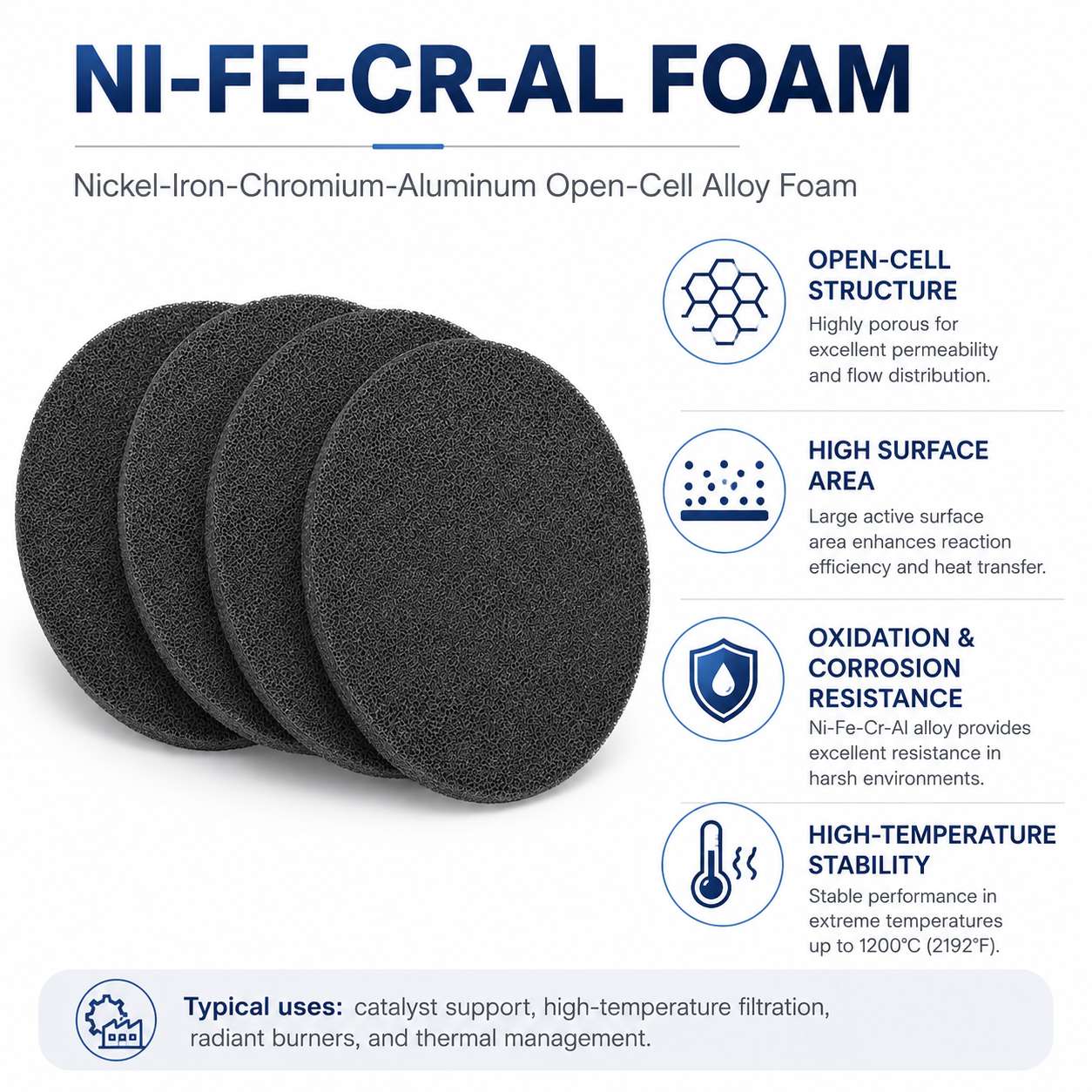
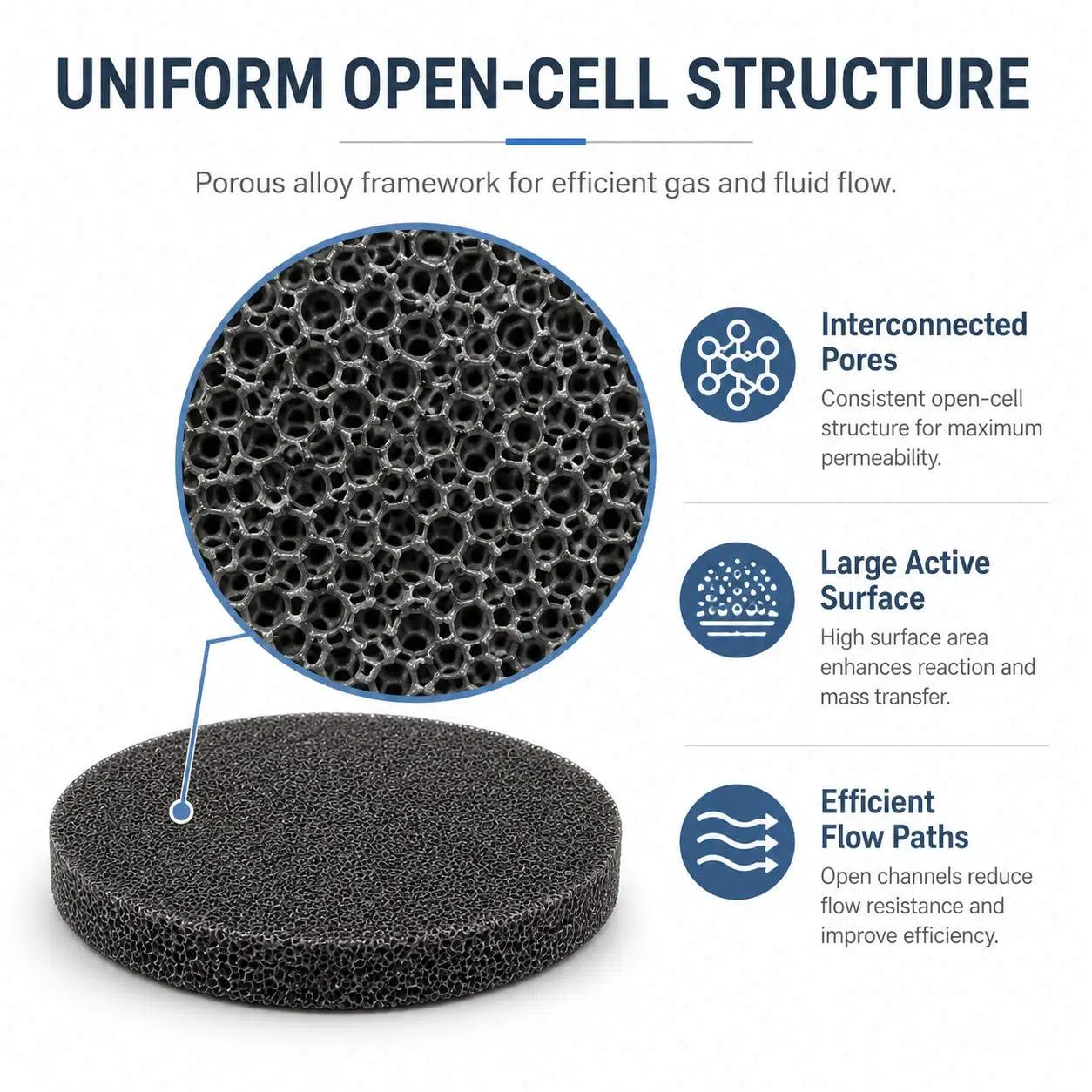
- Nickel‑Iron‑Chromium‑Aluminum Foam (Ni‑Fe‑Cr‑Al foam) is a high‑temperature‑resistant open‑cell metal foam with a 3D interconnected structure and high porosity. Based on heat‑resistant Ni‑Fe‑Cr‑Al alloys, it offers excellent oxidation and corrosion resistance, stable mechanical strength at elevated temperatures, and reliable electrical and thermal conductivity. The large specific surface area and low density make it ideal for harsh thermal and chemical environments.
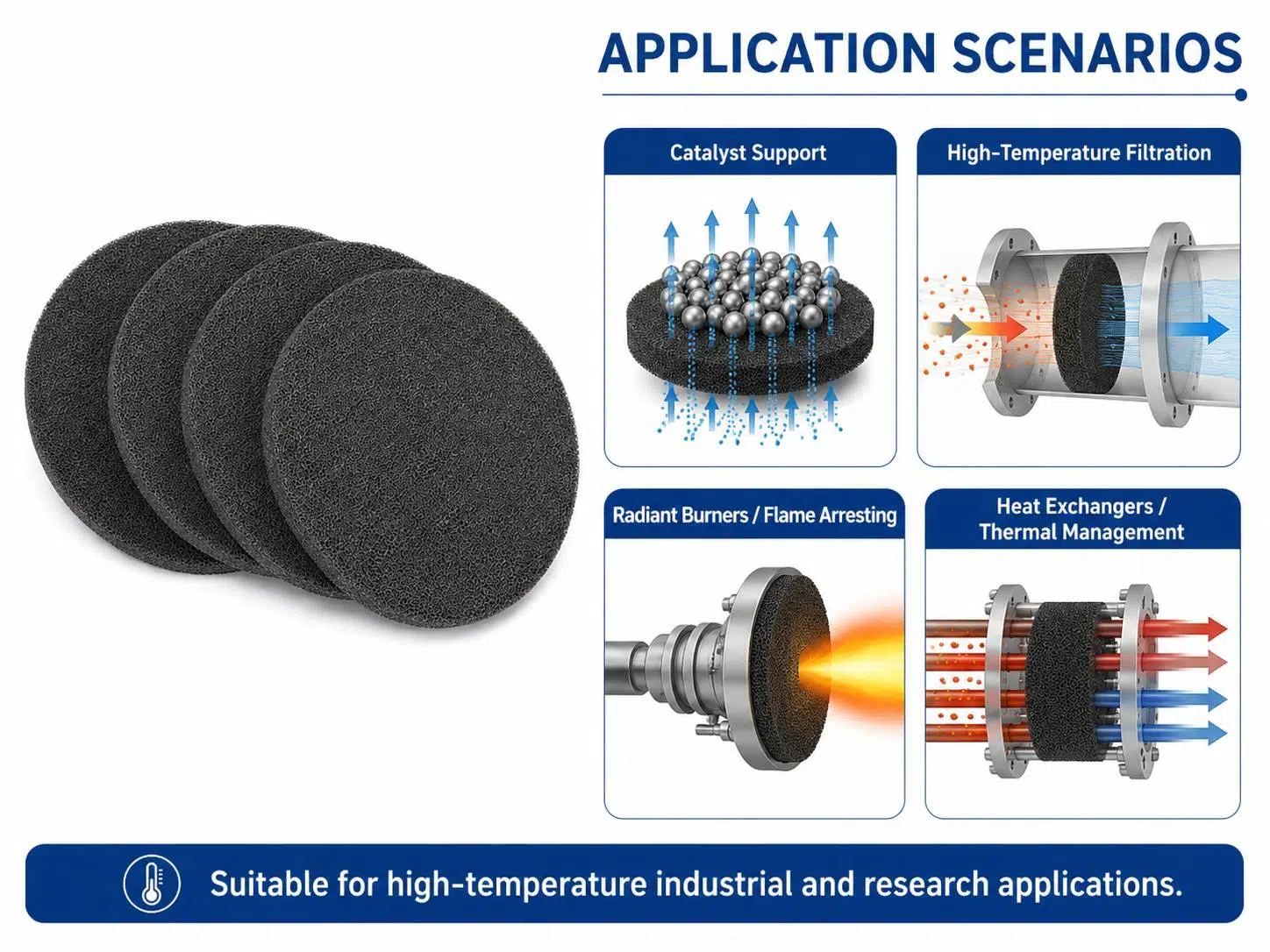
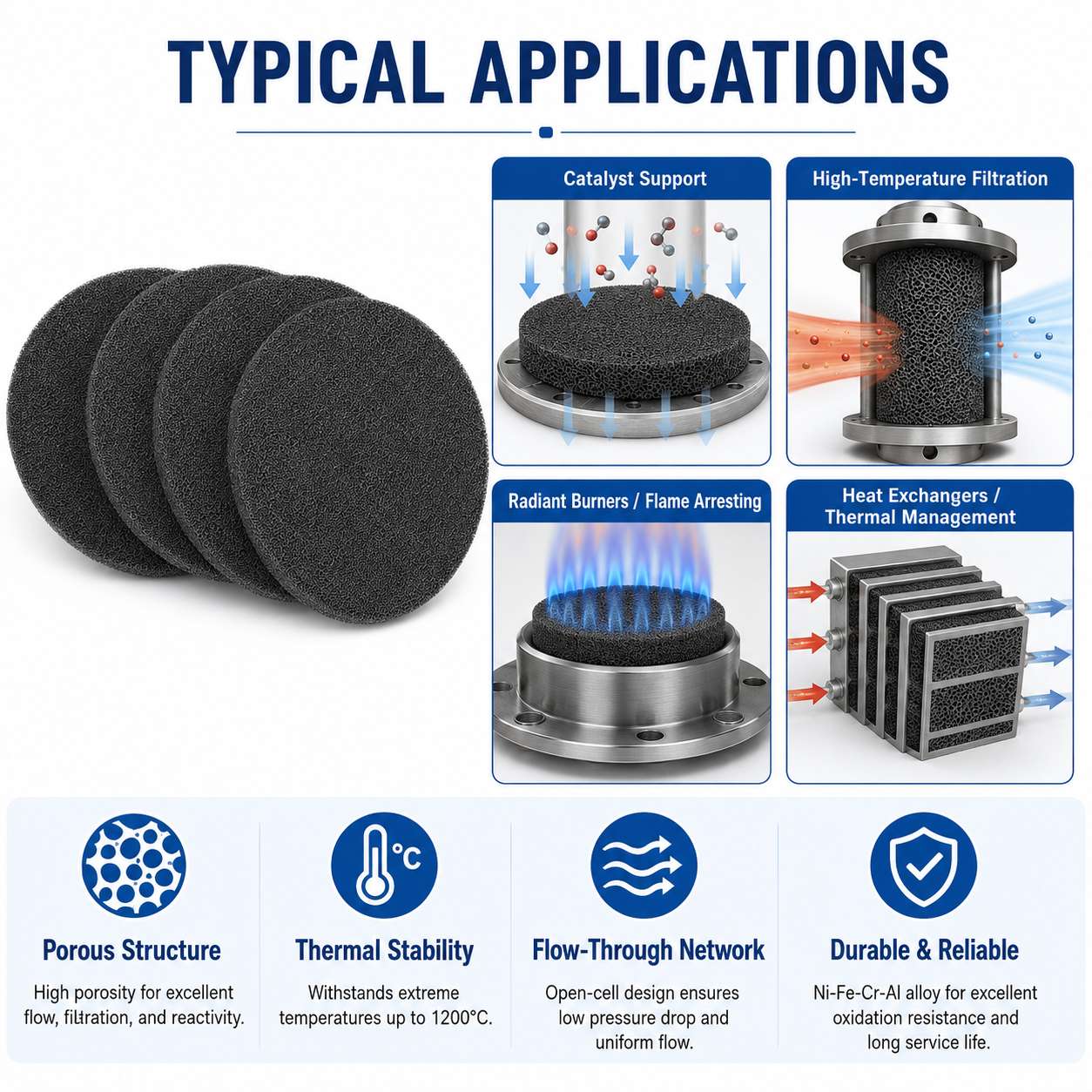
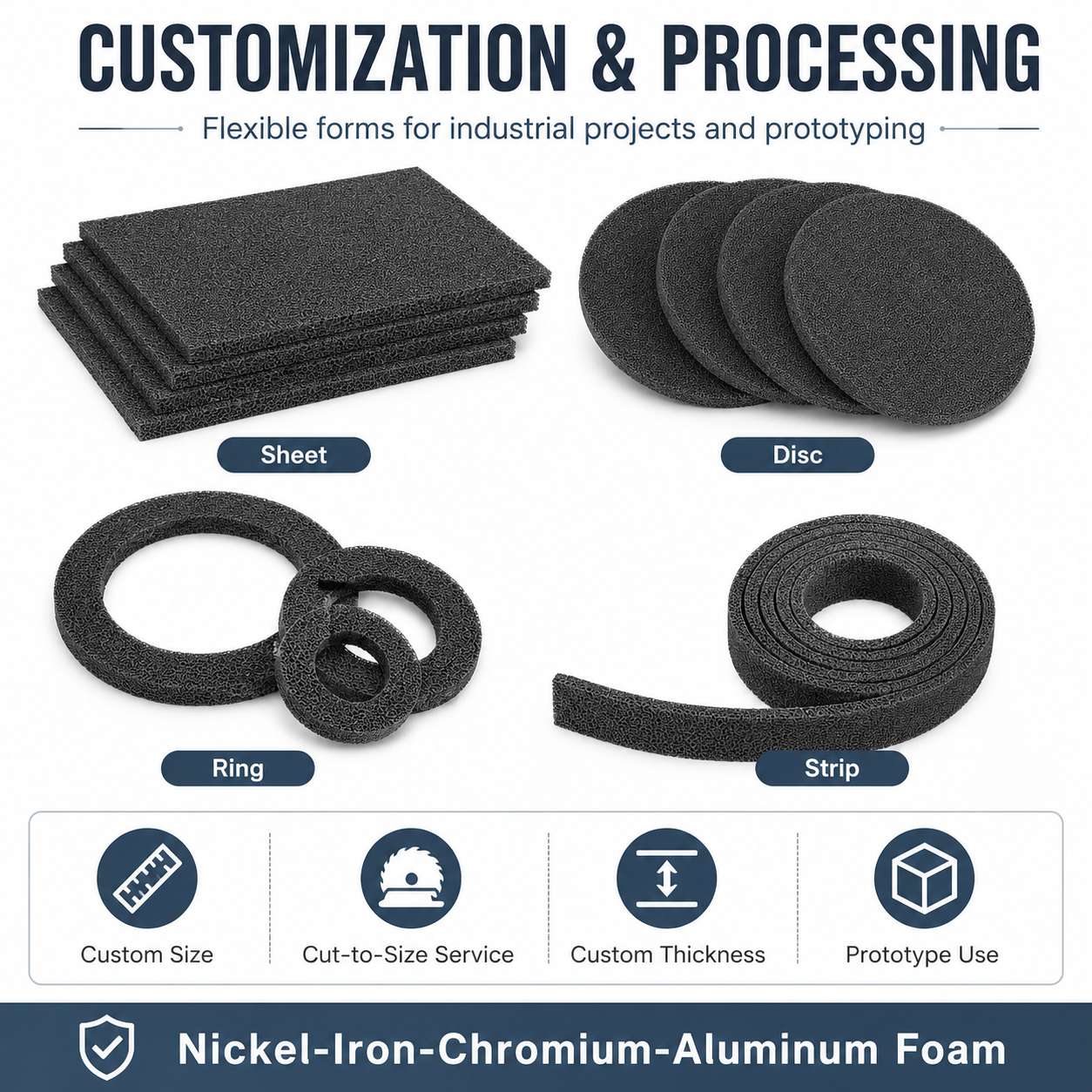
- Ni‑Fe‑Cr‑Al foam is widely used as a catalyst support, radiant burner core, combustion element, high‑temperature gas/liquid filter, heat exchanger medium, and gas distribution or flame‑stabilizing component in petrochemical, energy, metallurgy, environmental and thermal engineering systems. It is available in sheets or custom‑cut parts with adjustable pore size (PPI), thickness and density to match different reactor designs and process requirements.
Spécifications
| Type | Open cell Ni‑Fe‑Cr‑Al alloy foam |
| Purity / Alloy Base | Ni‑Fe‑Cr‑Al heat‑resistant alloy (typical systems similar to Ni‑Cr‑Fe‑Al or Fe‑Cr‑Al alloys, with optimized Ni/Fe/Cr/Al ratios for high‑temperature oxidation resistance) |
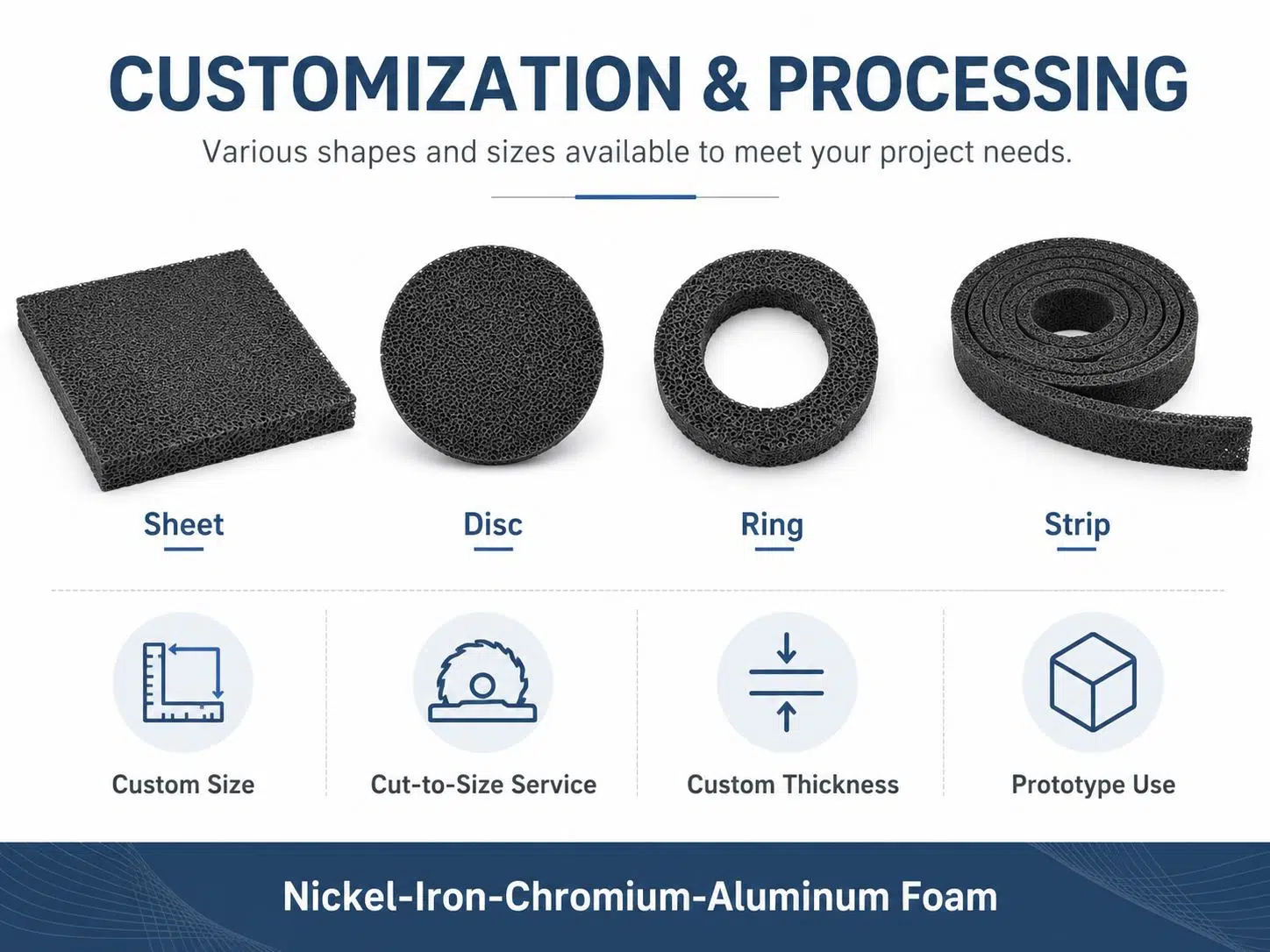
| Formulaire | Sheet, plate, strip, or custom‑cut blocks/parts depending on size & thickness |
| Taille des cellules (PPI) | Typically 10–80 PPI; other pore sizes can be customized on request |
| Épaisseur | Standard: approx. 0.5–20 mm; other thicknesses can be customized |
| Taille et forme | Common sheets: e.g. 100 × 100 mm / 200 × 300 mm; can be cut or formed into different shapes as per request |
| Porosité | Typically about 70% – 95%, depending on grade, PPI and density |
| Taux de cellules ouvertes | Usually ≥ 95% (3D interconnected open‑cell structure) |
| Densité volumique | Approx. 0.3–1.5 g/cm³ (adjustable by porosity and structure) |
| Densité de surface | Approx. 300–6000 g/m², depending on thickness and density |
| Thermal Conductivity (Effective) | Typically around 2–30 W/m·K (strongly depends on porosity and alloy; bulk Ni‑based alloys are much higher, but effective value is reduced by pores) |
| Mechanical Strength (Compressive) | Typically about 2–10 MPa (varies with density, pore size and alloy composition) |
| Average Tensile Strength (N/20 mm) | Vertical ≥ 20, horizontal ≥ 15 (typical for thin, medium‑density foam strips; actual values depend on product) |
| Temperature Resistance (Air / Oxidizing Atmosphere) | Generally suitable for long‑term use at approx. 900–1100 ℃ (exact limit depends on specific Ni‑Fe‑Cr‑Al grade and environment; Al and Cr provide excellent high‑temperature oxidation resistance) |
| Apparence | Metallic gray to dark gray Ni‑Fe‑Cr‑Al surface, uniform color, without obvious defects such as heavy oxide scale flaking, blind holes, large through holes, severe deformation or cracks |
| Chemical Composition | Ni‑Fe‑Cr‑Al multi‑component alloy; Al and Cr contents provide high‑temperature oxidation and corrosion resistance, while Ni/Fe offer mechanical strength and toughness (exact composition per specific grade/standard) |
| Electrical Conductivity | Good metallic electrical conductivity; effective conductivity decreases with porosity and foam structure but remains suitable for use as current collectors and heating/catalyst supports |
| Corrosion & Oxidation Resistance | Excellent high‑temperature oxidation resistance in air and many combustion gases; good corrosion resistance in many high‑temperature oxidizing environments; not suitable for strong reducing/halide atmospheres beyond alloy design limits |
| Flexibilité | Certain flexibility for thin, medium‑porosity sheets; can be slightly bent and compressed, but stiffness and brittleness increase with thickness and higher density |
| Elongation Rate (%) | Typically low compared with fully dense ductile alloys; for thin, high‑porosity foam, vertical ≈ 2–4%, horizontal ≈ 3–5% (reference values; actual data depend on grade) |
| Applications | High‑temperature catalyst supports, burner and combustion elements, radiant burner cores, high‑temperature gas/liquid filters, heat exchanger media, flame stabilizers, gas distribution plates, thermal insulation/energy‑absorbing structures in petrochemical, power, metallurgy, environmental and thermal engineering fields |
Dimension (Épaisseur* Longueur*Largeur)
| 0,08 mm × 300 mm × 200 mm | 0,2 mm × 200 mm × 300 mm | 0,3 mm * 200 mm * 300 mm |
| 0,5 mm × 200 mm × 300 mm | 0,7 mm × 200 mm × 300 mm | 0,9 mm × 200 mm × 300 mm |
| 1,0 mm × 200 mm × 300 mm | 1,3 mm × 200 mm × 300 mm | 1,5 mm × 200 mm × 300 mm |
| 1,7 mm × 200 mm × 300 mm | 2,0 mm × 200 mm × 300 mm | 5 mm × 200 mm × 300 mm |
| 10 mm × 200 mm × 300 mm | 30 mm × 200 mm × 300 mm | La taille peut être personnalisée. |
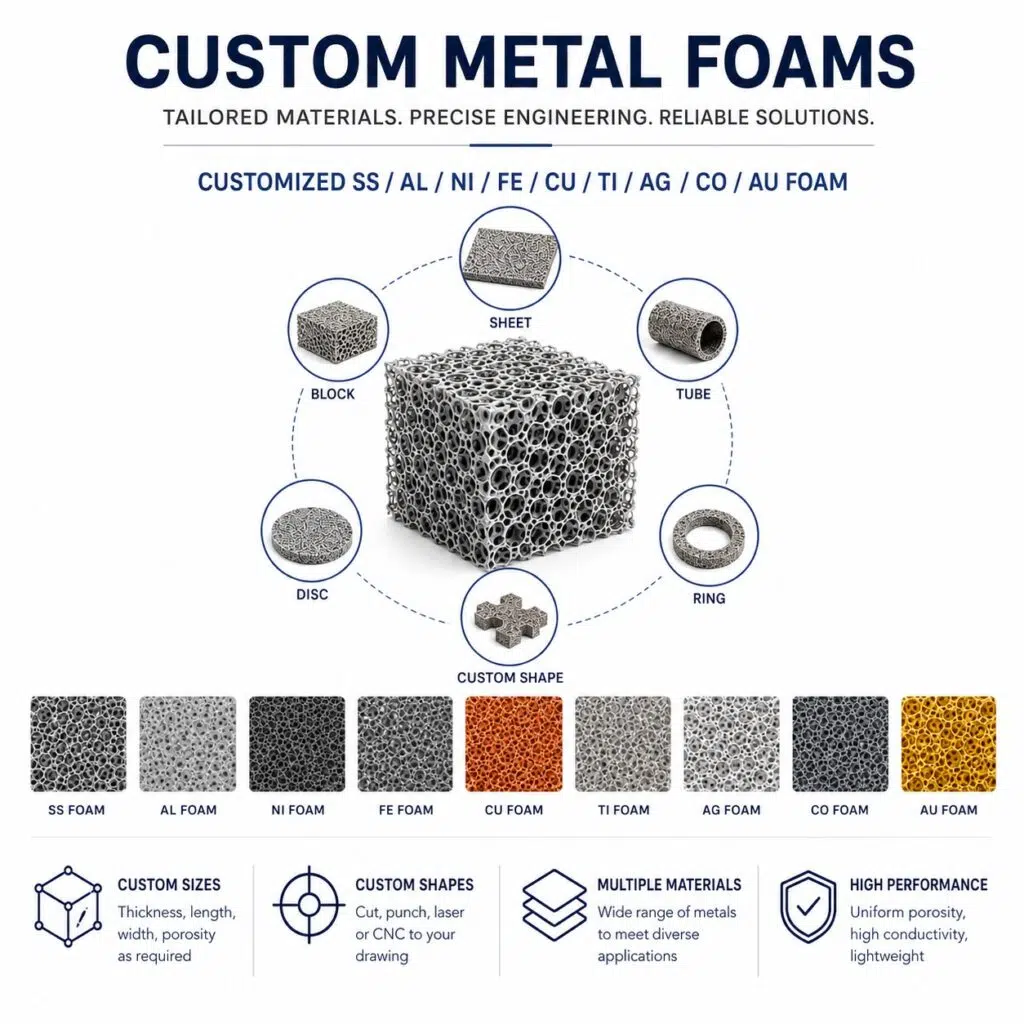
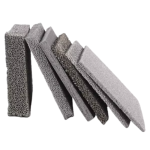
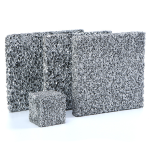
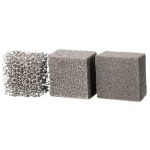
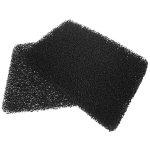
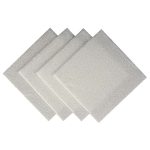
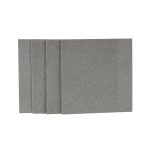
Pour personnaliser différentes mousses métalliques, veuillez cliquer sur l'image ci-dessous pour plus de détails :
 |
 |
 |
 |
 |
 |
 |
 |