






Custom Nickel Aluminum Clad Strip
Introdução
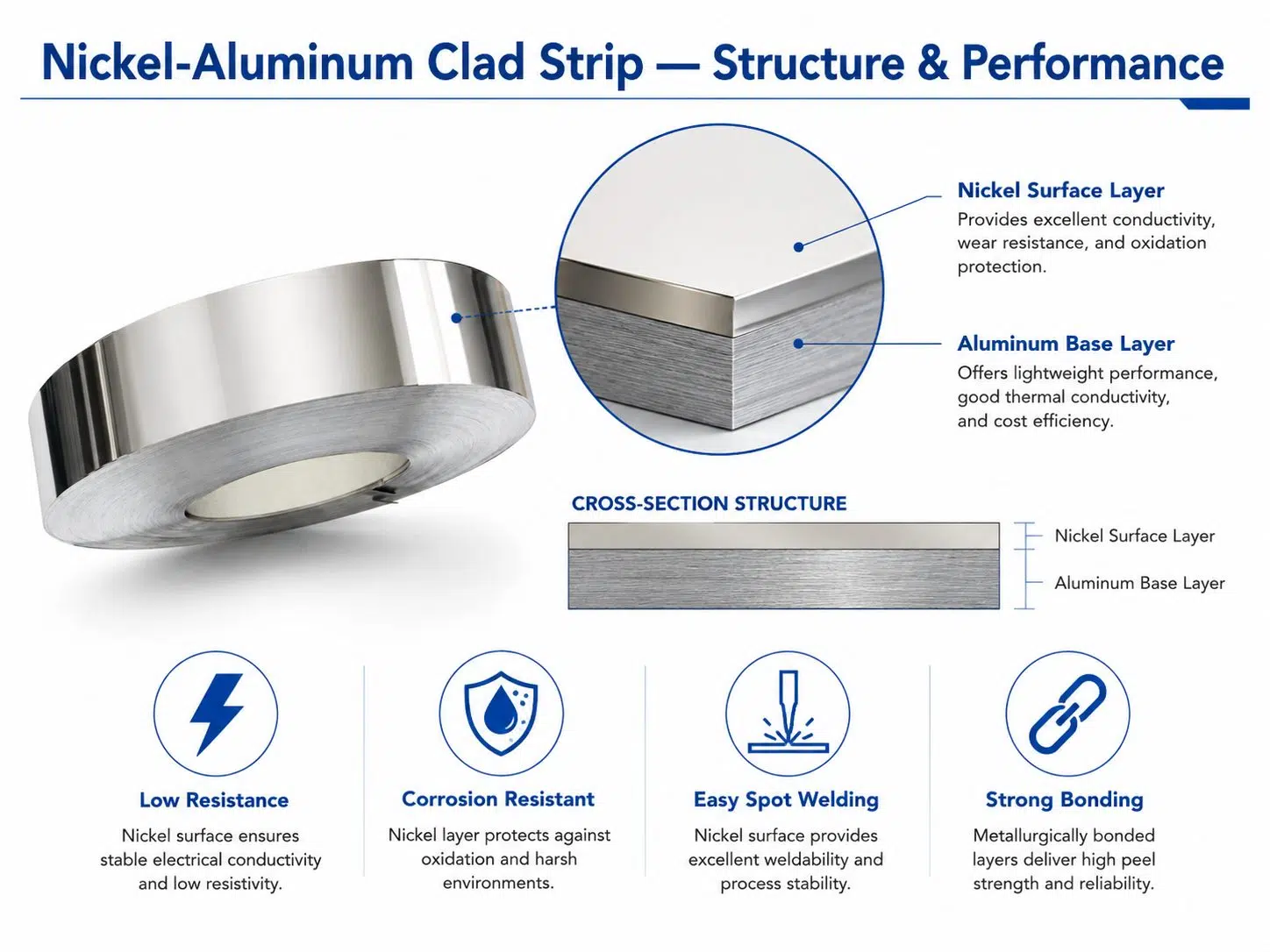
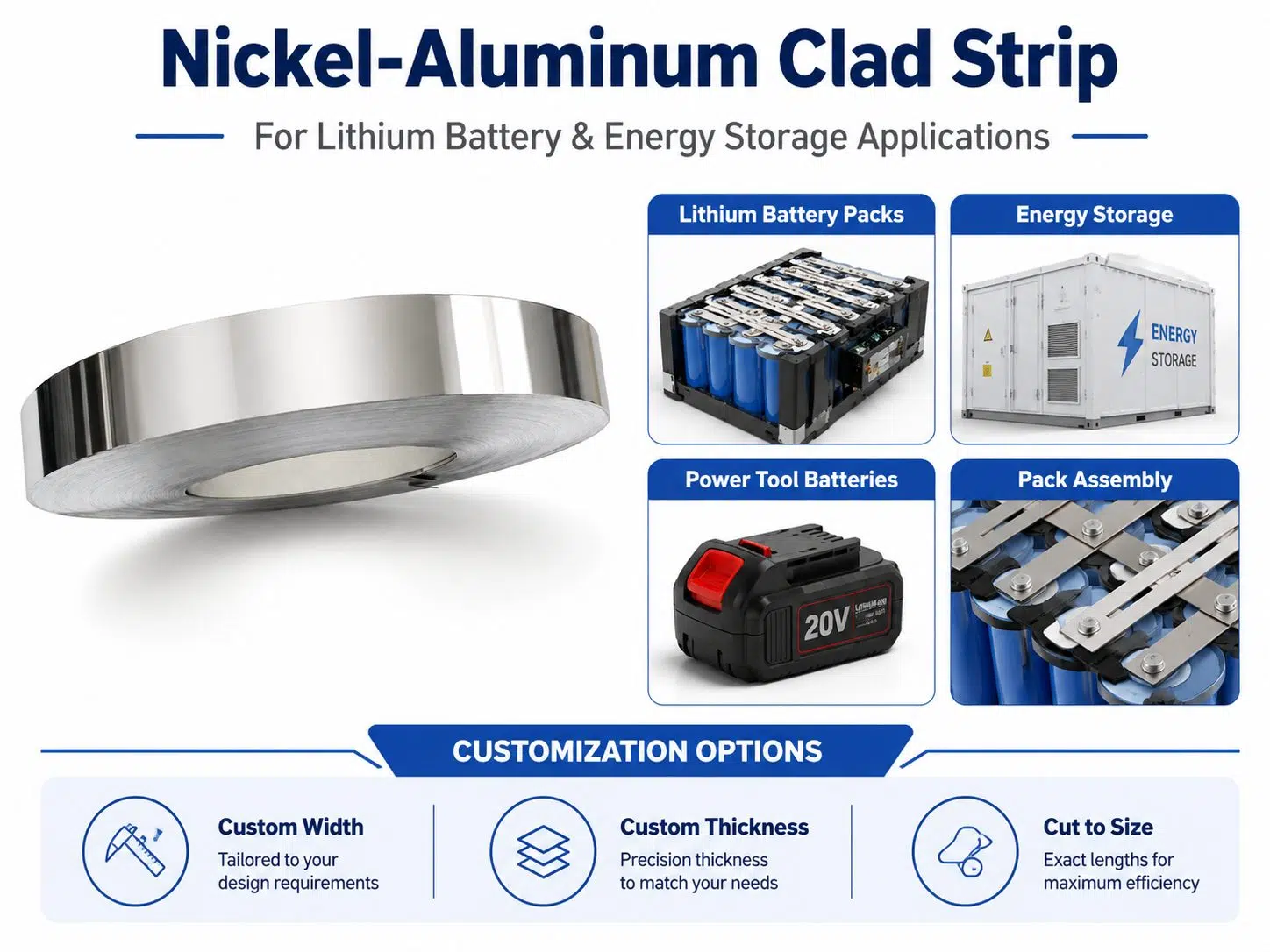
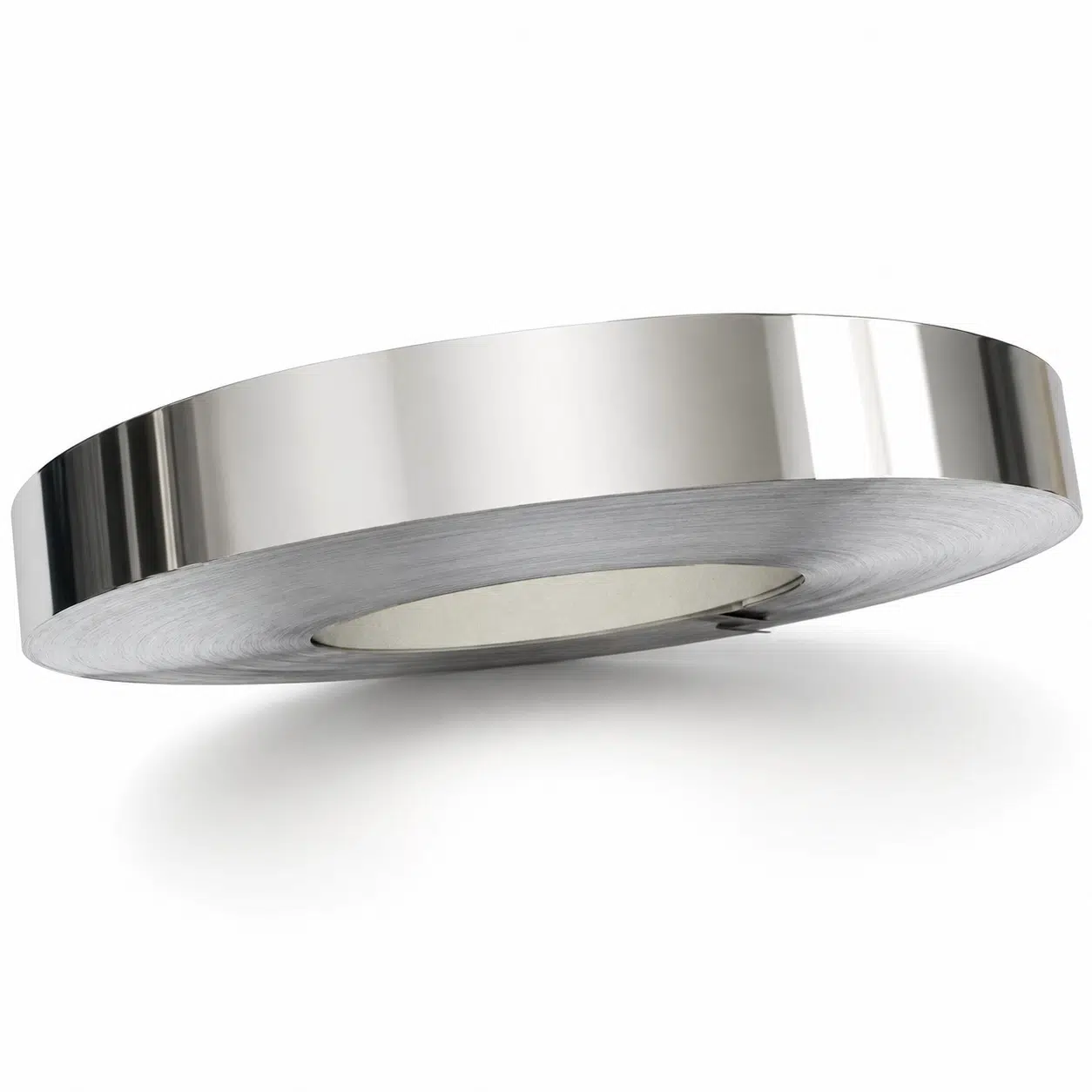
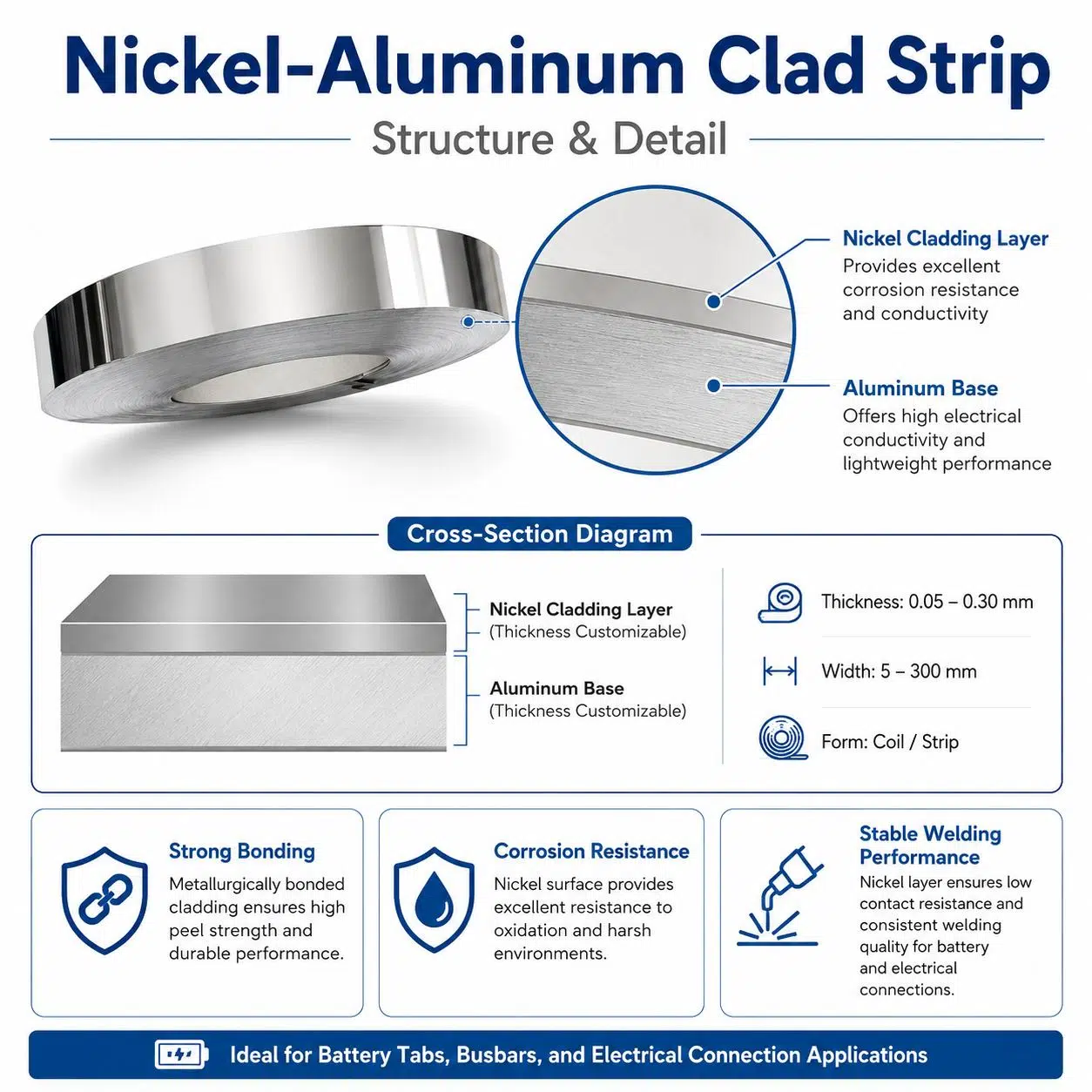
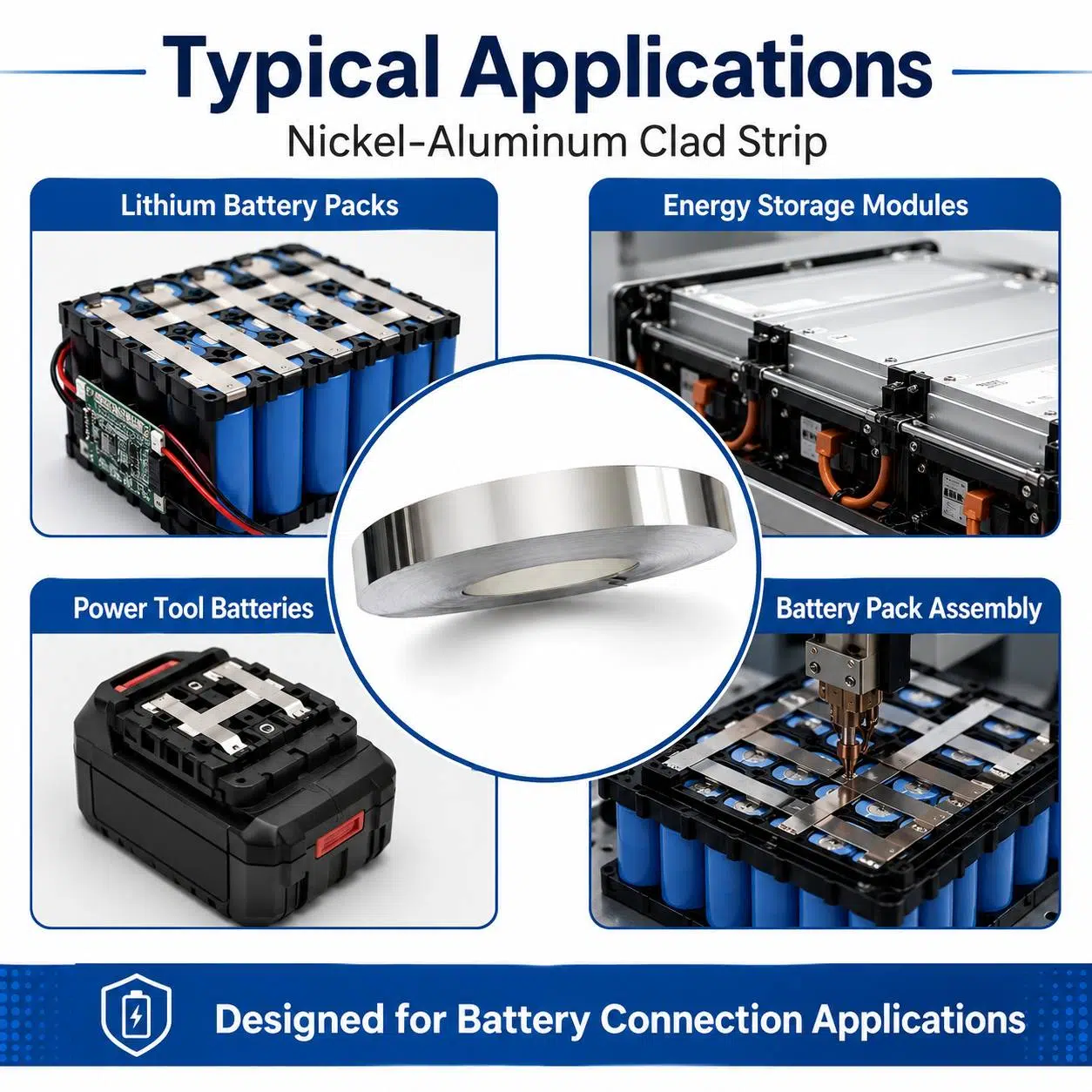
- Nickel Aluminum Clad Strip is a bimetal composite that bonds a nickel layer to a lightweight aluminum core through roll‑bonding and diffusion bonding technology. The aluminum provides low density, good electrical and thermal conductivity, and significant cost savings, while the nickel layer offers excellent weldability, corrosion resistance, and stable contact performance. This combination makes Ni–Al clad strip ideal for lithium‑ion battery tabs (connecting aluminum cell terminals to nickel or copper busbars), EV and energy‑storage pack connections, busbar transition joints, and other lightweight high‑current electrical interconnects.
-
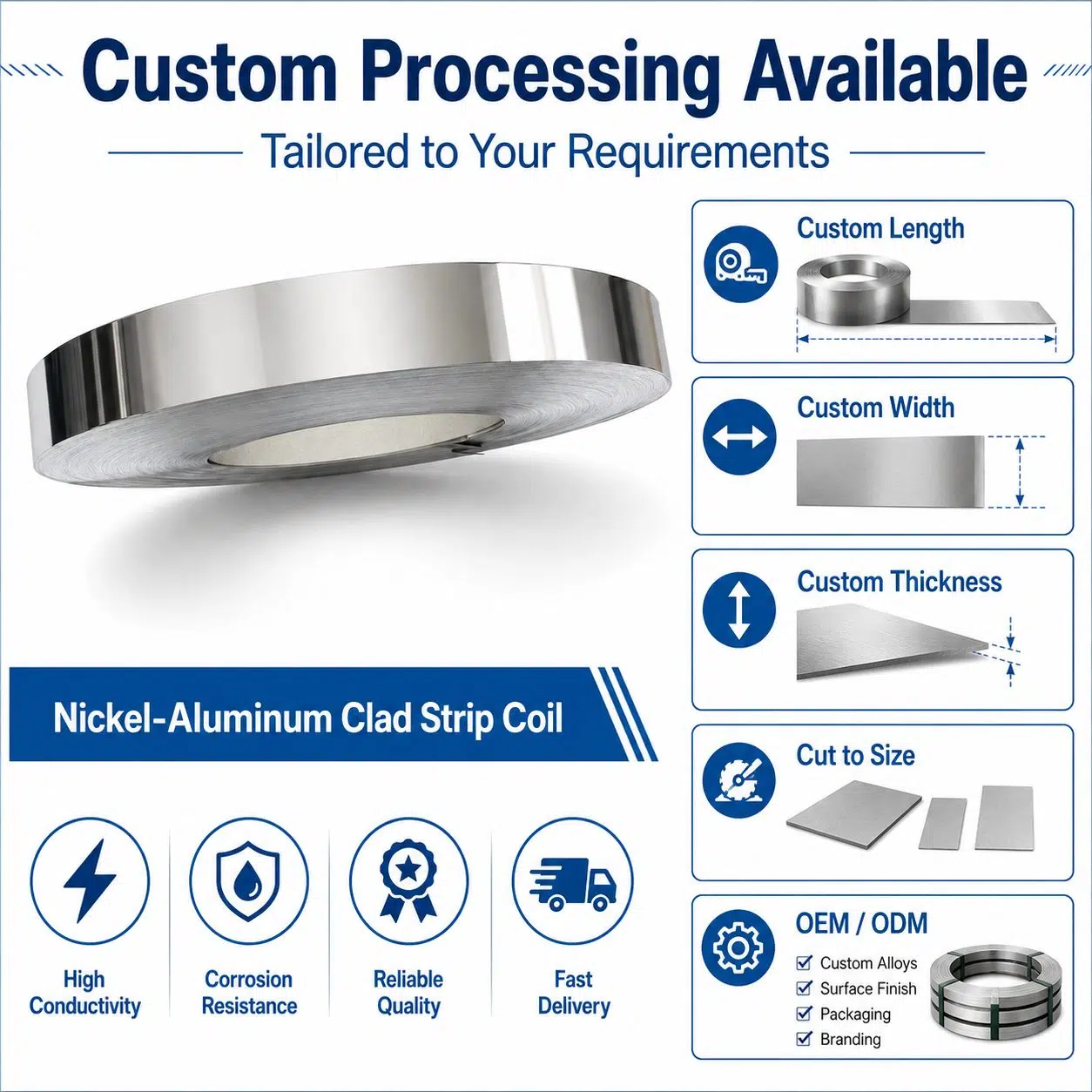
We offer fully customizable Nickel Aluminum Clad Strips, including total thickness, Ni/Al layer ratio, strip width, coil length, and mechanical properties tailored to your battery or power‑electronics design. The material features strong metallurgical bonding, uniform cladding, tight dimensional tolerances, and excellent formability for slitting, stamping, tab forming, and automated welding processes (ultrasonic, resistance, or laser welding). Optional surface treatments such as cleaning, oxidation‑control, and nickel‑side plating are available to enhance weld quality and long‑term reliability. OEM/ODM services and engineering support are provided to help you optimize conductor weight, cost, and performance for demanding applications.
Especificações
Tipo Nickel‑Aluminum Clad Strip / Coil / Ribbon / Bimetal Composite Structure Metallurgically bonded Ni–Al composite: typically Ni/Al or Al/Ni/Al layered structures produced by solid‑state roll‑bonding and diffusion bonding Material Grade Commercial‑purity or high‑purity nickel (e.g., Ni200/201 or equivalent) clad to electrical/structural aluminum (e.g., 1xxx, 3xxx series such as AA1050, AA1060, AA1100, AA3003) Ni/Al Ratio (Volume/Area) Customizable nickel and aluminum thickness ratio (e.g., 5/95, 10/90, 20/80, 30/70, 50/50 etc.), optimized for welding, conductivity, weight, and cost Electrical & Thermal Conduct. Aluminum core provides low density and good electrical/thermal conductivity; nickel layer offers stable contact resistance and reliable weldability to nickel‑, steel‑ or copper‑based busbars Formulário Narrow strip, coil, ribbon, or flat stock; supplied as continuous coils, cut‑to‑length strips, or pre‑processed tabs and connector parts Gama de espessuras Customizable total thickness, typically from about 0.05 mm to 2.0 mm (or more on request); individual Ni and Al layer thicknesses adjustable according to design and current‑carrying or welding requirements Width & Length Strip width typically from a few millimeters up to about 200–300 mm (depending on thickness); supplied in coils or fixed cut lengths according to customer specifications Bonding Method Solid‑state roll bonding followed by thermal treatment/diffusion bonding to create a continuous, high‑strength metallurgical interface between nickel and aluminum layers Interface Quality High bonding strength, uniform cladding, low interface resistance, and good peel strength suitable for high‑reliability battery, busbar, and power‑electronics applications Mechanical Properties Good strength‑to‑weight ratio and formability; suitable for slitting, stamping, bending, and tab forming; nickel surface improves wear and contact durability at welded or clamped joints Density & Cost Balance Bimetal design reduces the use of solid nickel while maintaining a nickel working surface, lowering both weight and cost compared with all‑nickel strips or connectors Surface Finish As‑rolled, bright‑annealed, matte, or brushed; controlled roughness on Ni or Al side to improve welding, bonding, or coating adhesion Surface Treatment Degreased and cleaned as standard; optional oxidation‑control treatment, special cleaning for battery‑grade use, or pre‑plating on the nickel side (e.g., tin) if required by the joining process Weldability & Joining Designed for ultrasonic welding, resistance welding, laser welding and spot welding; good compatibility with common joining of battery tabs, busbars, and laminated conductors Corrosion & Wear Resistance Nickel layer provides improved resistance to oxidation, corrosion, and mechanical wear, helping protect the aluminum substrate in typical battery and power‑electronics environments Dimensional Tolerances Tight control of thickness, width, and flatness to ensure stable automated feeding, consistent welding results, and reliable electrical performance Standards & Reference Manufactured with reference to relevant nickel and aluminum material standards (e.g., ASTM/EN/GB for base metals and composite strip quality); specific grades and tolerances available on request Application Range Lithium‑ion and LiFePO₄ battery tabs, EV and energy‑storage pack connections, aluminum–copper transition joints, busbar connections, power‑electronics interconnects, and other lightweight electrical conductors Processing Capability Supports slitting, shearing, precision stamping, progressive die forming, punching, tab forming, and CNC profiling; suitable for high‑volume automated production of battery and connector components Customization Tailored Ni/Al structure, thickness, width, coil inner/outer diameter, mechanical properties, surface finish, and pre‑stamped/weld‑ready geometries according to drawings or CAD files Packaging Supplied in sealed coils or bundled strips with edge protection; anti‑corrosion wrapping and reel/wooden‑case packaging available for safe transport and long‑term storage
Dimensões de referência
| 0.1mm*50mm*50mm | 0.2mm*100mm*100mm | 0.1mm*200mm*200mm |
| 0.2mm*300mm*3000mm | 0.3mm*500mm*500mm | 0.1mm*500mm*1000mm |
| 0.2mm*500mm*2000mm | 0.1mm to 50mm*1000mm*1000mm | O tamanho pode ser personalizado |